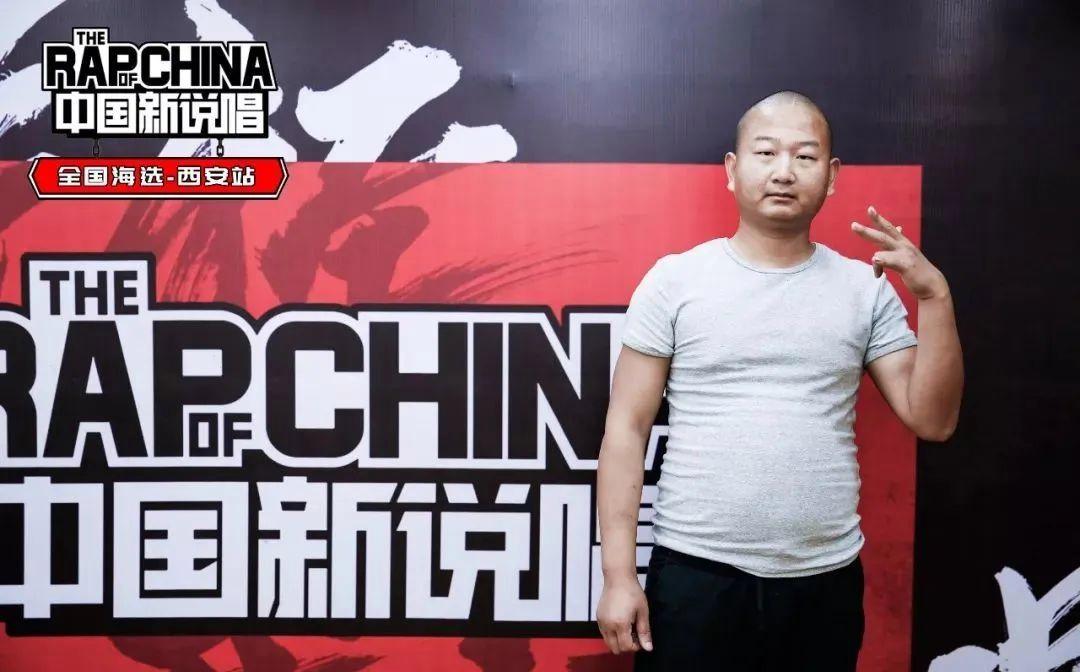
Hot comment: Wang Zhenhua has been revoked the title of national model worker. What do you think?

There is new news about Wang Zhenhua’s alleged child molestation. A few days ago, the Announcement on Revoking the title of "National Model Worker" in Wang Zhenhua issued by the Jiangsu Provincial Department of Human Resources and Social Security said that recently, Ministry of Human Resources and Social Security issued a decision to revoke the title of "National Model Worker" in Wang Zhenhua, withdraw its medals and certificates, stop the relevant treatment it enjoyed for winning the honor, and recover the material rewards such as the prize money it won.
As a well-known entrepreneur, Wang Zhenhua has won many honorary titles, such as "Jiangsu Model Worker", "National May 1st Labor Medal" and "National Model Worker". He was also a representative of Changzhou Municipal People’s Congress and a member of Shanghai Municipal People’s Political Consultative Conference.
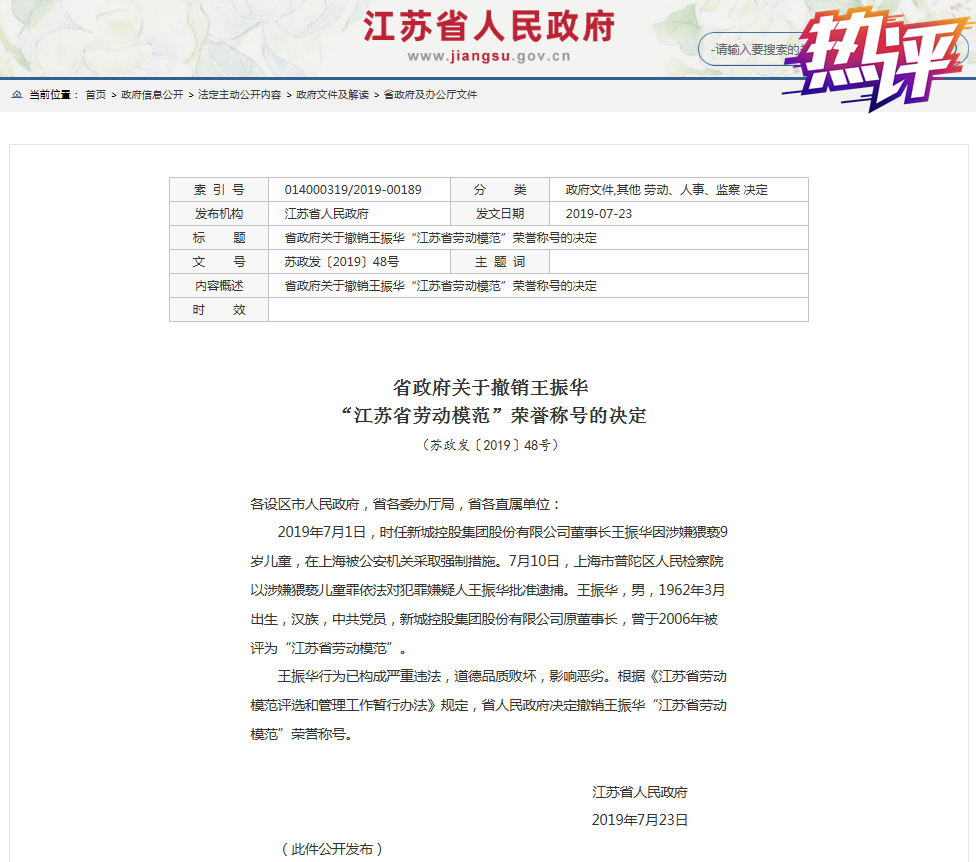
Wang Zhenhua’ s alleged child molestation case occurred on June 29 last year and was exposed on June 30; On July 1 last year, Wang Zhenhua was taken compulsory measures by the public security organs in Shanghai. On July 8 last year, the Shanghai CPPCC revoked Wang Zhenhua’s membership of the 13th Shanghai CPPCC. On July 10th last year, Wang Zhenhua was arrested on suspicion of child molestation. On July 23rd last year, the People’s Government of Jiangsu Province revoked Wang Zhenhua’s honorary title of "Model Worker in Jiangsu Province".
Nowadays, Wang Zhenhua has been revoked the title of "National Model Worker", which is not surprising at all. It is logical, legal and more in line with people’s hearts, which maintains the honor and seriousness of the title of model worker. As stated in the previous decision, Wang Zhenhua’s behavior has constituted a serious violation of the law, and his moral quality has deteriorated and his influence has been bad. According to the Interim Measures for the Selection and Management of Model Workers in Jiangsu Province, the People’s Government of Jiangsu Province decided to revoke the honorary title of "Model Workers in Jiangsu Province" of Wang Zhenhua. By the same logic, Wang Zhenhua does not deserve to continue to enjoy the honor of national model workers. No matter whether the medals and certificates are recovered or the bonuses are recovered, it is well-founded in the law.
It is worth mentioning that it has been nearly a year since Wang Zhenhua was suspected of molesting children. People have been paying attention to the progress of the case. Recently, many netizens are still asking whether Wang Zhenhua has been tried. The concerns of many netizens are in line with the people of the world. I still remember that when the Wang Zhenhua case was first exposed, public opinion was in uproar. It is tolerable for a well-known entrepreneur to do such a nasty thing! People still remember that the Shanghai police said at that time that they would "resolutely investigate to the end and fully ascertain the case" and "always hold a’ zero tolerance’ attitude towards crimes against minors and resolutely crack down on such crimes according to law".
What’s the progress of Wang Zhenhua’s alleged child molestation case? Waiting for the authority to respond. The indisputable fact is that the state is stepping up its crackdown on sexual assault on minors according to law. Just recently, the Supreme People’s Procuratorate, together with the State Supervision Commission, the Ministry of Public Security, the Ministry of Justice, the Ministry of Education, the Ministry of Civil Affairs, National Health Commission, the Central Committee of the Communist Youth League and the All-China Women’s Federation, signed and issued the Opinions on Establishing a Compulsory Reporting System for Cases of Infringement on Minors, stipulating that nine categories should be reported, such as sexual assault, abuse, bullying, and trafficking. If these situations are discovered, the relevant responsible subjects should report them. In order to stop crimes in time and effectively protect the legitimate rights and interests of minors, it is stipulated that "suspected" situations should also be reported. These regulations show the determination of the country.
There is a background that cannot be ignored. On June 1, the White Paper on the Procuratorial Work of Minors (2014-2019) issued by the Supreme People’s Procuratorate showed that 43,400 people were prosecuted for sexual assault against minors from 2017 to 2019, and the number of crimes against minors was on the rise. It is not difficult to judge that it is extremely necessary to establish a compulsory reporting system for cases against minors. In addition, it is necessary to build an effective mechanism of combining punishment with prevention, strengthen the protection of minors, on the one hand, build a safe barrier for minors, and improve their self-protection awareness; On the other hand, improve the fixed evidence in time, punish illegal crimes according to law, and make sexual abusers pay a heavy legal price.
The healthy growth of minors is related to the future of the country and the nation. At present, it is urgent to form a protection mechanism for minors with source prevention, timely detection, efficient emergency and punishment according to law. From this perspective, Wang Zhenhua’s deprivation of the title of "National Model Worker" is not the end. If he is convicted of child molestation, he will have to bear the corresponding legal responsibilities. Ruan Qilin, a law professor at China University of Political Science and Law, said in an interview with CCTV that according to the criminal law, those who commit child molestation will be sentenced to fixed-term imprisonment of not more than five years and severely punished. If it is found that people gather together or commit crimes in public places, or there are other bad circumstances, it shall be sentenced to fixed-term imprisonment of not less than five years.
At present, the construction of the rule of law is vast. Every fair precedent is a just act that stirs up confusion and clears up the Qing Dynasty, and it is also a solid cornerstone for shaping the public’s belief in the rule of law. Through the fair trial of a judicial case, it is also the profound connotation of the construction of the rule of law to deeply cast the spirit, consciousness and concept of the rule of law in the hearts of the public.
Therefore, we must not let justice be late, let alone absent. Responding to the voice of public opinion, facing up to the public’s desire for truth and expectation for justice, and promoting the progress of the rule of law through major case trials can not only fully demonstrate the effectiveness of comprehensively governing the country according to law and deepening judicial reform, but also make justice shine in the world, make criminals fear, and let the people gain a more real sense of the rule of law.
(Wen Yi Qin Chuan)
Reporting/feedback

National Bureau of Statistics: The annual GDP was 126,058.2 billion yuan, an increase of 5.2% over the previous year.

  CCTV News:A few days ago, the National Bureau of Statistics announced the statistical bulletin on national economic and social development in 2023. According to preliminary accounting, the annual GDP was 126,058.2 billion yuan, an increase of 5.2% over the previous year. Among them, the added value of the primary industry was 8,975.5 billion yuan, an increase of 4.1% over the previous year; The added value of the secondary industry was 48,258.9 billion yuan, an increase of 4.7%; The added value of tertiary industry was 68,823.8 billion yuan, up by 5.8%. The added value of the primary industry accounts for 7.1% of GDP, the added value of the secondary industry accounts for 38.3%, and the added value of the tertiary industry accounts for 54.6%. The final consumption expenditure boosted GDP by 4.3 percentage points, the total capital formation boosted GDP by 1.5 percentage points, and the net export of goods and services boosted GDP by 0.6 percentage points. Quarterly, GDP increased by 4.5% in the first quarter, 6.3% in the second quarter, 4.9% in the third quarter and 5.2% in the fourth quarter. The annual per capita GDP was 89,358 yuan, an increase of 5.4% over the previous year. The gross national income was 125,129.7 billion yuan, an increase of 5.6% over the previous year. The overall labor productivity was 161,615 yuan/person, an increase of 5.7% over the previous year.

  People’s Republic of China (PRC)2023Statistical bulletin on national economic and social development in[1]

National Bureau of Statistics(NBS)

February 29, 2024

  The first year of fully implementing the spirit of the 20th National Congress of the Communist Party of China in 2023 is a year of economic recovery and development after three years of epidemic prevention and control in COVID-19. Facing the complicated and severe international environment and arduous domestic reform, development and stability tasks, under the strong leadership of the CPC Central Committee with the Supreme Leader as the core, all localities and departments adhere to the guidance of the Supreme Leader’s Socialism with Chinese characteristics Thought in the new era, fully implement the spirit of the 20th Party Congress and the Second Plenary Session of the 20th CPC Central Committee, adhere to the general tone of striving for progress while maintaining stability, and fully, accurately and comprehensively implement the new development concept in accordance with the decision-making arrangements of the CPC Central Committee and the State Council. Accelerate the construction of a new development pattern, focus on promoting high-quality development, comprehensively deepen reform and opening up, intensify macro-control, focus on expanding domestic demand, optimize the structure, boost confidence and prevent risks, make solid progress in the recovery of the national economy and high-quality development, make important progress in the construction of a modern industrial system, achieve new breakthroughs in scientific and technological innovation, deepen reform and opening up, consolidate and consolidate the foundation for safe development, ensure effective people’s livelihood, and make progress in building a socialist modern country in an all-round way.

  I. Synthesis

  According to preliminary accounting, the annual GDP [2] was 126,058.2 billion yuan, an increase of 5.2% over the previous year. Among them, the added value of the primary industry was 8,975.5 billion yuan, an increase of 4.1% over the previous year; The added value of the secondary industry was 48,258.9 billion yuan, an increase of 4.7%; The added value of tertiary industry was 68,823.8 billion yuan, up by 5.8%. The added value of the primary industry accounts for 7.1% of GDP, the added value of the secondary industry accounts for 38.3%, and the added value of the tertiary industry accounts for 54.6%. The final consumption expenditure boosted GDP by 4.3 percentage points, the total capital formation boosted GDP by 1.5 percentage points, and the net export of goods and services boosted GDP by 0.6 percentage points. Quarterly, GDP increased by 4.5% in the first quarter, 6.3% in the second quarter, 4.9% in the third quarter and 5.2% in the fourth quarter. The annual per capita GDP was 89,358 yuan, an increase of 5.4% over the previous year. The gross national income [3] was 125,129.7 billion yuan, up by 5.6% over the previous year. The overall labor productivity [4] was 161,615 yuan/person, up by 5.7% over the previous year.

  At the end of the year, the national population was 1,409.67 million, 2.08 million fewer than the end of the previous year, including 932.67 million urban residents. The annual birth population was 9.02 million, and the birth rate was 6.39&permil. ; The death toll was 11.1 million, with a mortality rate of 7.87‰ ; The natural growth rate is-1.48 & permit; .

  At the end of the year, there were 740.41 million employed people in China, including 470.32 million employed people in cities and towns, accounting for 63.5% of the total employed people in China. In the whole year, 12.44 million new jobs were created in cities and towns, an increase of 380,000 over the previous year. The average unemployment rate in the national urban survey for the whole year was 5.2%. At the end of the year, the national urban survey unemployment rate was 5.1%. The total number of migrant workers in China [8] was 297.53 million, up by 0.6% over the previous year. Among them, there were 176.58 million migrant workers, an increase of 2.7%; There were 120.95 million local migrant workers, down by 2.2%.

  The annual consumer price rose by 0.2% over the previous year. The ex-factory price of industrial producers decreased by 3.0%. The purchase price of industrial producers decreased by 3.6%. The producer price of agricultural products [9] decreased by 2.3%. In December, among 70 large and medium-sized cities, the sales price of new commercial housing increased in 20 cities, remained flat in 2 cities and decreased in 48 cities. The number of cities where the sales price of second-hand houses increased year-on-year was 1, while the number of cities that decreased was 69.

  At the end of the year, China’s foreign exchange reserves reached 3,238 billion US dollars, an increase of 110.3 billion US dollars over the end of last year. The annual average exchange rate of RMB was 7.0467 yuan to the dollar, which was 4.5% lower than the previous year.

  New kinetic energy grows stronger. Among the industries above designated size [11], the added value of equipment manufacturing [12] increased by 6.8% over the previous year, accounting for 33.6% of the added value of industries above designated size; The added value of high-tech manufacturing [13] increased by 2.7%, accounting for 15.7% of the added value of industrial enterprises above designated size. The output of new energy vehicles was 9.443 million, an increase of 30.3% over the previous year; The output of solar cells (photovoltaic cells) was 540 million kilowatts, an increase of 54.0%; The output of service robots was 7.833 million sets, an increase of 23.3%; The output of 3D printing equipment was 2.789 million units, an increase of 36.2%. Among the above-scale service industries [14], the operating income of strategic emerging service industries [15] increased by 7.7% over the previous year. Investment in high-tech industries [16] increased by 10.3% over the previous year, and investment in technological transformation of manufacturing industry [17] increased by 3.8%. The transaction volume of e-commerce was [18] 468.273 billion yuan, an increase of 9.4% over the previous year. Online retail sales reached 15,426.4 billion yuan, an increase of 11.0% over the previous year. In the whole year, 32.73 million new business entities were established, and 27,000 new enterprises were established every day.

  The pace of urban-rural integration and regional coordinated development is steady. At the end of the year, the urbanization rate of permanent residents in China was 66.16%, an increase of 0.94 percentage points over the end of the previous year. By region [20], the GDP of the eastern region was 652.084 billion yuan, an increase of 5.4% over the previous year; The GDP of the central region was 26,989.8 billion yuan, an increase of 4.9%; The GDP of the western region was 26,932.5 billion yuan, up by 5.5%; The GDP of Northeast China was 5,962.4 billion yuan, an increase of 4.8%. The annual GDP of Beijing-Tianjin-Hebei region was 10,444.2 billion yuan, an increase of 5.1% over the previous year; The GDP of the Yangtze River Economic Belt was 58,427.4 billion yuan, an increase of 5.5%. The GDP of the Yangtze River Delta was 30,504.5 billion yuan, an increase of 5.7%. Major regional strategies such as Guangdong-Hong Kong-Macao Greater Bay Area construction, ecological protection in the Yellow River basin and high-quality development have been further promoted.

  The green and low-carbon transformation has been further promoted. The carbon dioxide emissions per 10,000 yuan of GDP in the whole year [21] were the same as that of the previous year. The electricity generated by clean energy such as hydropower, nuclear power, wind power and solar power generation was 3,190.6 billion kWh, up by 7.8% over the previous year. Among the 339 monitored cities at prefecture level and above, 59.9% of them meet the air quality standards, and 40.1% fail to meet the standards. Among the 3641 national surface water assessment sections, the proportion of sections with excellent water quality (I-III) is 89.4%, the proportion of sections with class IV is 8.4%, the proportion of sections with class V is 1.5%, and the proportion of sections with poor class V is 0.7%.

  Second, agriculture

  The annual grain planting area was 118.97 million hectares, an increase of 640,000 hectares over the previous year. Among them, the rice planting area was 28.95 million hectares, a decrease of 500,000 hectares; The wheat planting area was 23.63 million hectares, an increase of 110,000 hectares; The planting area of corn was 44.22 million hectares, an increase of 1.15 million hectares; The soybean planting area was 10.47 million hectares, an increase of 230,000 hectares. The cotton planting area was 2.79 million hectares, a decrease of 210,000 hectares. The oil planting area was 13.92 million hectares, an increase of 780,000 hectares. The planting area of sugar was 1.42 million hectares, a decrease of 30,000 hectares.

  The annual grain output was 695.41 million tons, an increase of 8.88 million tons or 1.3% over the previous year. Among them, the output of summer grain was 146.15 million tons, a decrease of 0.8%; The output of early rice was 28.34 million tons, an increase of 0.8%; The output of autumn grain was 520.92 million tons, an increase of 1.9%. The grain output was 641.43 million tons, an increase of 1.3% over the previous year. Among them, the rice output was 206.6 million tons, a decrease of 0.9%; The wheat output was 136.59 million tons, a decrease of 0.8%; The output of corn was 288.84 million tons, an increase of 4.2%. Soybean output was 20.84 million tons, an increase of 2.8%.

  The annual cotton output was 5.62 million tons, a decrease of 6.1% over the previous year. The oil output was 38.64 million tons, an increase of 5.7%. The output of sugar was 115.04 million tons, an increase of 2.4%. The output of tea was 3.55 million tons, an increase of 6.1%.

  The annual output of pigs, cattle, sheep and poultry was 96.41 million tons, up by 4.5% over the previous year. Among them, the output of pork was 57.94 million tons, an increase of 4.6%; The beef output was 7.53 million tons, an increase of 4.8%; The mutton output was 5.31 million tons, an increase of 1.3%; The output of poultry meat was 25.63 million tons, up by 4.9%. The output of poultry eggs was 35.63 million tons, an increase of 3.1%. The milk output was 41.97 million tons, an increase of 6.7%. At the end of the year, there were 434.22 million live pigs, down 4.1% from the end of last year. In 2001, 726.62 million pigs were slaughtered, up 3.8% over the previous year.

  The total output of aquatic products in the year was 71 million tons, an increase of 3.4% over the previous year. Among them, the aquaculture output was 58.12 million tons, an increase of 4.4%; The fishing output was 12.88 million tons, down by 1.0%.

  The annual timber output was 119.44 million cubic meters, down 2.0% from the previous year.

  In the whole year, 5.74 million hectares of high-standard farmland were built, renovated and upgraded, and 1.64 million hectares of high-efficiency water-saving irrigation were added.

  III. Industry and Construction Industry

  The total industrial added value of the whole year was 39,910.3 billion yuan, up by 4.2% over the previous year. The added value of industrial enterprises above designated size increased by 4.6%. In industries above designated size, the added value of state-owned holding enterprises increased by 5.0% according to economic types; Joint-stock enterprises increased by 5.3%, and foreign-invested enterprises from Hong Kong, Macao and Taiwan increased by 1.4%; Private enterprises increased by 3.1%. In terms of categories, the mining industry grew by 2.3%, the manufacturing industry by 5.0%, and the electricity, heat, gas and water production and supply industries by 4.3%.

  Among the industries above designated size, the added value of agricultural and sideline food processing industry increased by 0.2% over the previous year, textile industry decreased by 0.6%, chemical raw materials and chemical products manufacturing industry increased by 9.6%, non-metallic mineral products industry decreased by 0.5%, ferrous metal smelting and rolling processing industry increased by 7.1%, general equipment manufacturing industry increased by 2.0%, special equipment manufacturing industry increased by 3.6%, automobile manufacturing industry increased by 13.0%, and electrical machinery and equipment manufacturing industry increased by 12.9%.

  The annual profit of industrial enterprises above designated size was 7,685.8 billion yuan, down 2.3% from the previous year. In terms of economic types, the profits of state-owned holding enterprises were 2,262.3 billion yuan, down 3.4% from the previous year; Joint-stock enterprises reached 5,677.3 billion yuan, down by 1.2%, and foreign-invested enterprises from Hong Kong, Macao and Taiwan reached 1,797.5 billion yuan, down by 6.7%. Private enterprises reached 2,343.8 billion yuan, an increase of 2.0%. In terms of categories, the profit of the mining industry was 1,239.2 billion yuan, down 19.7% from the previous year; The manufacturing industry was 5,764.4 billion yuan, down 2.0%; Electricity, heat, gas and water production and supply industries reached 682.2 billion yuan, an increase of 54.7%. The cost per 100 yuan of operating income of industrial enterprises above designated size was 84.76 yuan, an increase of 0.04 yuan over the previous year; The profit rate of operating income was 5.76%, down by 0.20 percentage points. At the end of the year, the asset-liability ratio of industrial enterprises above designated size was 57.1%, down 0.1 percentage point from the end of the previous year. The annual utilization rate of industrial capacity above designated size [24] was 75.1%.

  According to preliminary accounting, the total primary energy production in the whole year was 4.83 billion tons of standard coal, up by 4.2% over the previous year.

  At the end of the year, the installed capacity of power generation in China was 2,919.65 million kilowatts, an increase of 13.9% over the end of last year. Among them, [26], the installed capacity of thermal power is 1,390.32 million kilowatts, an increase of 4.1%; The installed capacity of hydropower was 421.54 million kilowatts, an increase of 1.8%; The installed capacity of nuclear power was 56.91 million kilowatts, an increase of 2.4%; The installed capacity of grid-connected wind power is 441.34 million kilowatts, an increase of 20.7%; The installed capacity of grid-connected solar power generation is 609.49 million kilowatts, an increase of 55.2%.

  The added value of the construction industry in the whole year was 8,569.1 billion yuan, an increase of 7.1% over the previous year. The profit of general contracting and professional contracting construction enterprises with qualification grade in China was 832.6 billion yuan, up [27]0.2% over the previous year, of which 401.9 billion yuan was state-owned holding enterprises, up 4.3%.

  Fourth, the service industry

  The added value of wholesale and retail industry in the whole year was 12,307.2 billion yuan, an increase of 6.2% over the previous year; The added value of transportation, warehousing and postal services was 5,782 billion yuan, an increase of 8.0%; The added value of accommodation and catering industry was 2,102.4 billion yuan, an increase of 14.5%; The added value of the financial industry was 1,067.7 billion yuan, an increase of 6.8%; The added value of the real estate industry was 7,372.3 billion yuan, down by 1.3%; The added value of information transmission, software and information technology services was 5,519.4 billion yuan, an increase of 11.9%; The added value of leasing and business services was 4,434.7 billion yuan, up by 9.3%. The operating income of service enterprises above designated size increased by 8.3% over the previous year, and the total profit increased by 26.8%.

  The total cargo transportation in the whole year was [28] 55.7 billion tons, an increase of 8.1% over the previous year. The turnover of cargo transportation was 24,771.3 billion tons kilometers, up by 6.3%. The port’s cargo throughput was 17 billion tons, up 8.2% over the previous year, of which the foreign trade cargo throughput was 5 billion tons, up 9.5%. The port container throughput was 310.34 million TEUs, up by 4.9%.

  The total number of passengers transported in the whole year was 9.3 billion, an increase of 66.5% over the previous year. Passenger transport turnover was 2,861 billion person-kilometers, an increase of 121.4%.

  At the end of the year, there were 336.18 million civilian cars (including 7.06 million tricycles and low-speed trucks), an increase of 17.14 million over the end of last year, of which 294.27 million were private cars, an increase of 15.53 million. The number of civilian cars was 186.68 million, an increase of 9.28 million, including 175.41 million private cars, an increase of 8.56 million.

  In 2001, the postal delivery business totaled [2.9] 162.5 billion pieces, an increase of 16.8% over the previous year. The postal industry completed 970 million postal mail services, 200 million parcel services, 132.07 billion express delivery services and 1,207.4 billion yuan in express delivery services. In 2001, the total telecom business volume reached 1,832.7 billion yuan, up by 16.8% over the previous year. By the end of the year, there were 11.62 million mobile phone base stations, including 6.29 million 4G base stations and 3.38 million 5G base stations. The total number of telephone users in China is 1,899.92 million, including 1,726.6 million mobile phone users. The mobile phone penetration rate is 122.5/100 people. There were [32] 636.31 million fixed Internet broadband access users, an increase of 46.66 million over the end of last year, among which [33] 601.36 million broadband access users with a speed of 100M or above, an increase of 47.56 million. There are 2.332 billion end users of cellular Internet of Things [34], an increase of 488 million. There are 1.092 billion Internet users, including 1.091 billion mobile Internet users. The Internet penetration rate is 77.5%, of which the Internet penetration rate in rural areas is 66.5%. In 2001, the access traffic of mobile Internet users was 301.5 billion GB, up by 15.2% over the previous year. Software and information technology service industry [35] completed software business income of 12,325.8 billion yuan, an increase of 13.4% over the previous year.

  V. Domestic trade

  The total retail sales of consumer goods in the whole year was 47,149.5 billion yuan, an increase of 7.2% over the previous year. According to the business location, the retail sales of urban consumer goods was 40,749 billion yuan, an increase of 7.1%; The retail sales of rural consumer goods reached 6.4 trillion yuan, an increase of 8.0%. By consumption type, the retail sales of commodities reached 41,860.5 billion yuan, an increase of 5.8%; The catering revenue was 5,289 billion yuan, an increase of 20.4%. Retail sales of services [36] increased by 20.0% over the previous year.

  Among the retail sales of commodities above designated size, the retail sales of grain, oil and food increased by 5.2% over the previous year, beverages increased by 3.2%, alcohol and tobacco increased by 10.6%, clothing, shoes and hats, knitwear increased by 12.9%, cosmetics increased by 5.1%, gold and silver jewelry increased by 13.3%, daily necessities increased by 2.7%, household appliances and audio-visual equipment increased by 0.5%, and Chinese and western medicines increased by 0.5%. Cultural office supplies decreased by 6.1%, furniture increased by 2.8%, communication equipment increased by 7.0%, petroleum and products increased by 6.6%, automobiles increased by 5.9%, and building and decoration materials decreased by 7.8%.

  The annual online retail sales of physical goods reached 13,017.4 billion yuan, an increase of 8.4% over the previous year, accounting for 27.6% of the total retail sales of social consumer goods.

  VI. Investment in fixed assets

  In the whole year, the investment in fixed assets of the whole society was 50,970.8 billion yuan, an increase of [37]2.8% over the previous year. Investment in fixed assets (excluding farmers) was 50,303.6 billion yuan, an increase of 3.0%. In fixed assets investment (excluding farmers), by region [38], investment in the eastern region increased by 4.4%, investment in the central region increased by 0.3%, investment in the western region increased by 0.1%, and investment in the northeast region decreased by 1.8%.

  In fixed assets investment (excluding farmers), the investment in the primary industry was 1,008.5 billion yuan, down 0.1% from the previous year; Investment in the secondary industry was 16,213.6 billion yuan, an increase of 9.0%; Investment in the tertiary industry was 33,081.5 billion yuan, an increase of 0.4%. Infrastructure investment [39] increased by 5.9%. Investment in social fields [40] increased by 0.5%. Private investment in fixed assets [4.1] was 25,354.4 billion yuan, down by 0.4%; Among them, private investment in manufacturing increased by 9.4%, and private investment in infrastructure increased by 14.2%.

  The annual investment in real estate development was 11,091.3 billion yuan, down [43]9.6% from the previous year. Among them, residential investment was 8,382 billion yuan, down 9.3%; The investment in office buildings was 453.1 billion yuan, down by 9.4%; Investment in commercial premises was 805.5 billion yuan, down by 16.9%. The annual sales area of newly-built commercial housing was [44] 1,117.35 million square meters. The online signing area of second-hand housing transaction is [45] 708.82 million square meters. At the end of the year, the area of new commercial housing for sale was 672.95 million square meters, of which the area of commercial housing for sale was 331.19 million square meters.

  In the whole year, 1.59 million shanty towns were renovated, and 1.93 million were basically completed. Construction of affordable rental housing started and 2.13 million sets (rooms) were raised. Newly started renovation of 53,700 old urban communities, involving 8.97 million residents.

  VII. Foreign Economy

  The total import and export volume of goods in the whole year was 41,756.8 billion yuan, an increase of 0.2% over the previous year. Among them, exports were 23,772.6 billion yuan, an increase of 0.6%; Imports reached 1,798.42 billion yuan, down 0.3%. The import and export surplus of goods was 5,788.3 billion yuan, an increase of 193.8 billion yuan over the previous year. The import and export volume of countries that jointly built the "Belt and Road" [46] was 1,947.19 billion yuan, an increase of 2.8% over the previous year. Among them, exports were 10,731.4 billion yuan, an increase of 6.9%; Imports reached 8,740.5 billion yuan, down 1.9%. The import and export volume to other member countries of the Regional Comprehensive Economic Partnership Agreement (RCEP) [47] was 12,596.7 billion yuan, down by 1.6% over the previous year. The import and export volume of private enterprises was 22,360.1 billion yuan, an increase of 6.3% over the previous year, accounting for 53.5% of the total import and export volume.

  The total import and export of services in the year was 6,575.4 billion yuan, an increase of 10.0% over the previous year. Among them, exports were 2,685.7 billion yuan, down 5.8%; Imports reached 3,889.8 billion yuan, up by 24.4%. The service import and export deficit was 1,204.1 billion yuan.

  In 2001, 53,766 enterprises were newly established by foreign direct investment, an increase of 39.7% over the previous year. The actual use of foreign direct investment was 1,133.9 billion yuan, down 8.0%, equivalent to 163.3 billion US dollars, down 13.7%. Among them, 13,649 newly established enterprises have invested directly in China (including investment in China through some free ports) by countries that jointly built the Belt and Road Initiative, an increase of 82.7%; The direct investment in China was 122.1 billion yuan, down 11.4%, or 17.6 billion dollars, down 16.7%. The actual use of foreign capital in high-tech industries was 423.3 billion yuan, down 4.9%, or 61 billion US dollars, down 10.8%.

  The foreign non-financial direct investment in the whole year was 917 billion yuan, up by 16.7% over the previous year, accounting for 130.1 billion US dollars, up by 11.4%. Among them, the non-financial direct investment in countries that jointly built the "Belt and Road" was 224.1 billion yuan, up by 28.4%, accounting for 31.8 billion US dollars, up by 22.6%.

  In 2001, the turnover of foreign contracted projects was 1,133.9 billion yuan, an increase of 8.8% over the previous year, equivalent to 160.9 billion US dollars, an increase of 3.8%. Among them, the turnover of countries that jointly built the "Belt and Road" was 132.1 billion US dollars, an increase of 4.8%, accounting for 82.1% of the turnover of foreign contracted projects. Foreign labor cooperation sent 350,000 laborers of various types.

  VIII. Finance and finance

  In the whole year, the national general public budget revenue was 21,678.4 billion yuan, an increase of 6.4% over the previous year; Among them, the tax revenue was 18,112.9 billion yuan, an increase of 8.7%. The national general public budget expenditure was 27,457.4 billion yuan, an increase of 5.4% over the previous year. The annual tax reduction and fee reduction and tax refund deferred fees exceeded 2.2 trillion yuan.

  At the end of the year, the balance of broad money supply (M2) was 292.3 trillion yuan, an increase of 9.7% over the end of last year. The balance of narrow money supply (M1) was 68.1 trillion yuan, up by 1.3%; The balance of money in circulation (M0) was 11.3 trillion yuan, an increase of 8.3%.

  In the whole year, the scale of social financing increased by [48]35.6 trillion yuan, 3.4 trillion yuan more than the previous year. At the end of the year, the stock of social financing scale was [49]378.1 trillion yuan, an increase of 9.5% compared with the end of the previous year, of which the balance of RMB loans to the real economy was 235.5 trillion yuan, an increase of 10.4%. At the end of the year, the balance of local and foreign currency deposits of all financial institutions was 289.9 trillion yuan, an increase of 25.4 trillion yuan over the beginning of the year, of which the balance of RMB deposits was 284.3 trillion yuan, an increase of 25.7 trillion yuan. The balance of local and foreign currency loans of all financial institutions was 242.2 trillion yuan, up 22.2 trillion yuan, of which the balance of RMB loans was 237.6 trillion yuan, up 22.7 trillion yuan. The balance of RMB Pratt & Whitney small and micro loans [50] was 29.4 trillion yuan, an increase of 5.6 trillion yuan. The balance of medium-and long-term loans in RMB manufacturing industry was 12.2 trillion yuan, an increase of 3.1 trillion yuan.

  At the end of the year, the balance of RMB loans of major rural financial institutions (rural credit cooperatives, rural cooperative banks and rural commercial banks) was 29,358.4 billion yuan, an increase of 2,636.3 billion yuan over the beginning of the year. The balance of RMB consumer loans of all financial institutions was 57,943.8 billion yuan, an increase of 1,099.2 billion yuan. Among them, the balance of short-term consumer loans of households was 10,354.1 billion yuan, an increase of 507.8 billion yuan; The balance of long-term consumer loans for households was 47,589.7 billion yuan, an increase of 591.4 billion yuan.

  In the whole year, the accumulated fund-raising of A shares in Shanghai and Shenzhen Stock Exchanges was 1,073.4 billion yuan, a decrease of 437.5 billion yuan over the previous year. The Shanghai and Shenzhen Stock Exchanges initially issued 236 listed A shares, raising 341.8 billion yuan, a decrease of 228.6 billion yuan over the previous year, including 67 science and technology innovation board stocks, raising 143.9 billion yuan; The refinancing of A shares in Shanghai and Shenzhen Stock Exchanges (including public issuance, private placement, allotment, preference shares and convertible bonds) was 731.6 billion yuan, a decrease of 208.9 billion yuan. The Beijing Stock Exchange publicly issued 77 shares, raising [52] 14.6 billion yuan. Throughout the year, various entities raised 13,067.7 billion yuan by issuing bonds (including corporate bonds, asset-backed securities, government bonds, local government bonds and policy bank bonds) through the Shanghai and Shenzhen Stock Exchanges, among which the Shanghai and Shenzhen Stock Exchanges issued 40 REITs in the listed infrastructure sector, raising 91.4 billion yuan. There are 6241 listed companies in the national share transfer system for small and medium-sized enterprises [53], and the listed companies have raised 18 billion yuan in accumulated shares throughout the year.

  Corporate credit bonds [54] were issued in 13.8 trillion yuan, an increase of 0.1 trillion yuan over the previous year.

  In the whole year, the original insurance premium income of insurance companies was 5,124.7 billion yuan, an increase of 9.1% over the previous year. Among them, the original insurance premium income of life insurance business was 2,764.6 billion yuan, the original insurance premium income of health insurance and accidental injury insurance business was 999.3 billion yuan, and the original insurance premium income of property insurance business was 1,360.7 billion yuan. Pay all kinds of reparations and pay 1,888.3 billion yuan. Among them, life insurance paid 550.5 billion yuan, health insurance and accident insurance paid 420.7 billion yuan, and property insurance paid 917.1 billion yuan.

  Income, consumption and social security of residents

  In the whole year, the per capita disposable income of the national residents was 39,218 yuan, up by 6.3% over the previous year. After deducting the price factor, the real increase was 6.1%. The median per capita disposable income of the national residents was 33,036 yuan, an increase of 5.3%. According to the place of permanent residence, the per capita disposable income of urban residents was 51,821 yuan, an increase of 5.1% over the previous year, and the real increase was 4.8% after deducting the price factor. The median per capita disposable income of urban residents was 47,122 yuan, an increase of 4.4%. The per capita disposable income of rural residents was 21,691 yuan, an increase of 7.7% over the previous year. After deducting the price factor, the real increase was 7.6%. The median per capita disposable income of rural residents was 18,748 yuan, an increase of 5.7%. The per capita disposable income ratio of urban and rural residents was 2.39, 0.06 lower than that of the previous year. Divided into five equal income groups [57], the per capita disposable income of low-income group is 9215 yuan, the per capita disposable income of lower-middle income group is 20442 yuan, the per capita disposable income of middle-income group is 32195 yuan, the per capita disposable income of upper-middle income group is 50220 yuan, and the per capita disposable income of high-income group is 95055 yuan. The average monthly income of migrant workers nationwide was 4,780 yuan, an increase of 3.6% over the previous year. The per capita disposable income of rural residents in poverty-stricken counties [58] was 16,396 yuan, an increase of 8.5% over the previous year, and the real increase was 8.4% after deducting the price factor.

  In the whole year, the per capita consumption expenditure of the national residents was 26,796 yuan, an increase of 9.2% over the previous year. After deducting the price factor, the actual increase was 9.0%. Among them, the per capita service consumption expenditure [59] was 12,114 yuan, an increase of 14.4% over the previous year, accounting for 45.2% of the per capita consumption expenditure of residents. According to the place of permanent residence, the per capita consumption expenditure of urban residents was 32,994 yuan, an increase of 8.6%. After deducting the price factor, the actual increase was 8.3%. The per capita consumption expenditure of rural residents was 18,175 yuan, an increase of 9.3%. After deducting the price factor, the actual increase was 9.2%. The Engel’s coefficient of national residents is 29.8%, including 28.8% in cities and towns and 32.4% in rural areas.

  At the end of the year, the number of people participating in the basic old-age insurance for urban workers nationwide was 521.21 million, an increase of 17.66 million over the end of the previous year. The number of people participating in the basic old-age insurance for urban and rural residents was 545.22 million, a decrease of 4.3 million. The number of people who participated in the basic medical insurance was 1,333.87 million, including 370.94 million employees and 962.93 million urban and rural residents. The number of people participating in unemployment insurance was 243.73 million, an increase of 5.66 million. The number of people receiving unemployment insurance benefits was 3.52 million. The number of people participating in industrial injury insurance was 301.7 million, an increase of 10.54 million. 249.07 million people participated in maternity insurance. At the end of the year, there were 6.64 million people enjoying the urban minimum living security, 33.99 million people enjoying the rural minimum living security, 4.35 million people enjoying the assistance and support of the extremely poor people in rural areas, and 7.42 million people received temporary assistance throughout the year. In the whole year, 8.34 million veterans and other special care recipients received regular state pensions and living allowances.

  At the end of the year, there were 44,000 civil service organizations providing accommodation in China, including 41,000 institutions for the aged and 971 institutions for the welfare, assistance and protection of children. There are 8.463 million beds for civil affairs services, including 8.201 million beds for the aged and 98,000 beds for children’s welfare and rescue and protection institutions.

  X. Science, Technology and Education

  The annual expenditure on research and experimental development (R&D) was 3,327.8 billion yuan, up by 8.1% over the previous year, accounting for 2.64% of the GDP, of which the basic research expenditure was 221.2 billion yuan, up by 9.3% over the previous year, accounting for 6.65% of the R&D expenditure. The National Natural Science Foundation supported 52,500 projects. By the end of the year, there were 207 national engineering research centers and 1798 national enterprise technology centers under the new sequence management. The National Scientific and Technological Achievements Transformation Guidance Fund has set up 36 sub-funds with a total capital of 62.4 billion yuan. There are 1,606 state-level science and technology business incubators [64], and 2,376 national record creation spaces [65]. In the whole year, 921,000 invention patents were granted, an increase of 15.3% over the previous year. The number of PCT patent applications accepted was [66] 74,000. By the end of the year, there were 4.991 million valid invention patents, an increase of 18.5% over the end of the previous year. The number of high-value invention patents per 10,000 population is [67]11.8. In 2001, 4.383 million trademarks were registered, a decrease of 29.0% over the previous year. In 2001, 950,000 technical contracts were signed, with a turnover of 6,147.6 billion yuan, an increase of 28.6% over the previous year. The proportion of Chinese citizens with scientific literacy [68] reached 14.14%. 66 space launches were successfully completed throughout the year. The missions of Tianzhou-6, Shenzhou-16 and Shenzhou-17 have been implemented one after another, and the China Space Station has entered the stage of application and development.Suzaku II, the world’s first liquid oxygen methane rocket, was successfully launched. The prototype of quantum computing was successfully built in Chapter 9 and 3. The fully superconducting tokamak nuclear fusion experimental device realized steady-state high confinement mode plasma operation for 403 seconds. The world’s first fourth-generation nuclear power plant high-temperature gas-cooled reactor demonstration project was put into commercial operation. The world’s first 16 MW offshore wind turbine is connected to the grid for power generation. C919 large passenger plane officially put into commercial operation. The first domestic large-scale cruise ship completed the trial. Endeavor manned submersible completed extreme deep dive.

  At the end of the year, there were 877 national quality inspection centers in China. There are 1242 certification bodies for product quality, system and service in China, and 1.02 million enterprises have been certified. In the whole year, 2,902 national standards were formulated and revised, of which 1,708 were newly formulated. The annual qualified rate of manufacturing products [69] was 93.65%.

  In the whole year, there were 1.302 million students enrolled in postgraduate education, 3.883 million graduate students and 1.015 million graduates. General and vocational colleges [70] enrolled 10.422 million students, 37.75 million students and 10.470 million graduates. Secondary vocational education [71] enrolled 6.165 million students, 17.379 million students and 5.371 million graduates. Ordinary high schools have 9.678 million students, 28.036 million students and 8.604 million graduates. Junior high school enrolled 17.546 million students, 52.437 million students and 16.236 million graduates. Ordinary primary schools enrolled 18.779 million students, 108.36 million students and 17.635 million graduates. Special education enrolled 155,000 students, 912,000 students and 173,000 graduates. There are 40.93 million children in preschool education. The consolidation rate of nine-year compulsory education is 95.7%, and the gross enrollment rate in senior high school is 91.8%.

  XI. Cultural Tourism, Health and Sports

  At the end of the year, there were 1893 art performance groups affiliated to the national cultural and tourism departments. There are 3,309 public libraries in China, with a total circulation of [72] 1,126.68 million people. There are 3508 cultural centers. There are 202 million cable TV users, including 193 million cable digital TV users. At the end of the year, the comprehensive population coverage rate of radio programs was 99.7%, and that of TV programs was 99.8%. In the whole year, 156 TV series with 4632 episodes and 93811 minutes of TV cartoons were produced. Produced 792 story films and 179 science, education, documentary, animation and special films [73]. It has published 25.8 billion newspapers, 1.8 billion periodicals and 11.9 billion books, with a per capita book possession of [74]8.40 books. By the end of the year, there were 4,154 archives in China, and 238.27 million volumes (pieces) of various archives had been opened. In the whole year, the operating income of cultural and related industries enterprises above designated size was 12,951.5 billion yuan, an increase of 8.2% over the previous year.

  In the whole year, there were 4.89 billion domestic trips, an increase of 93.3% over the previous year. Among them, urban residents made 3.76 billion domestic trips, an increase of 94.9%; Rural residents made 1.13 billion domestic trips, an increase of 88.5%. Domestic tourists spent a total of 4,913.3 billion yuan, an increase of 140.3%. Among them, urban residents spent 4,178.1 billion yuan on travel, an increase of 147.5%; Rural residents spent 735.3 billion yuan on outings, an increase of 106.4%. There were 82.03 million inbound tourists, including 13.78 million foreigners and 68.24 million compatriots from Hongkong, Macau and Taiwan Province. Inbound tourists spend a total of $53 billion. There were 100.96 million domestic residents leaving the country, including 96.84 million for private reasons and 77.04 million for Hong Kong, Macao and Taiwan.

  At the end of the year, there were 1.071 million medical and health institutions in China, including 39,000 hospitals, 12,000 public hospitals and 27,000 private hospitals. There are 1.016 million primary medical and health institutions, including 34,000 township hospitals, 37,000 community health service centers (stations), 362,000 outpatient departments (institutes) and 583,000 village clinics. There are 12,000 professional public health institutions, including 3,426 centers for disease control and prevention and 2,791 health supervision centers. There are 12.47 million health technicians, including 4.78 million licensed doctors and assistant licensed doctors and 5.63 million registered nurses. There are 10.2 million beds in medical and health institutions, including 8 million in hospitals and 1.51 million in township hospitals. In the whole year, the total number of visits was [7.5] 9.56 billion, and the number of discharges was [7.6] 300 million.

  By the end of the year, there were [774] 4.593 million sports venues in China, with an area of [784] 4.07 billion square meters, with a per capita sports venue area of 289 square meters. In the whole year, Chinese athletes won 165 world championships in 32 events, creating 20 world records. At the 19th Asian Games in Hangzhou, Chinese athletes won a total of 201 gold medals, with a total of 383 medals, ranking first in the gold medal list of the 11th Asian Games. China’s disabled athletes won 231 world championships in 45 international competitions. At the 4th Asian Para Games in Hangzhou, Chinese athletes won a total of 214 gold medals, with a total of 521 medals, ranking first in the gold medal list and medal list of the 4th Asian Para Games.

  XII. Resources, Environment and Emergency Management

  In the whole year, the total supply of state-owned construction land in China was [79] 749,000 hectares, down by 2.1% over the previous year. Among them, industrial and mining storage land was 175,000 hectares, down by 11.9%; Real estate land [800] 84,000 hectares, down by 23.3%; Infrastructure land was 490,000 hectares, an increase of 7.2%.

  The total amount of water resources in the whole year was 2,478 billion cubic meters. The total water consumption was 590.7 billion cubic meters, down 1.5% from the previous year. Among them, domestic water consumption increased by 0.5%, industrial water consumption increased by 0.2%, agricultural water consumption decreased by 2.9%, and artificial ecological environment water supply increased by 3.9%. Ten thousand yuan of GDP water consumption [81]50 cubic meters, down 6.4%. The water consumption per 10,000 yuan of industrial added value was 26 cubic meters, down 3.9%. The per capita water consumption was 419 cubic meters, down by 1.4%.

  The afforestation area was 4 million hectares, including 1.33 million hectares of artificial afforestation, accounting for 33.4% of the total afforestation area. The improved area of planting grass is [82] 4.38 million hectares. By the end of the year, there were 5 national parks. The area of soil erosion control increased by 63,000 square kilometers in the whole year.

  According to preliminary accounting, the total energy consumption in the whole year was 5.72 billion tons of standard coal, an increase of 5.7% over the previous year. Coal consumption increased by 5.6%, crude oil consumption increased by 9.1%, natural gas consumption increased by 7.2% and electricity consumption increased by 6.7%. Coal consumption accounted for 55.3% of the total energy consumption, down 0.7 percentage points from the previous year; The consumption of clean energy such as natural gas, hydropower, nuclear power, wind power and solar power accounted for 26.4% of the total energy consumption, up by 0.4 percentage points. The comprehensive energy consumption per unit of calcium carbide decreased by 0.8%, the comprehensive energy consumption per unit of synthetic ammonia increased by 0.9%, the comprehensive energy consumption per ton of steel increased by 1.6%, the comprehensive energy consumption per unit of electrolytic aluminum decreased by 0.1%, and the standard coal consumption per kWh of thermal power generation decreased by 0.2%. According to preliminary calculation, after deducting the energy consumption of raw materials and non-fossil energy, the energy consumption per 10,000 yuan of GDP in China [83] decreased by 0.5% compared with the previous year. The volume of carbon emission quota [84] in the national carbon emission trading market was 212 million tons, with a turnover of 14.44 billion yuan.

  In the whole year, the coastal waters [85] reached the national Grade I and II seawater quality standards, accounting for 85.0%, Grade III seawater accounting for 4.5%, and Grade IV and Grade IV seawater accounting for 10.5%.

  Among the 339 monitored cities at prefecture level and above, the average annual concentration of fine particulate matter (PM2.5) was 30 μ g/m3, up by 3.4% over the previous year.

  Among the 326 cities that carry out daytime monitoring of urban regional acoustic environment, 5.8% cities have good acoustic environment quality, 69.3% cities have good acoustic environment quality, 23.9% cities have average acoustic environment quality, and 0.9% cities have poor acoustic environment quality.

  The annual average temperature was 10.71℃, 0.21℃ higher than the previous year. A total of six typhoons landed.

  The area affected by crops in the whole year was 10.54 million hectares, of which 980,000 hectares were never harvested. The direct economic losses caused by floods and geological disasters are 245.1 billion yuan, the direct economic losses caused by drought disasters are 20.6 billion yuan, the direct economic losses caused by low-temperature freezing and snow disasters are 4.9 billion yuan, and the direct economic losses caused by marine disasters are 2.5 billion yuan. There were 11 earthquakes of magnitude 5.0 or above, resulting in direct economic losses of 15.3 billion yuan. A total of 328 forest fires occurred, and the affected forest area was about 0.4 million hectares.

  A total of 21,242 people died in various production safety accidents in the whole year, down [86]4.7% from the previous year. There were 100,000 employees in industrial, mining and commercial enterprises, and 1.244 people died in production safety accidents, up by 4.2% over the previous year. The number of deaths per million tons in coal mines was 0.094, up by 23.7%. The number of deaths per 10,000 vehicles in road traffic accidents was 1.38, down by 5.5%.

  Notes:

  [1] The data in this bulletin are preliminary statistics. The statistics do not include Hong Kong Special Administrative Region, Macao Special Administrative Region and Taiwan Province. Due to rounding, some data are not equal to the total of sub-items.

  [2] The absolute figures of GDP, added value of tertiary industries and related industries, regional GDP, per capita GDP and gross national income are calculated at current prices, and the growth rate is calculated at constant prices.

  [3] Gross national income, formerly known as gross national product, refers to the total initial distribution income obtained by all permanent units in a country or region within a certain period of time, which is equal to the gross domestic product plus the net initial distribution income from abroad.

  [4] The total labor productivity is the ratio of gross domestic product (calculated at 2020 prices) to all employed people.

  [5] The national population refers to the population of 31 provinces, autonomous regions and municipalities directly under the Central Government and active servicemen in mainland China, excluding Hong Kong, Macao and Taiwan residents and foreigners living in 31 provinces, autonomous regions and municipalities directly under the Central Government.

  [6] By the end of 2023, the population aged 0-14 (including those under the age of 15) was 230.63 million, and the population aged 15-59 (including those under the age of 60) was 882.07 million.

  [7] The number of new jobs in cities and towns refers to the difference between the cumulative number of new jobs in cities and towns and the number of natural attrition during the reporting period.

  [8] The annual number of migrant workers includes migrant workers who have been employed outside their own towns for 6 months or more and local migrant workers who have been engaged in non-agricultural industries in their own towns for 6 months or more.

  [9] The producer price of agricultural products refers to the price when agricultural producers sell their products first-hand.

  [10] Housing prices include rental housing rent, housing maintenance and management, water and electricity fuel, and self-owned housing service prices.

  [11] Due to the changes in the survey scope stipulated in the statistical survey system, statistical law enforcement, elimination of duplicate data and other factors, the growth rate and changes of relevant indicators of industrial enterprises above designated size in 2023 are calculated according to comparable caliber.

  [12] Equipment manufacturing industry includes metal products industry, general equipment manufacturing industry, special equipment manufacturing industry, automobile manufacturing industry, railway, ship, aerospace and other transportation equipment manufacturing industry, electrical machinery and equipment manufacturing industry, computer, communication and other electronic equipment manufacturing industry, and instrument manufacturing industry.

  [13] High-tech manufacturing includes pharmaceutical manufacturing, aviation, spacecraft and equipment manufacturing, electronic and communication equipment manufacturing, computer and office equipment manufacturing, medical equipment and instrumentation manufacturing, and information chemicals manufacturing.

  [14] The statistical scope of service industries above designated size includes: transportation, warehousing and postal services with an annual business income of 20 million yuan or more, information transmission, software and information technology services, water conservancy, environment and public facilities management, and health industry legal entities; Real estate (excluding real estate development and operation), leasing and business services, scientific research and technical services, and legal entities in the education industry with annual operating income of 10 million yuan or more; As well as residents’ services, repairs and other services, culture, sports and entertainment, and social work industries with annual business income of 5 million yuan or more. In 2023, the growth rate of financial indicators of service enterprises above designated size was calculated by comparable caliber.

  [15] Strategic emerging service industries include service-related industries in eight major industries, including new generation information technology industry, high-end equipment manufacturing industry, new material industry, biological industry, new energy automobile industry, new energy industry, energy conservation and environmental protection industry and digital creative industry, as well as related services such as new technologies and innovation and entrepreneurship.

  [16] High-tech industry investment includes six categories of high-tech manufacturing investment such as pharmaceutical manufacturing, aerospace and equipment manufacturing, and nine categories of high-tech service investment such as information services and e-commerce services.

  [17] Investment in technological transformation of manufacturing industry refers to the investment made by manufacturing enterprises to upgrade existing facilities, technological conditions and production services by adopting new technologies, new processes, new equipment and new materials.

  [18] E-commerce transaction volume refers to the transaction volume of goods and services realized through e-commerce trading platforms (including self-built platforms of enterprises and third-party platforms), including transactions to units and individuals. The growth rate in 2023 is calculated according to comparable caliber.

  [19] Online retail sales refer to the retail sales of goods and services realized through public online trading platforms (online platforms mainly engaged in physical commodity trading, including self-built websites and third-party platforms), and the growth rate in 2023 is calculated according to comparable caliber.

  [20] The eastern region refers to the ten provinces (cities) of Beijing, Tianjin, Hebei, Shanghai, Jiangsu, Zhejiang, Fujian, Shandong, Guangdong and Hainan; The central region refers to the six provinces of Shanxi, Anhui, Jiangxi, Henan, Hubei and Hunan; The western region refers to 12 provinces (autonomous regions and municipalities) of Inner Mongolia, Guangxi, Chongqing, Sichuan, Guizhou, Yunnan, Xizang, Shaanxi, Gansu, Qinghai, Ningxia and Xinjiang; Northeast China refers to Liaoning, Jilin and Heilongjiang provinces.

  [21] Ten thousand yuan of GDP carbon dioxide emissions are calculated at 2020 prices.

  [22] See Note [11].

  [23] The data of steel output includes repeated processing of steel between enterprises.

  [24] Capacity utilization refers to the ratio of actual output to production capacity (both measured in value). The actual output of an enterprise refers to the total industrial output value of the enterprise during the reporting period; The production capacity of an enterprise refers to the product output that the enterprise can realize and maintain for a long time when the production equipment (machinery) keeps normal operation under the condition of guaranteed supply of labor, raw materials, fuel and transportation during the reporting period.

  [25] Thermal power includes coal-fired power generation, oil-fired power generation, gas-fired power generation, waste heat, residual pressure and residual gas power generation, garbage incineration power generation and biomass power generation.

  [26] A small amount of installed power generation capacity (such as geothermal) is not listed in the bulletin.

  [27] The profit growth rate of construction enterprises is calculated by comparable caliber. There are incomparable factors between the data of the reporting period and the published data of the same period last year, so it is impossible to directly compare and calculate the growth rate. The main reasons are as follows: ① Strengthen data quality audit, and eliminate relevant data whose main business does not belong to the construction industry. ② Strengthen statistical law enforcement inspection, and correct the data of problems found in accordance with relevant regulations.

  [28] The total volume and turnover of cargo transportation include the five modes of transportation: railway, highway, waterway, civil aviation and pipeline, and the growth rate in 2023 is calculated according to comparable caliber.

  [29] The total delivery business in the postal industry refers to the total number of enterprises engaged in various postal universal service businesses and express delivery businesses.

  [30] The total telecom business is calculated at the price of last year.

  [31] The number of mobile phone base stations refers to the number of wireless transceiver equipment serving the community at the end of the reporting period, which handles wireless communication between base stations and mobile stations, plays a relay role between mobile switches and mobile stations, and monitors the quality of wireless transmission.

  [32] Fixed Internet broadband access users refer to users who registered in telecom enterprises at the end of the reporting period and accessed the public Internet through xDSL, FTTx+LAN, FTTH/O and other broadband access methods and ordinary private lines.

  [33] Broadband access users with 100 m rate and above refer to broadband access users with downlink rate greater than or equal to 100Mbit/s at the end of the reporting period.

  [34] The end users of cellular Internet of Things refer to the users who accessed the mobile communication network and opened the Internet of Things service at the end of the reporting period. The IOT terminal is an IOT device that connects the sensing network layer and the transmission network layer to realize remote data collection and data transmission to the network layer.

  [35] Software and information technology services include software development, integrated circuit design, information system integration and Internet of Things technical services, operation and maintenance services, information processing and storage support services, information technology consulting services, digital content services and other information technology services. In 2023, the growth rate of software business income of software and information technology service industry will be calculated according to comparable caliber.

  [36] Retail sales of services refers to the sum of the value of non-production and non-operation services directly provided by enterprises (industrial activity units and self-employed households) to individuals and other units in the form of transactions, aiming to reflect the value of services sold by service providers in the form of money, including retail sales of service activities in transportation, accommodation, catering, education, health, sports, entertainment and other fields.

  [37] The growth rate of fixed assets investment related indicators is calculated by comparable caliber. There are incomparable factors between the data of the reporting period and the published data of the same period last year, so it is impossible to directly compare and calculate the growth rate. The main reasons are as follows: ① Improve and perfect the method of data quality audit and evaluation, and eliminate the previous land cost and cross-regional and cross-industry repeated statistical data that should not be included in the completed investment in the reporting period. (2) Strengthen the audit of investment projects under construction, and eliminate current assets, consumable biological assets and other projects that do not meet the statistical scope of fixed assets investment. ③ Strengthen statistical law enforcement inspection, and correct the data of problems found in accordance with relevant regulations.

  [38] See note [20].

  [39] Infrastructure investment includes investment in railway transportation, road transportation, water transportation, air transportation, pipeline transportation, multimodal transportation and transportation agency, loading and unloading, postal service, telecommunications, radio and television and satellite transmission services, Internet and related services, water conservancy management, ecological protection and environmental management, and public facilities management.

  [40] Social investment includes education, health and social work, and investment in culture, sports and entertainment.

  [41] Private investment in fixed assets refers to the investment in the construction or purchase of fixed assets by domestic enterprises and institutions with collective, private and individual nature and enterprises controlled by them (including absolute holding and relative holding).

  [42] In addition to real estate development investment, real estate investment also includes self-built houses by construction units, property management, intermediary services and other real estate investments.

  [43] The growth rate of real estate development investment and new commercial housing sales is calculated by comparable caliber. There are incomparable factors between the data of the reporting period and the published data of the same period last year, so it is impossible to directly compare and calculate the growth rate. The main reasons are: ① Strengthen the audit of real estate development projects under construction, and eliminate non-real estate development projects such as simple first-class land development. ② Strengthen the audit of commercial housing sales data, and exclude non-commercial housing sales data such as check-out and mortgage. ③ Strengthening statistical law enforcement, and correcting the data of problems found in accordance with relevant regulations.

  [44] The sales area of new commercial housing refers to the total contract area of new commercial housing sold by real estate development enterprises during the reporting period.

  [45] The online signing area of second-hand housing transactions refers to the total area of online signing contracts for second-hand housing transactions in cities and towns during the reporting period.

  [46] The Belt and Road refers to the Silk Road Economic Belt and the 21st Century Maritime Silk Road.

  [47] Other members of RCEP include Indonesia, Malaysia, Philippines, Thailand, Singapore, Brunei, Cambodia, Laos, Myanmar, Vietnam, Japan, South Korea, Australia and New Zealand.

  [48] The increment of social financing scale refers to the total amount of funds obtained by the real economy from the financial system in a certain period of time.

  [49] The stock of social financing scale refers to the balance of funds obtained by the real economy from the financial system at the end of a certain period (the end of the month, the end of the season or the end of the year).

  [50] Pratt & Whitney small and micro loans include small and micro enterprise loans with a single household credit of less than 10 million yuan, business loans for individual industrial and commercial households, and business loans for small and micro enterprises.

  [51] According to the listing date, the amount of funds raised by the Shanghai and Shenzhen Stock Exchanges includes the actual amount of convertible bonds converted into shares. In 2022 and 2023, the actual amount of convertible bonds converted into shares was 93.4 billion yuan and 83.2 billion yuan respectively.

  [52] The amount of stock financing of Beijing Stock Exchange is calculated according to the listing date.

  [53] The national share transfer system for small and medium-sized enterprises is a national stock exchange approved by the State Council in 2012. In the whole year, the cumulative financing of listed companies in the national share transfer system for small and medium-sized enterprises does not include preferred shares, and the stock financing is counted according to the listing date of new shares.

  [54] Corporate credit bonds include non-financial corporate debt financing instruments, corporate bonds, corporate bonds and convertible bonds.

  [55] The original insurance premium income refers to the original insurance contract premium income confirmed by the insurance enterprise.

  [56] The median per capita disposable income refers to the per capita disposable income of all households in the middle position, which is arranged according to the per capita income level from low to high (or from high to low).

  [57] The quintuple income grouping of national residents refers to arranging all the surveyed households according to the per capita income level from low to high, and dividing them into five equal parts on average. The families with the lowest income of 20% are low-income groups, and so on.

  [58] Poverty alleviation counties include the original 832 national key counties for poverty alleviation and development, counties in concentrated contiguous poverty-stricken areas, and 7 cities and counties in Aksu, Xinjiang.

  [59] Service consumption expenditure refers to the consumption expenditure of households for various life services, including catering services, clothing and footwear processing services, residential services, family services, transportation and communication services, education, culture and entertainment services, medical services and other services.

  [60] In 2023, the number of participants in the basic medical insurance excluded some repeated participation.

  [61] Poor people in rural areas refer to the rural elderly, disabled people and minors under the age of 16 who have no ability to work, no source of income, no obligation to support, support or support their legal obligations.

  [62] Temporary assistance refers to the emergency and transitional assistance given by the state to families or individuals whose basic life is in trouble due to unexpected events, accidental injuries, serious diseases or other special reasons, which can not be covered by other social assistance systems for the time being or whose basic life is still in serious difficulties for the time being after assistance.

  [63] In addition to adoption institutions, civil service beds also include beds in rescue institutions and community institutions.

  [64] State-level science and technology business incubator refers to a science and technology business incubator that conforms to the provisions of the Administrative Measures for Science and Technology Business Incubators, aims at promoting the transformation of scientific and technological achievements, cultivating science and technology enterprises and entrepreneurship, and provides physical space, shared facilities and professional services, and is approved by the Ministry of Science and Technology.

  [65] The national record creation space refers to a new innovation and entrepreneurship service platform that meets the requirements of the Guidelines for the Development of Creative Space, and has been audited and filed by the Ministry of Science and Technology in accordance with the Interim Provisions of the National Record Creation Space.

  [66]PCT patent application acceptance refers to the number of PCT patent applications accepted by China National Intellectual Property Administration as the PCT patent application acceptance bureau. PCT(Patent Cooperation Treaty) is an international cooperation treaty in the patent field.

  [67] The number of high-value invention patents per 10,000 population refers to the number of effective invention patents authorized by China National Intellectual Property Administration that meet any of the following conditions: invention patents in strategic emerging industries; Invention patents with the same family patent right overseas; An invention patent with a service life of more than 10 years; Invention patents with higher pledge financing amount; The invention patent won the National Science and Technology Award and the China Patent Award.

  [68] Citizen’s scientific quality refers to advocating scientific spirit, establishing scientific ideas, mastering basic scientific methods, understanding necessary scientific and technological knowledge, and having the ability to analyze and judge things and solve practical problems. The data on the proportion of citizens with scientific literacy are obtained by sampling survey for citizens aged 18-69.

  [69] The qualification rate of manufacturing product quality refers to the implementation of quality sampling inspection by means of product quality inspection in accordance with the prescribed methods, procedures and standards, and the number of samples judged as qualified accounts for the percentage of all sampled samples. The statistical survey samples cover 29 industries in manufacturing industry.

  [70] General and vocational colleges include general undergraduate courses, vocational undergraduate courses and higher vocational colleges.

  [71] Secondary vocational education includes general secondary schools, adult secondary schools, vocational high schools and technical schools.

  [72] The total number of people in circulation refers to the total number of people who received library services in the library venues this year, including borrowing books and periodicals, consulting questions and participating in various reader activities.

  [73] Special films refer to films that are displayed in different ways from conventional cinemas in terms of technology, equipment and programs, such as image maximum, 3D special effects (4D) films, dynamic films and dome films.

  [74] The per capita book ownership refers to the number of books published in the same year that each person in the country can own in a year.

  [75] The total number of medical consultations refers to the total number of medical consultations, including outpatient consultations, emergency consultations, home visits, appointments for medical consultations, individual health examinations, and health consultation and guidance (excluding health lectures and nucleic acid testing).

  [76] The number of people discharged from hospital refers to the number of people discharged from hospital after hospitalization during the reporting period, including the number of people who were discharged from hospital by doctor’s advice, transferred to other medical institutions by doctor’s advice, the number of people who were not discharged by doctor’s advice, the number of people who died and others, excluding the number of people who were removed from their family beds.

  [77] The survey objects of sports venues do not include sports venues belonging to the military and railway systems.

  [78] The area of sports ground refers to the effective area of sports training, competition and fitness ground.

  [79] The total supply of state-owned construction land refers to the total amount of state-owned construction land that the municipal and county people’s governments signed a transfer contract or issued an allocation decision and completed transactions with land units or individuals according to the annual land supply plan in accordance with the law.

  [80] Real estate land refers to the sum of commercial service land and residential land.

  [81] Ten thousand yuan of GDP water consumption and ten thousand yuan of industrial added value water consumption are calculated at 2020 prices.

  [82] The improved area of grass planting refers to the sum of the areas of grassland ecological restoration through artificial grass planting, aerial planting, grassland improvement, enclosure and other measures.

  [83] The energy consumption per 10,000 yuan of GDP is calculated at the price of 2020.

  [84] The carbon emission quota of the national carbon emission trading market refers to the emission quota of greenhouse gases such as carbon dioxide allocated to key emission units in the national carbon emission trading market within the specified period.

  [85] The coastal seawater quality is evaluated by the area method.

  [86] The statistical data of production safety accidents in 2022 were verified and adjusted, and the comparison between 2023 and the previous year was calculated according to the adjusted data.

  Source:

  The data of new employment, endowment insurance, unemployment insurance, industrial injury insurance and technical schools in secondary vocational education in this bulletin come from Ministry of Human Resources and Social Security; Foreign exchange reserves and exchange rate data come from the State Administration of Foreign Exchange; Data on business entities, quality inspection, formulation and revision of national standards and qualified rate of manufacturing products come from the State Administration of Market Supervision. Environmental monitoring and carbon emission trading data come from the Ministry of Ecology and Environment; The data of aquatic product output, new construction and renovation to improve high-standard farmland area and new high-efficiency water-saving irrigation area come from the Ministry of Agriculture and Rural Affairs. The data of timber output, afforestation area, grass improvement area and national parks come from the National Forestry and Grassland Bureau. The data of total water resources, water consumption and new soil erosion control area come from the Ministry of Water Resources. The installed capacity of power generation, the capacity of newly added AC substation equipment of 220 kV and above, and the data of power consumption come from China Electric Power Enterprise Association. The data of port cargo throughput, port container throughput, road transportation, waterway transportation, newly rebuilt expressway mileage, and new capacity of port berths of 10,000 tons and above are from the Ministry of Transport; The data of railway transportation, mileage of newly-built railway, mileage of newly-built double-track railway and mileage of electrified railway are from China National Railway Group Co., Ltd.; The data of civil aviation transportation and new civil transportation airports are from the Civil Aviation Administration of China; Pipeline transportation data comes from China Petroleum and Natural Gas Group Co., Ltd., China Petrochemical Corporation, China Offshore Oil Group Co., Ltd. and National Petroleum and Natural Gas Pipeline Network Group Co., Ltd.;The data of civil car ownership and road traffic accidents come from the Ministry of Public Security; Postal service data comes from the State Post Bureau; The data of communication industry, software business income and new optical cable line length come from the Ministry of Industry and Information Technology; Data of Internet users and Internet penetration rate come from China Internet Network Information Center. The data of second-hand housing transaction network signing area, shantytown renovation, affordable rental housing and urban old community renovation come from the Ministry of Housing and Urban-Rural Development; Import and export data of goods come from the General Administration of Customs; The data of service import and export, foreign direct investment, foreign direct investment, foreign contracted projects and foreign labor cooperation come from the Ministry of Commerce; Financial data comes from the Ministry of Finance; The data of new tax reduction and fee reduction and tax refund deferral are from State Taxation Administration of The People’s Republic of China; Data of monetary, financial and corporate credit bonds come from the People’s Bank of China; The fund-raising data of domestic trading places come from China Securities Regulatory Commission; The data of insurance industry comes from the State Financial Supervision and Administration Bureau; The data of medical insurance and maternity insurance come from the National Health Insurance Bureau; The data of urban and rural subsistence allowances, assistance and support for rural poor people, temporary assistance and civil affairs services come from the Ministry of Civil Affairs; The data of special care recipients comes from the Department of Veterans Affairs; The data of projects funded by the National Natural Science Foundation of China come from the National Natural Science Foundation of China; National Science and Technology Achievement Transformation Guidance Fund, national science and technology business incubator, national record creation space and technology contract data come from the Ministry of Science and Technology; Data of National Engineering Research Center and National Enterprise Technology Center come from National Development and Reform Commission; Patent and trademark data come from China National Intellectual Property Administration;The data of citizens’ scientific literacy comes from China Association for Science and Technology. Space launch data comes from the National Bureau of Science, Technology and Industry for National Defense; Education data comes from the Ministry of Education; Art performance groups, public libraries, cultural centers and tourism data come from the Ministry of Culture and Tourism; Television and radio data come from the State Administration of Radio and Television; The film data comes from the National Film Bureau; The data of newspapers, periodicals and books come from the State Press and Publication Administration. File data comes from the National Archives Bureau; The exit data of residents come from the National Immigration Bureau; Medical and health data come from the National Health and Wellness Committee; Health supervision data comes from the National Bureau of Disease Control and Prevention; Sports data comes from the State Sports General Administration; The data of disabled athletes come from China Disabled Persons’ Federation; The data of state-owned construction land supply and direct economic losses caused by marine disasters come from the Ministry of Natural Resources. The average temperature and typhoon landing data are from China Meteorological Bureau. The data of affected area of crops, direct economic losses caused by floods and geological disasters, direct economic losses caused by drought disasters, direct economic losses caused by low-temperature freezing and snow disasters, number of earthquakes, direct economic losses caused by earthquake disasters, forest fires, affected forest areas and production safety accidents come from the Emergency Management Department; Other data are from the National Bureau of Statistics.

What are the registration conditions for self-taught colleges?

In today’s society, education is a stepping stone. The greater the education, the more opportunities you can choose. Many on-the-job people want to enhance their advantages through self-taught education. What are the conditions for self-taught college entrance examination?

Click to enter:If you have any questions about the self-study exam, don’t know how to choose the main examination institution and major, and don’t know the local policy of self-study exam, click to learn now > >

1, People’s Republic of China (PRC) citizens, including compatriots from Hong Kong, Macao and Taiwan, regardless of gender, age, education, race, nationality, place of residence, physical health and other conditions, can apply for adult self-taught colleges.

Reeducation-through-labor and reeducation-through-labor personnel who can abide by the law, accept reform and actively study may also apply for registration after approval by the relevant departments. Candidates only need to pass all the course examinations before applying for graduation, and the graduation certificate will be jointly issued by the provincial self-study examination committee and the examiners’ colleges.

2. There is no entrance examination for adult self-taught college, but candidates need to take about 16 examination subjects. Adult self-taught college is a single-subject graduation examination. Single candidates need to pass the exam one by one, pass one, and issue a certificate of qualification. Only after passing all subjects can they apply for graduation and obtain a diploma.

The most important thing is whether the self-taught college can pass without foundation depends on the efforts of the candidates. Students who have no foundation in self-taught colleges can choose to study by themselves or report to remedial classes. If candidates choose to study by themselves, they should study textbooks carefully. Self-taught textbooks are the basis of test propositions. Students can only improve their own quality on the premise of studying hard. To put it simply, it is the best policy to take the exam without leaving the book, and to learn without leaving the book. At the same time, we should practice repeatedly and deepen our memory in combination with the practice of real questions over the years.

Of course, the most important thing for preparing for the self-study exam is that the candidates should work hard themselves, and be able to persist in learning and master the right learning methods. I believe that through everyone’s efforts, it is a matter of time before you pass the self-study exam.

The above is related to the adult self-taught examination. Candidates want to get more information about the self-taught examination, such as the registration time, examination time, application conditions, preparation knowledge, related news, etc. Please pay attention to the online self-taught examination channel of China Education.

Popular recommendation:

If you have any questions about the self-study exam, don’t know how to choose the main examination institution and major, and don’t know the local policy of self-study exam, click to learn now > >

Recommended reading:

Official website Summary of Self-study Examination Registration in Provinces

Summary of Registration Time and Entrance of Self-taught Examination in Provinces

Summary of printing time and entrance of admission ticket for self-study examination in each province

Analysis on the development of military biological crossover technology in the world

"Source of this article: Global Technology Map"
At present, the development speed of military biological crossover technology in the world is obviously accelerated. The National Academy of Sciences, the Academy of Engineering and the Medical College of the United States released the report "Protecting Bio-economy", and looked forward to the development trend and related risks of bio-cross-economy. RAND Corporation of the United States released the report Brain-Computer Interface: Preliminary Assessment of Military Application and Impact, exploring the current and future operational value, related weaknesses and risks of brain-computer interface technology, and the policy norms that should be formulated before technology deployment. The European Commission issued the report "Cross-technology Development in Life Sciences", aiming at guiding and promoting cross-technology development in biological sciences. Russia and many countries in the Asia-Pacific region attach importance to the development of military biological cross-technology.
Countries actively explore new concepts and technologies of biological computing.
Biocomputing is the basic enabling technology to promote the innovation of military bio-crossover technology at present.. With the support of large-scale and multi-type data and information storage, management, acquisition and computing technology, bio-computing technology provides necessary and efficient data support for military biological cross-technology innovation. The military powers led by the United States and Russia are promoting the research of biochip and bio-storage technology through a number of projects.
Russia cooperates with many countries to propose a new concept of biochip.In June, 2020, Lobachevsky State University, in cooperation with scientists from many countries, put forward the concept of "memory-resistive neural hybrid chip", which can be used in compact biosensors and neuroprostheses. This concept is a prospective solution based on the combination of nerve cells and microfluidic technology, which makes it possible to implant a "spatially ordered active neural network".
The United States uses silk protein to realize high-capacity biological storage.In August 2020, the State University of New York at Stony Brook cooperated with the University of Texas at Austin and other universities to realize the high-capacity biological storage technology based on silk protein. This storage technology takes natural silk protein with good biocompatibility, easy functionalization and controllable degradation rate as information storage medium, and near-field infrared nano-lithography technology as digital information writing method.
The practical degree of biosensing technology is constantly improving.
Biosensing is a technology that uses sensors sensitive to biological substances to convert the concentration of substances into electrical signals for detection. It mainly realizes three functions of feeling, observing and reacting, and is widely used in medicine, biochip, environmental detection, military monitoring and other fields. The United States and other military science and technology powers are making great efforts to promote biosensor technology to be practical.
The United States developed new biosensor materials to detect environmental changes in real time.In June, 2020, researchers at Tufts University in the United States printed a high-precision biosensor structure with biological activity on a wearable substrate, so as to carry out real-time localized detection of biomolecules. When the surrounding environment changes or releases specific molecules, the sensing material with biological activity can react with it, thus changing color.
DARPA continues to promote the water biosensor project to monitor underwater areas.In September 2020, the DARPA Persistent Aquatic Biosensor (PALS) project entered the second phase, which is expected to last until November 2021. The project was announced in February 2018, aiming at developing a new sensor system to detect, record and interpret the behaviors of marine organisms such as Epinephelus, so as to identify, characterize and report manned/unmanned submersibles operating in strategic waters. This technology will enhance the capabilities of the existing hardware-based maritime surveillance system in the United States, and greatly expand the scope, sensitivity and life span of the US military’s underwater surveillance capabilities.
DARPA set up bionic coastal protection project to strengthen coastal base.In June, 2021, DARPA added a bionic coastal protection project to its application budget in FY, 2022. Based on the technology accumulated by the persistent aquatic biosensor project, this project aims to develop a sustainable coral reef structure with a mixture of man-made and biological materials, and provide protection for American bases in low-lying coastal areas.
The popularity of brain-computer interface technology has soared, and frontier breakthroughs have continued to emerge.
Brain-computer interface (BCI) refers to the technology of creating direct connection between human or animal brain and external equipment to realize information interaction between brain and equipment.Brain-computer interface (BCI) has been highly concerned by major military powers and innovative enterprises in the world in recent years because of its subversive military use and pioneering medical use, and has achieved a series of breakthrough results.
The United States uses tiny wires to transmit EEG signals.In March 2020, researchers at Stanford University in the United States developed a new device that can directly connect the brain to a silicon chip. The device inserts a bundle of tiny wires thinner than human hair into the brain and connects the wires directly to an external silicon chip, which can record the EEG signals transmitted through each wire. Compared with the existing equipment, this equipment can record more data and is less invasive. The researchers tested on rat retinal cells and got meaningful signals.
The United States transmits visual information through the brain-computer interface to help the blind recover their vision.In May, 2020, the research team of Baylor Medical College in the United States published a research achievement in the top international journal Cell. Through the brain-computer interface technology, dynamic current was used to stimulate the cerebral cortex, and visual information was directly transmitted to the brain to help blind patients bypass the damaged eyes and nerves and restore their vision.
The US Air Force uses brain-computer interface to extract brain signals to determine the learning state of human brain.In October 2020, the US Air Force Research Laboratory announced that it would jointly develop a "personalized neural learning system" with Microsoft Research Institute, MIT Lincoln Lab and other industry partners to create an interface between the human brain and the computer, and determine the learning state of the human brain by extracting brain signals and other physiological data in real time, so as to improve the ability of pilots to learn and make decisions quickly and effectively.
The United States completed the experiment of human using wireless high-bandwidth brain-computer interface for the first time.In April, 2021, researchers from Brown University in the United States demonstrated the first time that humans used high-bandwidth wireless brain-computer interface. The system can transmit brain signals with single neuron resolution and full broadband fidelity without physical binding with the decoding system. This is an important step towards a fully implantable brain-computer interface system.
The American Neural Connection Company successfully conducted an experiment in which monkeys played games through an invasive brain-computer interface.In April, 2021, the neural connection company founded by elon musk showed a scene in which a monkey played video games through the brain-computer interface system LINKV0.9. The system has the advantages of small volume, small rejection reaction, large number of signal acquisition channels, wireless communication and charging, and high practicality, which lays the foundation for accelerating the research and development of practical "brain control" system. It is expected that the device can be used to solve many nervous system problems, such as memory loss, stroke and addiction, etc. At present, it has been approved by the US Food and Drug Administration and is expected to carry out human trials in the short term. Prior to this, in August 2020, Neural Connection Company implanted an invasive brain-computer interface system into the pig’s brain and obtained clear EEG signals.
The United States uses brain-computer interface to transmit text information, which is comparable to normal typing.In May, 2021, researchers at Stanford University developed a new brain-computer interface, which can convert the imaginary "handwriting" in human brain into screen text with an accuracy rate of over 99%. The device can accurately convert 90 characters per minute, which is comparable to normal handwriting or typing on a smart phone, and more than double the speed of typing with eye tracking system.
Analysis on the development characteristics of military biological crossover technology
Military biological crossing technology is the strategic commanding height of future science and technology.At present, the four scientific problems recognized in the world include the origin of life, the essence of consciousness, the material structure and the evolution of the universe. The military biological crossing technology is closely related to the first two, and it is the strategic commanding height that the world military powers have made efforts to seize. In the future, the military bio-crossing technology will refer to the operation mode of biological organisms, and realize the meaningful analysis of advanced neurological functions such as semi-synthesis of life, efficient utilization of life components and cognitive memory thinking. Synthetic organisms with strategic monitoring, autonomous control and other national defense application values will become a hot spot in laboratory research, and technologies such as brain reading, brain imitation, brain control and brain control will be applied in specific scenarios.
The military biological crossover technology will develop rapidly in the future.As an important source of military subversive technological breakthrough, military biological crossover technology is developing in the direction of great integration, great crossover and great breakthrough, especially after being combined with methods and tools such as machine learning, artificial intelligence, high-performance computing, micro-nano manufacturing and cognitive nerve, military biological crossover technology has entered a period of development and strategic opportunity, and will have great application value in the military field. At present, key technologies of defense, which has become the key investment of the world’s military powers, is constantly giving birth to new operational styles and concepts, which will have an important impact on the generation of military capabilities and the transformation of war forms in the future.
Analysis on the development characteristics of military biological crossover technology
Military biological crossing technology is the strategic commanding height of future science and technology. At present, the four scientific problems recognized in the world include the origin of life, the essence of consciousness, the material structure and the evolution of the universe. The military biological crossing technology is closely related to the first two, and it is the strategic commanding height that the world military powers have made efforts to seize. In the future, the military bio-crossing technology will refer to the operation mode of biological organisms, and realize the meaningful analysis of advanced neurological functions such as semi-synthesis of life, efficient utilization of life components and cognitive memory thinking. Synthetic organisms with strategic monitoring, autonomous control and other national defense application values will become a hot spot in laboratory research, and technologies such as brain reading, brain imitation, brain control and brain control will be applied in specific scenarios.
The military biological crossover technology will develop rapidly in the future. As an important source of military subversive technological breakthrough, military biological crossover technology is developing in the direction of great integration, great crossover and great breakthrough, especially after being combined with methods and tools such as machine learning, artificial intelligence, high-performance computing, micro-nano manufacturing and cognitive nerve, military biological crossover technology has entered a period of development and strategic opportunity, and will have great application value in the military field. At present, key technologies of defense, which has become the key investment of the world’s military powers, is constantly giving birth to new operational styles and concepts, which will have an important impact on the generation of military capabilities and the transformation of war forms in the future.
Military biological cross technology will become a new military scientific and technological force in the future. New concept biological weapons, such as neuroscience and brain science, biosensing and bio-computing, bionic materials and bionic machinery, are rising rapidly, which can improve or weaken the situation awareness, decision-making evaluation and combat function of combat subjects to meet the new requirements of military science and technology for precision warfare and soft killing under the information war. In the future, the military bio-crossover technology will play an important role in many fields, such as target identification of new weapons and equipment, judgment of friends and enemies, intelligent directional weapons reconnaissance and monitoring sensors, energy supply of logistics support equipment, development of large-scale biological computers, wearable devices for future soldiers, life tissue repair and battlefield rescue.
Disclaimer:This article is transferred from military abstracts. The content of the article is the author’s personal opinion, and this WeChat official account reprint is only for sharing and conveying different opinions. If you have any objections, please contact us!
Recommended reading
Development trend of world frontier science and technology in the first half of 2021
The development trend of the world’s frontier science and technology in the first half of 2021-information field
The development trend of the world’s frontier science and technology in the first half of 2021-the biological field
The development trend of the world’s frontier science and technology in the first half of 2021-energy field
The development trend of the world’s frontier science and technology in the first half of 2021-the field of new materials
The development trend of the world’s frontier science and technology in the first half of 2021-advanced manufacturing field
The development trend of the world’s frontier science and technology in the first half of 2021-aviation field
The development trend of the world’s frontier science and technology in the first half of 2021-aerospace field
The development trend of world frontier science and technology in the first half of 2021-marine field
Transferred from a military digest
Editor Zheng Shi
Brief introduction of the institute
International Institute of Technology and Economics (IITE) was established in November 1985. It is a non-profit research institution affiliated to the State Council Development Research Center. Its main function is to study major policy, strategic and forward-looking issues in China’s economic, technological and social development, track and analyze the world’s technological and economic development trends, and provide decision-making consulting services for the central government and relevant ministries. "Global Technology Map" is the official WeChat account of the International Institute of Technology and Economics, which is dedicated to delivering cutting-edge technical information and scientific and technological innovation insights to the public.
Address: Building A, Building 20, Xiaonanzhuang, Haidian District, Beijing
Tel: 010-82635522
Wechat: iite_er
Reporting/feedback

The original application of AI big model out of the "bubble period" began in 2024?

Since the advent of ChatGPT at the end of 2022, the upsurge of AI big model in the technology industry has swept the world. In 2023, global technology giants all increased their layout, aiming to occupy a leading position in this round of scientific and technological revolution initiated by AI big model.

In this context, China’s science and technology enterprises quickly follow up. According to the data of CCID Research Institute of the Ministry of Industry and Information Technology, there are more than 19 language model research and development manufacturers in China. Among them, the model products of 15 manufacturers have passed the record. It is estimated that the market size of large language models in China will reach 13.23 billion yuan this year, with a growth rate of 110%.

In fact, AI technology has been developed for many years, and the reason why the popularity has risen rapidly in 2023 lies in the changes brought about by the increase in computation.

When AI Go defeated human players, the parameter scale of Google Bert was 300 million; After 2020, GPT-3 was born, and the parameter order has crossed to 175 billion; Iterating to GPT-4, the parameters continue to multiply, reaching about 1.8 trillion.

When the amount of calculation reaches the 22 nd power of 10, the model capacity will complete a leap from quantitative change to qualitative change, showing an amazing explosive growth.

With the expansion of the parameter scale, since the second half of the year, the subversive influence of technology has gradually penetrated into the industry and reconstructed the traditional industrial form and mode. Gartner predicts that by 2026, more than 80% of enterprises will use generative artificial intelligence APIs and models in production or deploy generative artificial intelligence applications.

And 2024 is the year when the application of AI big model broke out. Recently, Fu Sheng, Chairman and CEO of Cheetah Mobile and Chairman of Orion Star, said at the 2023 Exploration Conference that there will be many applications in the future, such as Didi, Meituan Takeaway in the era of mobile smartphones, which have not appeared in the past.

Image source: vision china

Competition and elimination

IT is generally believed in the industry that the AI big model era is another new era full of opportunities and possibilities after the IT era and the mobile Internet era. From a global perspective, all parts of the world are actively promoting the development and application of large models, among which the total number of general large models released by the United States and China accounts for 80% of the global release.

Following the footsteps of ChatGPT, major enterprises and institutions have joined the big model competition in succession, including Internet giants such as Baidu, Alibaba and Tencent, AI field manufacturers such as Shangtang Technology and Defiance Technology, big model start-ups such as Zhipu Huazhang, Baichuan Intelligent and Daguan Data, and universities and institutions such as Fudan University and Tsinghua University. According to public information, as of October this year, 238 large models have been released in China.

In the new big model competition, startups and big manufacturers have their own advantages. With years of accumulation and a large number of users, large manufacturers can obtain massive user data and feedback, but first-line startups usually have innovative technologies and business models, and there is also the possibility of rapid technology iteration. As Wang Xiaochuan, founder and CEO of Baichuan Intelligent, said, "Small innovation depends on big factories, while big innovation still depends on small factories".

In the "SuperCLUE Chinese Big Model Benchmark Evaluation Report, 2023", the average score difference between the big model of the big factory and the startup company is about 1 point, which is almost the same.

However, the capability gap between domestic and foreign big models still exists. "The gap between us and OpenAI is widening, not narrowing." Xiao Yanghua, a professor at the School of Computer Science and Technology of Fudan University, said.

In SuperCLUE evaluation, GPT4-Turbo is far ahead with a total score of 89.79, which is higher than all domestic large models and foreign representative large models. The big model with the highest score in China is ERNIE Bot 4.0, but it is still 15.77 points away from GPT4-Turbo.

"At present, the ability level of the mainstream big models in China is basically around GPT3.5." Wu Wei, an extraordinary capital partner, told 21st century business herald that in his view, the gap was more than half a year.

The core barriers of the big model include computing power, data and algorithm, so it is also the aspect where the gap is concentrated. Xu Dongliang, CTO of Du Xiaoman, said at the annual meeting of 2023 Financial Street Forum that only a few enterprises can complete industrial-level R&D from beginning to end.

Computational power is the cornerstone of large model training. Nowadays, the model parameters increase exponentially, and the calculation power required for training is huge. It costs tens of millions of dollars to train a large general model of 100 billion levels. At present, among the large models published in China, there are only about 10 manufacturers whose parameter scale reaches 100 billion or more.

Under the latest round of blockade and sanctions imposed by the United States, the demand for domestic alternatives is more urgent. But for a long time, chip and computing power will still be a huge gap between domestic big models and ChatGPT.

"Every company in China has to do it, which will create a problem. Each company does its own, but each company has limited data and computing power, and there is not much money to support research and development, and it is doing some very basic and repetitive things." Qiu Xipeng, a professor at Fudan University School of Computer Science and the head of Moss system, said in an interview with 21st century business herald.

With the continuous catching-up of domestic big models, the competitive pattern of the industry will also change. At present, the big model industry is still in the bubble period, and companies with technical strength don’t want to be left behind by the tide of the times, trying to catch up by training their own big models, so there is a hundred-model war and a thousand-model war. When the industry enters a mature stage, only a few enterprises can truly empower the industry, and the value can be precipitated after the bubble is squeezed out.

"In the future, large models will gradually show the trend of oligarchy, because in the case of limited computing power and too homogeneous large models, computing power resources and data resources will be concentrated in the future, and some large models with low value will gradually be eliminated." Li Qing, director of Sullivan Greater China, told the 21st century business herald reporter.

It is generally believed in the industry that only a few giants will win in the general model.

"The eliminated big model enterprises will not disappear, and they may find their own opportunities, such as making multi-modal big models or big models in certain industries." Wu Wei told reporters.

Since the second half of the year, the market’s enthusiasm for big models has dropped significantly compared with that at the beginning of the year. In the industry’s view, this is nothing more than the embodiment that the market overestimates the short-term impact and underestimates the long-term potential of new technologies. From another point of view, when the new technology disenchants, various problems gradually appear in the process of landing, and the excessive expectation for the big model is also in the process of becoming rational.

Application and commercialization

When the competition in the industry intensifies, the application of large-scale model has become the focus of attention of all parties.

In the research report of Gen AI ARC Survey in August 2023, IDC pointed out that among enterprises with more than 5,000 employees, 80% believe that generative AI will subvert their business in the next 18 months.

"The big model should never stay in the alchemy stage. We should promote it to become a scientific big model. Only by deep integration with the industry can we truly achieve sustainable development." Xiao Yanghua said.

The first is the transformation from a general large model to a vertical large model. Some industry views believe that the future development of large models will tend to be both general and specialized.

In June this year, Tencent Cloud officially announced the research and development progress of the industry model for the first time, and released Tencent Cloud MaaS service solutions for B-end customers. In July this year, Huawei released Pangu Big Model 3.0, which is "Do not write poems but do things", and deeply cultivated government affairs, finance, manufacturing, coal mines, railways, pharmaceuticals, meteorology and other industries. In addition, the tourism-oriented "Ctrip Asking", the medical-oriented Baidu "Spiritual Doctor" model and the education-oriented Netease "Zi Yue" model were also released in the second half of the year.

Among them, the financial industry is rich in application scenarios, and it is the earliest institution to carry out digital transformation, and it has become one of the best scenarios for the application of AI big models. The financial industry has accumulated a huge amount of data, including financial transaction data and customer information, and a good data foundation provides conditions for the landing application of AI big model. At present, two financial models, generation and decision-making, have been implemented in banks, securities and other financial institutions.

"How to match your business and business scenarios with the logic of AI, and how to seek AI value innovation, not just from the perspective of efficiency, may be a problem that needs to be considered in the current promotion." Li Qing said, "If you can’t use the big model flexibly, or you can’t fully adapt to your own business scenarios, it may be difficult to fully achieve the purpose of reducing costs and increasing efficiency to a certain extent."

For the latecomers, the opportunity of the big model lies in the application. AI native application based on large model technology is regarded as a path that will really ignite the industry. Wu Wei told reporters that from the perspective of investors, it is also more optimistic about startups with large model applications.

Li Yanhong, founder, chairman and CEO of Baidu, recently said at a round-table event that the Hundred Models War is a waste of social resources, and more resources should be put on super applications. At the Xili Lake Forum in November, he also said, "In the AI ​ ​ native era, we need 1 million AI native applications, but we don’t need 100 large models." At the scene of Baidu World 2023, Baidu took the lead in throwing out more than ten AI native applications.

The prosperity of new technologies must be the prosperity of applications, such as the wonderful duck camera that uploads 20 photos to generate real photos, and the Pika that can generate high-quality videos by inputting a few keywords. These hot innovative products have opened a new door for AI entrepreneurship. It is generally believed in the industry that native applications can incite greater commercial value and are the symbol of human beings entering the AI era.

They have the ability to integrate large models based on the original products, and also have scene-based applications that re-load large models. "At present, we see that many applications have chosen the second one." Li Qing told reporters.

He believes that the regulatory level may give some space. "When the big model first came out, because its understanding and future applications were relatively vague, strict strategies were adopted at first. Later, with the birth of applications and differences at home and abroad, the regulatory level may give appropriate flexible space to support the development of the industry."

Unfortunately, until the end of the year, there was still no AI application that continued to be popular in China. Even the wonderful duck camera, which was a smash hit, gradually faded out of public view only two months after it was launched, due to repeated payment and insufficient user stickiness. In Wu Wei’s view, the business model of domestic large-scale model application still needs to be explored. In contrast, overseas markets have greater opportunities. "The monthly income of similar overseas applications has exceeded one million dollars."

However, such problems should not be rushed. The high use cost of large models, the illusion of their own existence, and the lack of willingness to pay in the market are all reasons that limit the development of applications, and the solutions of these problems are advancing in the ever-changing changes.

Some people in the industry believe that the prosperous AI native application ecology needs three elements: large model, intelligent computing power and new paradigm of AI native application research and development to complement each other. Others believe that the starting point of AI native application will be in 2024. To be sure, the outbreak will take time, but the future of AI application is worth looking forward to.

Zhengzhou, Henan Province: The fourth round of total nucleic acid detection has detected 6.654 million people, and no abnormal results have been detected.

CCTV News:Yesterday (August 16th) morning, Zhengzhou, Henan Province held a press conference on epidemic prevention and control, August 15th 0-mdash; At 24: 00, there were no new confirmed cases and asymptomatic infected persons in Zhengzhou, and 3 confirmed patients reached the discharge standard.

According to reports, since the outbreak of this round, Zhengzhou has reported a total of 138 confirmed cases and 1 asymptomatic infected person. By 24: 00 on August 15th, 6.836 million people had been sampled and 6.654 million people had been detected in the fourth round of all-staff nucleic acid testing in Zhengzhou, and no abnormal results were detected.

The conference also reported the situation of ensuring supply and price stability in Zhengzhou’s agricultural products market. Up to now, 125 farmers’ markets and 109 professional markets in Zhengzhou are operating normally. In the closed area, Zhengzhou has implemented the shopping mode of "online selection, online ordering and zero-distance non-contact delivery to home", and set up 54 "micro-markets" in the closed control community to place orders through the community owner’s WeChat group to ensure the normal living needs of citizens at home.

Urban organic renewal should strengthen the protection of historical and cultural blocks and historical buildings.

□ Hao Ningning

ImageFetcher.jpg

The Fifth Plenary Session of the 19th CPC Central Committee adopted the Central Committee of the Communist Party of China’s Proposal on Formulating the 14th Five-year Plan for National Economic and Social Development and the Long-term Target for the Year 2035 (hereinafter referred to as the "Proposal"), which clearly put forward the implementation of urban renewal. Among them, strengthening historical and cultural protection and shaping urban features is one of the main tasks of urban renewal, and it is also the key point that all localities need to grasp in promoting urban renewal. Previously, the topic on the Internet about the stay and protection of Tianfu Palace in Changsha City, Hunan Province caused heated discussion. Tianfu Palace is one of the few remaining Chinese ancient buildings in Changsha, and the Bixiang Street shed renovation project is one of the 14 shantytown renovation projects in Tianxin District of Changsha. The local authorities have made it clear that Tianfu Palace will not be demolished illegally, but how to protect the fragile and even dangerous ancient buildings is still under discussion.

The case of Tianfu Palace is a common problem in promoting urban renewal. The debate around Tianfu Palace will become a microcosm of the protection and utilization of historical and cultural blocks and historical buildings in the future urban renewal process. In this regard, china construction news High Quality Development interviewed Liu Su, a professor at the School of Architecture of Hunan University. As an expert who has been engaged in the research of architectural history and theory, the restoration and protection of ancient buildings and the protection of traditional villages for a long time, he also has many thoughts on urban renewal.

Organic combination of development and protection

Historical culture feeds back urban development.

On January 18 this year, the General Office of the Ministry of Housing and Urban-Rural Development issued the Notice on Further Strengthening the Protection of Historical and Cultural Blocks and Historic Buildings (hereinafter referred to as the Notice), emphasizing that it is of great significance to do a good job in the protection of historical and cultural blocks and historic buildings in urban and rural construction for strengthening cultural self-confidence, carrying forward Chinese excellent traditional culture, shaping urban features and promoting high-quality development in urban and rural areas.

"The’ renewal’ in the urban renewal action refers to organic renewal. The so-called organic renewal does not mean tearing down all the big buildings, but retaining part, transforming part and rebuilding part. The historical and cultural blocks and historical buildings in the city should be preserved." Liu Su believes that a city needs history and urban memory, just as people recall the years experienced by their elders through old photos at home, people in a city also need to see the past of the city through historical buildings.

Urban development can’t just pay attention to economy and ignore culture. Historical buildings are symbols of culture. A city without historical buildings can’t talk about culture. For example, Liu Su said that ancient buildings in many European cities are well preserved, such as Paris, France and Rome, Italy, and almost all cities are ancient buildings. Preserving ancient buildings does not mean backwardness, but the cultural and historical characteristics of the city are its real attraction. "People who come to Paris and Rome are not looking at modern skyscrapers, but at historical remains such as Notre Dame or the Colosseum. Foreigners also go to Beijing to see the Forbidden City, the Temple of Heaven and the Summer Palace …" Liu Su said.

In fact, it is these historical scenes bearing profound cultural accumulation that have made the quality of a city. "With the development of urbanization in China today, the quality of cities has been significantly improved. One of the manifestations of urban quality is people’s comfort and livability, such as convenient work and life, and complete facilities such as museums and theaters. In recent years, cities in China have made great progress in spiritual civilization construction." Liu Su believes that historical and cultural blocks and historical buildings are also symbols of urban quality. They coexist with modern high-rise buildings, which not only preserves people’s historical memory and homesickness, but also helps people transform their visual space.

More importantly, the protection and utilization of historical and cultural blocks and historical buildings can feed back urban development, but this has been ignored for a long time. "In the short term, it may be difficult to achieve a win-win situation in urban development with both culture and economy, unless historical buildings are protected and tourism is developed at the same time, but the problem is that not all historical and cultural blocks and historical buildings are like famous scenic spots such as the Forbidden City, and ticket income alone is enough to support their maintenance costs. Some projects that carry special significance and are not suitable for commercial development require government investment to protect them. " Liu Su believes that this is the inevitable cost of high-quality urban development.

From a long-term perspective, protecting historical and cultural blocks and historical buildings not only preserves historical memory for the city, but also provides more possibilities for urban development. Taking Tianfu Palace in Changsha as an example, Liu Su introduced a win-win model. He said that Tianfu Palace is just a temple, and on the surface it can’t bring more benefits to developers. However, by investigating the history of Tianfu Palace, it can be found that Tianfu Palace once had a very lively temple fair. If Tianfu Palace can be preserved, the temple itself can be restored and people can be attracted to spend here, which may drive the commercial and economic development around the temple.

In addition to Tianfu Palace Temple Fair, Liu Su also envisaged a richer "historical experience area". He said that there is a bank with western architectural style and some industrial heritage parks near Tianfu Palace, which belong to modern industrial style. If we put these together, we can make a "historical experience area" that combines China’s classical, western and modern industrial styles, and on this basis, we can combine it with commercial management to attract tourists.

Respect history and restore history.

Put modern facilities into the old house

As for the protection of Tianfu Palace in Changsha, one view is that it can be preserved by "rebuilding in different places". Liu Su objected to this. He advocated "in-situ protection" and opposed "off-site protection". In his view, historical buildings have their own environment, both geographical and humanistic, which is immobile. If they are moved rashly, the original components of the building itself will be easily damaged while the environment of the building changes. The newly built buildings without the original components are antique buildings, and cultural relics pay attention to raw materials and original technology. Antique buildings are not cultural relics.

The protection of historical and cultural blocks and historical buildings should respect history, restore history, and properly integrate history into modern times. "I think an ideal state is to walk into the old city, and all you can see are old buildings with historical and cultural heritage, but when you walk into the building, it is full of modern life." In Liu Su’s view, there is no contradiction between the protection of historical and cultural blocks and historical buildings and modern life.

The "Notice" pointed out that it is necessary to strengthen restoration and give full play to the use value of historical and cultural blocks and historical buildings. All localities should increase investment to carry out the protection and restoration of historical and cultural blocks. Combined with the renovation of old residential areas, we will focus on building reinforcement and renovation, street facade renovation, road renovation and renovation, as well as supporting the improvement of hydropower and hot gas, communication lighting, garbage collection and transfer, fire and security facilities, etc., to repair and update historical and cultural blocks and continuously improve the livability of historical and cultural blocks.

Liu Su believes that in the protection of historical and cultural blocks and historical buildings, and the transformation of old urban communities, historical buildings can be left behind and preserved for transformation and utilization. During the renovation, the exterior of the historic building should be preserved, and modern facilities should be introduced into the building, so that people living in the "old house" can live a modern life. Regarding the "modernization of old houses", Liu Su introduced the feasibility of this idea by taking some European countries as examples. He said that some hotels in many European cities may have a history of hundreds of years or more, but the interior of the house is modern facilities and the life is also modern. There are also good cases in China in this respect. The exterior of Beijing quadrangles has maintained its original historical appearance with the external blocks, and modern pipe network facilities such as gas pipelines can also be installed inside, so that residents can live more comfortably. "For example, in an old street, all kinds of pipeline lines are connected and buried underground along the vein of this street, and the interface leads to the door of every household, which can completely realize modern life." Liu Su said.

In Liu Su’s view, this kind of transformation and utilization technology is relatively mature, and the cost can be controlled. In practice, the key is to have the consciousness of "putting modern facilities into old houses". In some places, when protecting ancient buildings, they only pay attention to the appearance and make the appearance look antique, but the interior of the building is "tattered" and has no practical function. Such protection is unsustainable. He believes that it is necessary to support and encourage the contemporary functions of historical buildings on the basis of maintaining the appearance and typical components, and organically integrate them with urban and urban life in order to promote maintenance.

The press conference of Hainan Island International Film Festival was held in Wen Juan, Huang Xiaoming.

Approved by the State Film Bureau, the first Hainan Island International Film Festival will be held in Sanya, Hainan Province from December 9 to 16, 2018. The famous actor Jackie Chan was hired as the image ambassador of this Hainan Island International Film Festival. On October 29th, the press conference of the first Hainan Island International Film Festival was held in Boao, Hainan, which was the first time that the film festival released official information and unveiled it to the whole world. Wang Lu, Vice Governor of Hainan Provincial People’s Government; Wang Yibiao, Deputy Editor-in-Chief of People’s Daily; Zhang Pimin, Chairman of China Film Foundation; Fu Xuanguo, Executive Vice Minister of Propaganda Department of CPC Hainan Provincial Committee and Director of Provincial Film Bureau; Wu Jianchun, Vice Minister of Propaganda Department of CPC Hainan Provincial Committee; Sun Su, Chairman of Hainan Federation of Literary and Art Circles; Xie Qinglin, Vice Mayor of Sanya Municipal People’s Government; Yu Jianhong, Vice President of Beijing Film Academy; Zhang Wei, Vice President of China Film Critics Society; Wen Juan, Vice Chairman of Hong Kong Film Awards;


On April 13, 2018, General Secretary of the Supreme Leader solemnly announced at the celebration of the 30th anniversary of Hainan’s establishment of a provincial special economic zone that the CPC Central Committee decided to support the construction of a free trade pilot zone throughout Hainan and the gradual exploration and steady promotion of the construction of a free trade port with China characteristics. "Guiding Opinions of the Central Committee of the Communist Party of China and the State Council on Supporting Hainan’s Comprehensive Deepening of Reform and Opening-up" clearly proposed to support Hainan to hold an international film festival, and the Hainan Island International Film Festival came into being.

Fu Xuanguo, Secretary-General of the Organizing Committee of this film festival, Executive Deputy Minister of Propaganda Department of Hainan Provincial Party Committee and Director of Provincial Film Bureau, introduced the overall situation of the film festival to hundreds of domestic and foreign media present. When introducing the orientation and development direction of Hainan Island International Film Festival, Fu Xuanguo said that Hainan Island International Film Festival will highlight the new film festival mode of "year-round screening, island-wide screening and universal viewing", create an international, academic and popular international film festival that will never end, cultivate new formats and hot spots of film consumption in Hainan Free Trade Zone (Hong Kong), make Hainan an important destination for tourism, shopping and watching movies, and build a platform for international film exchange, cooperation and trading. We will build an international film and television shooting and production base to promote the joint development of Hainan’s film and television industry with the film festival. Holding Hainan Island International Film Festival will help to strengthen international film cultural exchanges and cooperation, promote the innovation and development of the film industry, accelerate the research and development, popularization and application of high-tech film, introduce new directors, new actors and new works, and promote the prosperity of film creation.

Hainan Island International Film Festival has unique natural environment advantages, policy advantages of regional development of Hainan Pilot Free Trade Zone and China-featured free trade port, industrial resource advantages of one of the largest and most important film markets in the world, and good expectations of the macro-development trend of China’s film industry, which has the basic conditions for building a world-class film festival. Hainan Island International Film Festival will fully learn from and absorb the valuable experience and mature operation mode of major international film festivals, and combine its own advantages and characteristics to form an independent, healthy and sustainable development format, and its future development is limitless.

In accordance with international practice, this year’s film festival has set up regular activities such as the opening and closing ceremonies, film exhibitions, forums, selection and so on. It also relies on the huge and powerful China film market to launch the server-side activities, including the promotion of new films in China film market and the national exhibition of shooting attractions. At that time, theater managers and directors from the top 1000 box office in China will focus on the promotion of nearly 100 new films to be released in the Spring Festival, so that producers can introduce and communicate with theater managers with their latest masterpieces at zero distance. At the same time, film and television bases and shooting scenes all over the country will also focus on promoting scenic spots for all production agencies and the general exhibition audience, and the organizing Committee will also give free support and promotion to shooting scenes booths in some poor areas.

In the film festival, excellent domestic and foreign films were premiered in regular cinemas. In addition, an open beach cinema was opened by making full use of the excellent beaches of Hainan Island and the whole island was toured. Classic silent films with unique style and artists’ soundtrack, classic audio films that have just been restored, excellent children’s films that are rarely released in China, and films of Hainan New Power Unit with Hainan regional pertinence were shown. These films will not only present the richness and diversity of films, but also benefit ordinary citizens with more elegant art enjoyment, so that more people can feel the unique charm of films and film festivals.

In the film festival awards session, due to the short preparation time, the international awards of the Golden Coconut Award, the main competition unit of the film festival, will be grandly launched in 2019. This year, the organizing committee will launch an honorary promotion unit for Chinese films to encourage Chinese films to produce more fine products and talents.

In the forum section, the film festival will also hold a series of professional theme forums, inviting film artists, production organizations and media from all countries and regions to gather together to discuss the common problems of global film development. During the film festival, the film festival will launch charity ambassadors to gather the global industry elites, and use the great appeal of the film industry to promote the concern of global problems faced by mankind through star poverty alleviation actions and star charity dinners, highlighting the humanistic care of Hainan Island International Film Festival and film artists.

In order to ensure the complete success of the first Hainan Island International Film Festival, Hainan Province issued the Supporting Policy on Encouraging and Supporting the Construction and Renovation of cinemas and cinemas in Hainan Province, which accelerated the pace of the construction of cinemas and cinemas in Hainan, and also promoted the construction of "1+X" cinemas in five-star hotels in the province, so that Chinese and foreign tourists can watch movies in their own hotels. Hainan is known as the "natural studio". Every year, a large number of film and television crews come to Hainan for filming. With the continuous improvement of these facilities, Hainan Island International Film Festival will eventually achieve the development goal of "year-round screening, island-wide screening, universal viewing and whole industry chain". Hainan Island International Film Festival will do its utmost to promote the perfection and development of China’s film industry chain, promote the front-end and terminal of various industries to reach various effective cooperation and exchanges at the film festival, and finally form a healthy business relationship, so as to provide effective services for the content-oriented global film industry chain.

At the press conference, Fu Xuanguo, together with Zhang Pimin, President of China Film Foundation, Yu Jianhong, Vice President of Beijing Film Academy, Zhang Wei, Vice President of China Film Critics Association, Wen Juan, Vice Chairman of Hong Kong Film Awards, and Bai Moody, Chairman of Hainan Island International Film Festival Co., Ltd., initiated the strategic cooperation between Hainan Island International Film Festival and important institutions in the industry.


Wenzhou "superman", leading the country! What are the mobile Internet of Things "connected"?

Xiaobu learned from the Municipal Bureau of Economic and Information that the first Mobile Internet of Things Conference held recently released the list of leading cities in the mobile Internet of Things in 2022, and 15 cities across the country were selected, and Wenzhou was among them.

name

word

solve

explain

01

Mobile internet of things

Mobile Internet of Things is a ubiquitous digital information infrastructure based on cellular mobile communication technology and network, which realizes the interconnection and connection of everything through multi-network collaboration. It is an important part of new infrastructure.

02

"superman"

"Things Superman" means that the number of mobile Internet of Things terminal users representing "things" connection exceeds the number of mobile phone users representing "people" connection.

According to the data of the Ministry of Industry and Information Technology, as of the end of August, the number of mobile Internet of Things connections in China reached 1.698 billion, and the number of mobile phone users representing "people-to-people" connections was 1.678 billion. This transcendence means that China has officially entered the era of "material superman" and become the first country in the world’s major economies to achieve "material superman".

temperature

state

Mobile Internet of Things in 2022

"Superman" leads the city

Photo by Li Zhengong of Ouyue Bridge

In recent years, the development of Wenzhou Mobile Internet of Things has shown a good trend and achieved solid results. At present, there are 27.38 million mobile Internet of Things terminal users in Wenzhou, 14.73 million more than 12.65 million mobile phone users, accounting for 68.4% of the total mobile users.

Industry development

Relying on platforms such as Zhengtai (Yueqing) Internet of Things Sensor Industrial Park, South Zhejiang Science and Technology City Digital Economy (Internet of Things) Innovation Service Complex, and Zhejiang Mobile Internet of Things (Wenzhou) Base, Wenzhou’s smart electrical, smart auto parts, smart pump valves, smart locks and other industries have developed rapidly, and the scale of the Internet of Things industry has continued to grow, with 47 core manufacturing enterprises of Internet of Things exceeding 100 million yuan, achieving an annual output value of about 26 billion yuan.

Photo courtesy of Yueqing in Zhengtai Internet of Things Sensor Industrial Park

Network construction

The city has built more than 19,000 5G base stations, with 19.8 5G base stations per 10,000 people, achieving 100% coverage of administrative villages. Provincial industrial parks, small and micro enterprise parks, township industrial parks and village-level industrial clusters, as well as key areas such as airports and scenic spots, have high-quality coverage of 5G networks, and the coverage rate of Gigabit optical fiber networks has reached 150.00%.

Photo courtesy of Yungu Longwan in southern Zhejiang

Industrial application

Wenzhou focuses on exploring the scene application of mobile Internet of Things in the field of intelligent manufacturing, and has built 58 industrial Internet platforms, 50 "5G+ Industrial Internet" projects under construction, 241 manufacturing enterprises cultivating on the cloud, and 6 provincial manufacturing enterprises cultivating on the cloud. At the same time, in the fields of cultural tourism, medical and health care, urban transportation, government services, etc., a number of demonstration applications of the Internet of Things have emerged, such as nearly 4 million pieces of self-service terminals in Ou E Office.

Photo courtesy of Zhejiang Tianzheng Electric Co., Ltd. "Workshop Intelligent Scheduling" Project by the Municipal Economic and Information Bureau

In the next step, Wenzhou will further implement the upgraded version of the "No.1 Project" of the digital economy, closely follow the opportunity of the mobile Internet of Things "Superman" leading city, deepen the construction of gigabit cities, jointly promote the construction and development of 5G and Gigabit optical networks, consolidate the network foundation of mobile Internet of Things, deepen the construction of information consumption demonstration cities, promote the close integration of mobile Internet of Things technology with industry and urban development, implement product R&D design and technological innovation strategies, and promote the synergy and integration of enterprises, universities and scientific research institutions.

Original title: "Wenzhou" superman ",leading the country! What are the mobile Internet of Things "connected"? 》

Model worker spirit leads social fashion.

  Model worker is a glorious title and a spiritual coordinate. Model workers inspire people with their exemplary actions, and the spirit of model workers has become the spiritual driving force to encourage people to work hard.

  On November 24, 2020, the national commendation meeting for model workers and advanced workers was held in the Great Hall of the People in Beijing. In his important speech, General Secretary of the Supreme Leader pointed out that in the long-term practice, we have cultivated and formed the spirit of model workers who love their jobs, strive for first-class, work hard, be brave in innovation, be indifferent to fame and fortune, and be willing to contribute, the spirit of advocating labor, loving labor, hard work and honest labor, and the spirit of craftsmen who are persistent, dedicated, meticulous and pursuing Excellence.

  Speaking of model workers, people can always flash many brilliant images in their hearts. Shi Chuanxiang, Iron Man Wang Jinxi, Blast Furnace Defender Meng Tai, Father of Hybrid Rice Yuan Longping, Taihang Hero Shen Jilan, Grab King Bao Qifan, Contemporary Yugong Li Shuangliang, Worker Professor Dou Tiecheng, and Gold Medal Worker Xu Zhenchao … At every stage of the development of new China, there are labor models emerging. Their model worker spirit, which is condensed by excellent labor, is a vivid embodiment of the spirit of the times, leads the trend of social values, and is a powerful spiritual driving force to inspire the whole party and the people of all ethnic groups in China to advance bravely, rain or shine.

  The spirit of model workers embodies the spirit of the times.

  In the report of the 19th National Congress of the Communist Party of China, General Secretary of the Supreme Leader pointed out that "we should build an army of knowledge-based, skilled and innovative laborers, carry forward the spirit of model workers and craftsmen, and create a glorious social fashion of labor and a professional atmosphere of striving for perfection".

  People make history and labor makes life. Advocating labor is our glorious tradition. The selection of labor model is a unique cultural phenomenon in socialist countries, which shows the affirmation of the working people and the labor value created by the party and the state. Model worker is an honor with unique meaning. The spirit of model workers is an important spiritual style for people to learn and practice in the new era.

  Li Ruiyi, deputy director of the Research Office of the All-China Federation of Trade Unions, explained the rich connotation of the spirit of model workers to reporters word by word. She said that the spirit of model workers who love their jobs, strive for first-class, struggle hard, be brave in innovation, be indifferent to fame and fortune, and be willing to contribute is a vivid portrayal of the professional quality, professional ability and professional quality of model workers in production practice, and contains rich core value elements.

  A simple summary of 24 words, each sentence contains rich meaning. Li Ruiyi explained that loving one’s post and striving for first-class means treating one’s post with a respectful attitude, loving one’s work, and striving for better performance through one’s own efforts. This is an attitude towards occupation and a basic element in the spirit of model workers. Struggle hard and be brave in innovation refers to being able to overcome difficulties and hardships in work, make unremitting efforts to achieve certain goals, dare to be the first, break through convention and create new production conditions, methods and achievements through innovation in thinking, knowledge and technology, which is the core element of the model worker spirit. Being indifferent to fame and fortune and being willing to contribute means being willing, silently sticking to it, working wholeheartedly, not pursuing fame and self-interest, regardless of gains and losses, and not seeking returns. These are the value elements of the model worker spirit.

  Li Ruiyi said that many model workers are ordinary workers and farmers, all from the front line. With simple feelings and sincere labor, they have become models admired by the masses. The spirit of model workers shows the firm political stance, strong sense of ownership, selfless labor enthusiasm and good professional ethics of the advanced elements in the working class and the broad masses of working people, which embodies a high degree of politics.

  Rich development of model worker spirit in inheritance

  On April 28th, 2013, the national forum for representatives of model workers was held in the All-China Federation of Trade Unions on Chang ‘an Avenue in Beijing. Liang Jun, the first female tractor driver in New China with white hair, said with emotion that she came to Beijing in 1950 to participate in the model worker commendation meeting. After more than 60 years, she was very moved to participate in the model worker representative meeting again.

  Liang Jun’s speech left a deep impression on people, and also spoke of an old model worker’s unchanging sense of honor in the years. At every historical stage when the Party led the people, a large number of model workers stood out. The selection of model workers has accompanied us through different historical stages. It is these model workers who, with their extraordinary labor, gave birth to an exciting model worker spirit.

  Some researchers pointed out that the phenomenon of model workers came into being in the revolutionary period of 1930s. Under the leadership of the Communist Party of China, some Soviet areas carried out production campaigns in full swing, and production competitions appeared. The word "model worker" first appeared on the hat as a prize of labor competition in the Soviet area.

  In the 1940s, Yan ‘an launched a vigorous mass production campaign. In this movement, a large number of model workers, such as Zhao Zhankui, a worker in the border area, and Wu Yunduo, a pioneer in ordnance industry, emerged. They treated new labor with a new attitude and enriched the connotation of model workers’ spirit.

  Shortly after the founding of New China, the National Conference of Model Workers of Workers, Peasants and Soldiers was held on September 25th, 1950. This meeting not only commended more than 400 model workers, but also decided to "form a fixed system for selecting model workers". As a system, the appraisal and commendation of model workers persisted, and the spirit of model workers also developed continuously.

  The spirit of model workers has always been enriched with the development of the times. Entering the period of reform and opening up, our understanding of model workers has also been expanded. Not only pay attention to the selection and training of model workers at the grass-roots level, but also pay attention to whether they have played a significant role in promoting the development of productive forces and made greater contributions to the cause of socialist construction. Productivity standards occupy a certain position in the selection of model workers. In 2005, the national commendation meeting for model workers and advanced workers first expressed the scientific connotation of model workers’ spirit in 24 words, namely, "love and respect their posts, strive for first-class, work hard, be brave in innovation, be indifferent to fame and fortune, and be willing to contribute".

  Over the past 40 years, in the great practice of reform and opening up, the spirit of model workers has been given a new meaning of the times and carried forward. Generation after generation of model workers diligently learn technology and practice skills, persist in concentration and pursue Excellence, and become the spiritual vane of society, influencing and inspiring the broad masses of workers.

  Since the 18th National Congress of the Communist Party of China, the spirit of model workers has been constantly enriched in the great practice of Socialism with Chinese characteristics in the new era, and has become the values that lead people to work hard for a better life. On October 29, 2018, when talking collectively with the members of the new leadership team of the All-China Federation of Trade Unions, the General Secretary of the Supreme Leader pointed out that the model workers are the elite of the nation and the model of the people. Artisans in big countries are highly skilled personnel in the workforce.

  The spirit of model workers inspires people to move forward bravely.

  Behind every model worker, there is a touching story. Every model worker is deeply loved by the masses.

  Shen Jilan, a famous model worker in China, lived in the mountain village called Xigou in the depths of Taihang Mountain all his life. She said many times: "It’s not that Xigou can’t live without me, it’s that I can’t live without Xigou." Since the 1950s, she led the masses to establish agricultural cooperatives, and worked with village cadres to implement the household contract responsibility system, set up township enterprises, and afforest barren hills. She worked with the masses, suffered together and enjoyed together all her life.

  Li Shuangliang, a national model worker known as the "local foolish old man", did not need any investment from the state, and led the workers in the slag yard to remove the slag mountain, which has been sleeping for more than half a century and covers an area of 2.3 square kilometers, and created their own equipment to produce various waste residue extension products. Since then, he has led the workers to build a large garden with trees and beautiful environment in the same place, which fundamentally solved the problem of slag dumping in TISCO.

  Li Bin, a national model worker known as a "worker expert", was an employee of Shanghai Hydraulic Pump Factory before his death. With his own efforts, he grew from a technical school graduate to an expert in numerical control application. He also taught himself German, and with his professional knowledge, he saved millions of yuan for the country in the negotiation of technology introduction with foreign businessmen. He said: "learning knowledge and skills is only my first step. It is my ultimate pursuit to innovate with knowledge and skills and create greater benefits for enterprises and countries."

  Model workers in different periods all represent the direction of social development in a period. Every model worker has outstanding labor skills, and at the same time lives among the masses and is supported by the public. The combination of progressiveness and mass is the common feature of model workers in China.

  Carry forward the spirit of model workers in the whole society and let more people know about model workers. Li Ruiyi believes that it is very important to widely publicize the advanced deeds of model workers and let the masses feel that model workers are approachable and can be learned. Model workers come from and are familiar with the masses. Propagandizing the deeds of model workers is the most vivid spiritual education of model workers. In order to create an atmosphere of learning from model workers and loving labor in the whole society, we should continue to publicize the deeds and spirit of model workers.

  Nowadays, learning the spirit of model workers and loving labor have been written into primary and secondary school textbooks. Model worker spirit is the best teaching material for labor education. It is necessary to extensively carry out mass activities and integrate the spirit of model workers into mass activities. Only in this way can the masses learn from and strive to be model workers, and better promote the spirit of model workers to be deeply rooted in the hearts of the people. Of course, on the other hand, it is also necessary to better safeguard the rights and interests of workers, build a labor industry army, and lay a solid social foundation for model worker education. (Reporter Wei Yonggang)