CCTV News:A few days ago, the National Bureau of Statistics announced the statistical bulletin on national economic and social development in 2023. According to preliminary accounting, the annual GDP was 126,058.2 billion yuan, an increase of 5.2% over the previous year. Among them, the added value of the primary industry was 8,975.5 billion yuan, an increase of 4.1% over the previous year; The added value of the secondary industry was 48,258.9 billion yuan, an increase of 4.7%; The added value of tertiary industry was 68,823.8 billion yuan, up by 5.8%. The added value of the primary industry accounts for 7.1% of GDP, the added value of the secondary industry accounts for 38.3%, and the added value of the tertiary industry accounts for 54.6%. The final consumption expenditure boosted GDP by 4.3 percentage points, the total capital formation boosted GDP by 1.5 percentage points, and the net export of goods and services boosted GDP by 0.6 percentage points. Quarterly, GDP increased by 4.5% in the first quarter, 6.3% in the second quarter, 4.9% in the third quarter and 5.2% in the fourth quarter. The annual per capita GDP was 89,358 yuan, an increase of 5.4% over the previous year. The gross national income was 125,129.7 billion yuan, an increase of 5.6% over the previous year. The overall labor productivity was 161,615 yuan/person, an increase of 5.7% over the previous year.
People’s Republic of China (PRC)2023Statistical bulletin on national economic and social development in[1]
National Bureau of Statistics(NBS)
February 29, 2024
The first year of fully implementing the spirit of the 20th National Congress of the Communist Party of China in 2023 is a year of economic recovery and development after three years of epidemic prevention and control in COVID-19. Facing the complicated and severe international environment and arduous domestic reform, development and stability tasks, under the strong leadership of the CPC Central Committee with the Supreme Leader as the core, all localities and departments adhere to the guidance of the Supreme Leader’s Socialism with Chinese characteristics Thought in the new era, fully implement the spirit of the 20th Party Congress and the Second Plenary Session of the 20th CPC Central Committee, adhere to the general tone of striving for progress while maintaining stability, and fully, accurately and comprehensively implement the new development concept in accordance with the decision-making arrangements of the CPC Central Committee and the State Council. Accelerate the construction of a new development pattern, focus on promoting high-quality development, comprehensively deepen reform and opening up, intensify macro-control, focus on expanding domestic demand, optimize the structure, boost confidence and prevent risks, make solid progress in the recovery of the national economy and high-quality development, make important progress in the construction of a modern industrial system, achieve new breakthroughs in scientific and technological innovation, deepen reform and opening up, consolidate and consolidate the foundation for safe development, ensure effective people’s livelihood, and make progress in building a socialist modern country in an all-round way.
I. Synthesis
According to preliminary accounting, the annual GDP [2] was 126,058.2 billion yuan, an increase of 5.2% over the previous year. Among them, the added value of the primary industry was 8,975.5 billion yuan, an increase of 4.1% over the previous year; The added value of the secondary industry was 48,258.9 billion yuan, an increase of 4.7%; The added value of tertiary industry was 68,823.8 billion yuan, up by 5.8%. The added value of the primary industry accounts for 7.1% of GDP, the added value of the secondary industry accounts for 38.3%, and the added value of the tertiary industry accounts for 54.6%. The final consumption expenditure boosted GDP by 4.3 percentage points, the total capital formation boosted GDP by 1.5 percentage points, and the net export of goods and services boosted GDP by 0.6 percentage points. Quarterly, GDP increased by 4.5% in the first quarter, 6.3% in the second quarter, 4.9% in the third quarter and 5.2% in the fourth quarter. The annual per capita GDP was 89,358 yuan, an increase of 5.4% over the previous year. The gross national income [3] was 125,129.7 billion yuan, up by 5.6% over the previous year. The overall labor productivity [4] was 161,615 yuan/person, up by 5.7% over the previous year.
At the end of the year, the national population was 1,409.67 million, 2.08 million fewer than the end of the previous year, including 932.67 million urban residents. The annual birth population was 9.02 million, and the birth rate was 6.39&permil. ; The death toll was 11.1 million, with a mortality rate of 7.87‰ ; The natural growth rate is-1.48 & permit; .
At the end of the year, there were 740.41 million employed people in China, including 470.32 million employed people in cities and towns, accounting for 63.5% of the total employed people in China. In the whole year, 12.44 million new jobs were created in cities and towns, an increase of 380,000 over the previous year. The average unemployment rate in the national urban survey for the whole year was 5.2%. At the end of the year, the national urban survey unemployment rate was 5.1%. The total number of migrant workers in China [8] was 297.53 million, up by 0.6% over the previous year. Among them, there were 176.58 million migrant workers, an increase of 2.7%; There were 120.95 million local migrant workers, down by 2.2%.
The annual consumer price rose by 0.2% over the previous year. The ex-factory price of industrial producers decreased by 3.0%. The purchase price of industrial producers decreased by 3.6%. The producer price of agricultural products [9] decreased by 2.3%. In December, among 70 large and medium-sized cities, the sales price of new commercial housing increased in 20 cities, remained flat in 2 cities and decreased in 48 cities. The number of cities where the sales price of second-hand houses increased year-on-year was 1, while the number of cities that decreased was 69.
At the end of the year, China’s foreign exchange reserves reached 3,238 billion US dollars, an increase of 110.3 billion US dollars over the end of last year. The annual average exchange rate of RMB was 7.0467 yuan to the dollar, which was 4.5% lower than the previous year.
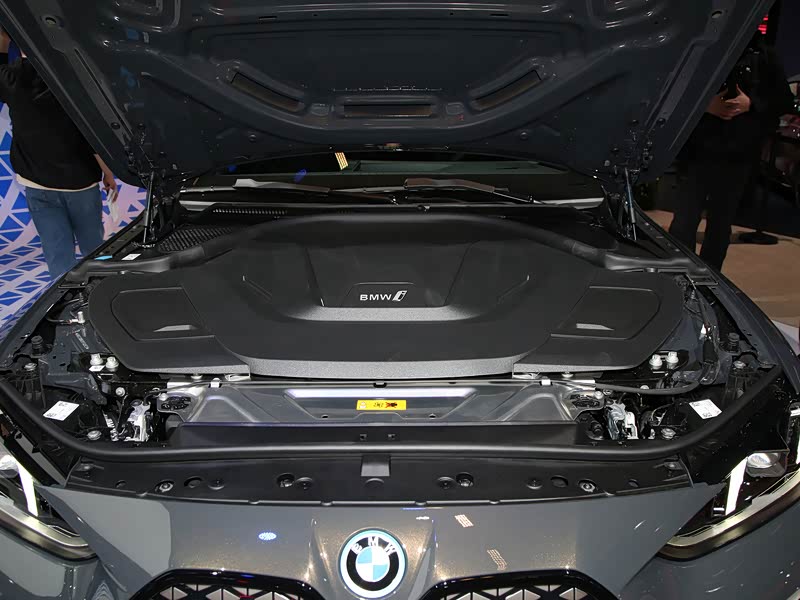
New kinetic energy grows stronger. Among the industries above designated size [11], the added value of equipment manufacturing [12] increased by 6.8% over the previous year, accounting for 33.6% of the added value of industries above designated size; The added value of high-tech manufacturing [13] increased by 2.7%, accounting for 15.7% of the added value of industrial enterprises above designated size. The output of new energy vehicles was 9.443 million, an increase of 30.3% over the previous year; The output of solar cells (photovoltaic cells) was 540 million kilowatts, an increase of 54.0%; The output of service robots was 7.833 million sets, an increase of 23.3%; The output of 3D printing equipment was 2.789 million units, an increase of 36.2%. Among the above-scale service industries [14], the operating income of strategic emerging service industries [15] increased by 7.7% over the previous year. Investment in high-tech industries [16] increased by 10.3% over the previous year, and investment in technological transformation of manufacturing industry [17] increased by 3.8%. The transaction volume of e-commerce was [18] 468.273 billion yuan, an increase of 9.4% over the previous year. Online retail sales reached 15,426.4 billion yuan, an increase of 11.0% over the previous year. In the whole year, 32.73 million new business entities were established, and 27,000 new enterprises were established every day.
The pace of urban-rural integration and regional coordinated development is steady. At the end of the year, the urbanization rate of permanent residents in China was 66.16%, an increase of 0.94 percentage points over the end of the previous year. By region [20], the GDP of the eastern region was 652.084 billion yuan, an increase of 5.4% over the previous year; The GDP of the central region was 26,989.8 billion yuan, an increase of 4.9%; The GDP of the western region was 26,932.5 billion yuan, up by 5.5%; The GDP of Northeast China was 5,962.4 billion yuan, an increase of 4.8%. The annual GDP of Beijing-Tianjin-Hebei region was 10,444.2 billion yuan, an increase of 5.1% over the previous year; The GDP of the Yangtze River Economic Belt was 58,427.4 billion yuan, an increase of 5.5%. The GDP of the Yangtze River Delta was 30,504.5 billion yuan, an increase of 5.7%. Major regional strategies such as Guangdong-Hong Kong-Macao Greater Bay Area construction, ecological protection in the Yellow River basin and high-quality development have been further promoted.
The green and low-carbon transformation has been further promoted. The carbon dioxide emissions per 10,000 yuan of GDP in the whole year [21] were the same as that of the previous year. The electricity generated by clean energy such as hydropower, nuclear power, wind power and solar power generation was 3,190.6 billion kWh, up by 7.8% over the previous year. Among the 339 monitored cities at prefecture level and above, 59.9% of them meet the air quality standards, and 40.1% fail to meet the standards. Among the 3641 national surface water assessment sections, the proportion of sections with excellent water quality (I-III) is 89.4%, the proportion of sections with class IV is 8.4%, the proportion of sections with class V is 1.5%, and the proportion of sections with poor class V is 0.7%.
Second, agriculture
The annual grain planting area was 118.97 million hectares, an increase of 640,000 hectares over the previous year. Among them, the rice planting area was 28.95 million hectares, a decrease of 500,000 hectares; The wheat planting area was 23.63 million hectares, an increase of 110,000 hectares; The planting area of corn was 44.22 million hectares, an increase of 1.15 million hectares; The soybean planting area was 10.47 million hectares, an increase of 230,000 hectares. The cotton planting area was 2.79 million hectares, a decrease of 210,000 hectares. The oil planting area was 13.92 million hectares, an increase of 780,000 hectares. The planting area of sugar was 1.42 million hectares, a decrease of 30,000 hectares.
The annual grain output was 695.41 million tons, an increase of 8.88 million tons or 1.3% over the previous year. Among them, the output of summer grain was 146.15 million tons, a decrease of 0.8%; The output of early rice was 28.34 million tons, an increase of 0.8%; The output of autumn grain was 520.92 million tons, an increase of 1.9%. The grain output was 641.43 million tons, an increase of 1.3% over the previous year. Among them, the rice output was 206.6 million tons, a decrease of 0.9%; The wheat output was 136.59 million tons, a decrease of 0.8%; The output of corn was 288.84 million tons, an increase of 4.2%. Soybean output was 20.84 million tons, an increase of 2.8%.
The annual cotton output was 5.62 million tons, a decrease of 6.1% over the previous year. The oil output was 38.64 million tons, an increase of 5.7%. The output of sugar was 115.04 million tons, an increase of 2.4%. The output of tea was 3.55 million tons, an increase of 6.1%.
The annual output of pigs, cattle, sheep and poultry was 96.41 million tons, up by 4.5% over the previous year. Among them, the output of pork was 57.94 million tons, an increase of 4.6%; The beef output was 7.53 million tons, an increase of 4.8%; The mutton output was 5.31 million tons, an increase of 1.3%; The output of poultry meat was 25.63 million tons, up by 4.9%. The output of poultry eggs was 35.63 million tons, an increase of 3.1%. The milk output was 41.97 million tons, an increase of 6.7%. At the end of the year, there were 434.22 million live pigs, down 4.1% from the end of last year. In 2001, 726.62 million pigs were slaughtered, up 3.8% over the previous year.
The total output of aquatic products in the year was 71 million tons, an increase of 3.4% over the previous year. Among them, the aquaculture output was 58.12 million tons, an increase of 4.4%; The fishing output was 12.88 million tons, down by 1.0%.
The annual timber output was 119.44 million cubic meters, down 2.0% from the previous year.
In the whole year, 5.74 million hectares of high-standard farmland were built, renovated and upgraded, and 1.64 million hectares of high-efficiency water-saving irrigation were added.
III. Industry and Construction Industry
The total industrial added value of the whole year was 39,910.3 billion yuan, up by 4.2% over the previous year. The added value of industrial enterprises above designated size increased by 4.6%. In industries above designated size, the added value of state-owned holding enterprises increased by 5.0% according to economic types; Joint-stock enterprises increased by 5.3%, and foreign-invested enterprises from Hong Kong, Macao and Taiwan increased by 1.4%; Private enterprises increased by 3.1%. In terms of categories, the mining industry grew by 2.3%, the manufacturing industry by 5.0%, and the electricity, heat, gas and water production and supply industries by 4.3%.
Among the industries above designated size, the added value of agricultural and sideline food processing industry increased by 0.2% over the previous year, textile industry decreased by 0.6%, chemical raw materials and chemical products manufacturing industry increased by 9.6%, non-metallic mineral products industry decreased by 0.5%, ferrous metal smelting and rolling processing industry increased by 7.1%, general equipment manufacturing industry increased by 2.0%, special equipment manufacturing industry increased by 3.6%, automobile manufacturing industry increased by 13.0%, and electrical machinery and equipment manufacturing industry increased by 12.9%.
The annual profit of industrial enterprises above designated size was 7,685.8 billion yuan, down 2.3% from the previous year. In terms of economic types, the profits of state-owned holding enterprises were 2,262.3 billion yuan, down 3.4% from the previous year; Joint-stock enterprises reached 5,677.3 billion yuan, down by 1.2%, and foreign-invested enterprises from Hong Kong, Macao and Taiwan reached 1,797.5 billion yuan, down by 6.7%. Private enterprises reached 2,343.8 billion yuan, an increase of 2.0%. In terms of categories, the profit of the mining industry was 1,239.2 billion yuan, down 19.7% from the previous year; The manufacturing industry was 5,764.4 billion yuan, down 2.0%; Electricity, heat, gas and water production and supply industries reached 682.2 billion yuan, an increase of 54.7%. The cost per 100 yuan of operating income of industrial enterprises above designated size was 84.76 yuan, an increase of 0.04 yuan over the previous year; The profit rate of operating income was 5.76%, down by 0.20 percentage points. At the end of the year, the asset-liability ratio of industrial enterprises above designated size was 57.1%, down 0.1 percentage point from the end of the previous year. The annual utilization rate of industrial capacity above designated size [24] was 75.1%.
According to preliminary accounting, the total primary energy production in the whole year was 4.83 billion tons of standard coal, up by 4.2% over the previous year.
At the end of the year, the installed capacity of power generation in China was 2,919.65 million kilowatts, an increase of 13.9% over the end of last year. Among them, [26], the installed capacity of thermal power is 1,390.32 million kilowatts, an increase of 4.1%; The installed capacity of hydropower was 421.54 million kilowatts, an increase of 1.8%; The installed capacity of nuclear power was 56.91 million kilowatts, an increase of 2.4%; The installed capacity of grid-connected wind power is 441.34 million kilowatts, an increase of 20.7%; The installed capacity of grid-connected solar power generation is 609.49 million kilowatts, an increase of 55.2%.
The added value of the construction industry in the whole year was 8,569.1 billion yuan, an increase of 7.1% over the previous year. The profit of general contracting and professional contracting construction enterprises with qualification grade in China was 832.6 billion yuan, up [27]0.2% over the previous year, of which 401.9 billion yuan was state-owned holding enterprises, up 4.3%.
Fourth, the service industry
The added value of wholesale and retail industry in the whole year was 12,307.2 billion yuan, an increase of 6.2% over the previous year; The added value of transportation, warehousing and postal services was 5,782 billion yuan, an increase of 8.0%; The added value of accommodation and catering industry was 2,102.4 billion yuan, an increase of 14.5%; The added value of the financial industry was 1,067.7 billion yuan, an increase of 6.8%; The added value of the real estate industry was 7,372.3 billion yuan, down by 1.3%; The added value of information transmission, software and information technology services was 5,519.4 billion yuan, an increase of 11.9%; The added value of leasing and business services was 4,434.7 billion yuan, up by 9.3%. The operating income of service enterprises above designated size increased by 8.3% over the previous year, and the total profit increased by 26.8%.
The total cargo transportation in the whole year was [28] 55.7 billion tons, an increase of 8.1% over the previous year. The turnover of cargo transportation was 24,771.3 billion tons kilometers, up by 6.3%. The port’s cargo throughput was 17 billion tons, up 8.2% over the previous year, of which the foreign trade cargo throughput was 5 billion tons, up 9.5%. The port container throughput was 310.34 million TEUs, up by 4.9%.
The total number of passengers transported in the whole year was 9.3 billion, an increase of 66.5% over the previous year. Passenger transport turnover was 2,861 billion person-kilometers, an increase of 121.4%.
At the end of the year, there were 336.18 million civilian cars (including 7.06 million tricycles and low-speed trucks), an increase of 17.14 million over the end of last year, of which 294.27 million were private cars, an increase of 15.53 million. The number of civilian cars was 186.68 million, an increase of 9.28 million, including 175.41 million private cars, an increase of 8.56 million.
In 2001, the postal delivery business totaled [2.9] 162.5 billion pieces, an increase of 16.8% over the previous year. The postal industry completed 970 million postal mail services, 200 million parcel services, 132.07 billion express delivery services and 1,207.4 billion yuan in express delivery services. In 2001, the total telecom business volume reached 1,832.7 billion yuan, up by 16.8% over the previous year. By the end of the year, there were 11.62 million mobile phone base stations, including 6.29 million 4G base stations and 3.38 million 5G base stations. The total number of telephone users in China is 1,899.92 million, including 1,726.6 million mobile phone users. The mobile phone penetration rate is 122.5/100 people. There were [32] 636.31 million fixed Internet broadband access users, an increase of 46.66 million over the end of last year, among which [33] 601.36 million broadband access users with a speed of 100M or above, an increase of 47.56 million. There are 2.332 billion end users of cellular Internet of Things [34], an increase of 488 million. There are 1.092 billion Internet users, including 1.091 billion mobile Internet users. The Internet penetration rate is 77.5%, of which the Internet penetration rate in rural areas is 66.5%. In 2001, the access traffic of mobile Internet users was 301.5 billion GB, up by 15.2% over the previous year. Software and information technology service industry [35] completed software business income of 12,325.8 billion yuan, an increase of 13.4% over the previous year.
V. Domestic trade
The total retail sales of consumer goods in the whole year was 47,149.5 billion yuan, an increase of 7.2% over the previous year. According to the business location, the retail sales of urban consumer goods was 40,749 billion yuan, an increase of 7.1%; The retail sales of rural consumer goods reached 6.4 trillion yuan, an increase of 8.0%. By consumption type, the retail sales of commodities reached 41,860.5 billion yuan, an increase of 5.8%; The catering revenue was 5,289 billion yuan, an increase of 20.4%. Retail sales of services [36] increased by 20.0% over the previous year.
Among the retail sales of commodities above designated size, the retail sales of grain, oil and food increased by 5.2% over the previous year, beverages increased by 3.2%, alcohol and tobacco increased by 10.6%, clothing, shoes and hats, knitwear increased by 12.9%, cosmetics increased by 5.1%, gold and silver jewelry increased by 13.3%, daily necessities increased by 2.7%, household appliances and audio-visual equipment increased by 0.5%, and Chinese and western medicines increased by 0.5%. Cultural office supplies decreased by 6.1%, furniture increased by 2.8%, communication equipment increased by 7.0%, petroleum and products increased by 6.6%, automobiles increased by 5.9%, and building and decoration materials decreased by 7.8%.
The annual online retail sales of physical goods reached 13,017.4 billion yuan, an increase of 8.4% over the previous year, accounting for 27.6% of the total retail sales of social consumer goods.
VI. Investment in fixed assets
In the whole year, the investment in fixed assets of the whole society was 50,970.8 billion yuan, an increase of [37]2.8% over the previous year. Investment in fixed assets (excluding farmers) was 50,303.6 billion yuan, an increase of 3.0%. In fixed assets investment (excluding farmers), by region [38], investment in the eastern region increased by 4.4%, investment in the central region increased by 0.3%, investment in the western region increased by 0.1%, and investment in the northeast region decreased by 1.8%.
In fixed assets investment (excluding farmers), the investment in the primary industry was 1,008.5 billion yuan, down 0.1% from the previous year; Investment in the secondary industry was 16,213.6 billion yuan, an increase of 9.0%; Investment in the tertiary industry was 33,081.5 billion yuan, an increase of 0.4%. Infrastructure investment [39] increased by 5.9%. Investment in social fields [40] increased by 0.5%. Private investment in fixed assets [4.1] was 25,354.4 billion yuan, down by 0.4%; Among them, private investment in manufacturing increased by 9.4%, and private investment in infrastructure increased by 14.2%.
The annual investment in real estate development was 11,091.3 billion yuan, down [43]9.6% from the previous year. Among them, residential investment was 8,382 billion yuan, down 9.3%; The investment in office buildings was 453.1 billion yuan, down by 9.4%; Investment in commercial premises was 805.5 billion yuan, down by 16.9%. The annual sales area of newly-built commercial housing was [44] 1,117.35 million square meters. The online signing area of second-hand housing transaction is [45] 708.82 million square meters. At the end of the year, the area of new commercial housing for sale was 672.95 million square meters, of which the area of commercial housing for sale was 331.19 million square meters.
In the whole year, 1.59 million shanty towns were renovated, and 1.93 million were basically completed. Construction of affordable rental housing started and 2.13 million sets (rooms) were raised. Newly started renovation of 53,700 old urban communities, involving 8.97 million residents.
VII. Foreign Economy
The total import and export volume of goods in the whole year was 41,756.8 billion yuan, an increase of 0.2% over the previous year. Among them, exports were 23,772.6 billion yuan, an increase of 0.6%; Imports reached 1,798.42 billion yuan, down 0.3%. The import and export surplus of goods was 5,788.3 billion yuan, an increase of 193.8 billion yuan over the previous year. The import and export volume of countries that jointly built the "Belt and Road" [46] was 1,947.19 billion yuan, an increase of 2.8% over the previous year. Among them, exports were 10,731.4 billion yuan, an increase of 6.9%; Imports reached 8,740.5 billion yuan, down 1.9%. The import and export volume to other member countries of the Regional Comprehensive Economic Partnership Agreement (RCEP) [47] was 12,596.7 billion yuan, down by 1.6% over the previous year. The import and export volume of private enterprises was 22,360.1 billion yuan, an increase of 6.3% over the previous year, accounting for 53.5% of the total import and export volume.
The total import and export of services in the year was 6,575.4 billion yuan, an increase of 10.0% over the previous year. Among them, exports were 2,685.7 billion yuan, down 5.8%; Imports reached 3,889.8 billion yuan, up by 24.4%. The service import and export deficit was 1,204.1 billion yuan.
In 2001, 53,766 enterprises were newly established by foreign direct investment, an increase of 39.7% over the previous year. The actual use of foreign direct investment was 1,133.9 billion yuan, down 8.0%, equivalent to 163.3 billion US dollars, down 13.7%. Among them, 13,649 newly established enterprises have invested directly in China (including investment in China through some free ports) by countries that jointly built the Belt and Road Initiative, an increase of 82.7%; The direct investment in China was 122.1 billion yuan, down 11.4%, or 17.6 billion dollars, down 16.7%. The actual use of foreign capital in high-tech industries was 423.3 billion yuan, down 4.9%, or 61 billion US dollars, down 10.8%.
The foreign non-financial direct investment in the whole year was 917 billion yuan, up by 16.7% over the previous year, accounting for 130.1 billion US dollars, up by 11.4%. Among them, the non-financial direct investment in countries that jointly built the "Belt and Road" was 224.1 billion yuan, up by 28.4%, accounting for 31.8 billion US dollars, up by 22.6%.
In 2001, the turnover of foreign contracted projects was 1,133.9 billion yuan, an increase of 8.8% over the previous year, equivalent to 160.9 billion US dollars, an increase of 3.8%. Among them, the turnover of countries that jointly built the "Belt and Road" was 132.1 billion US dollars, an increase of 4.8%, accounting for 82.1% of the turnover of foreign contracted projects. Foreign labor cooperation sent 350,000 laborers of various types.
VIII. Finance and finance
In the whole year, the national general public budget revenue was 21,678.4 billion yuan, an increase of 6.4% over the previous year; Among them, the tax revenue was 18,112.9 billion yuan, an increase of 8.7%. The national general public budget expenditure was 27,457.4 billion yuan, an increase of 5.4% over the previous year. The annual tax reduction and fee reduction and tax refund deferred fees exceeded 2.2 trillion yuan.
At the end of the year, the balance of broad money supply (M2) was 292.3 trillion yuan, an increase of 9.7% over the end of last year. The balance of narrow money supply (M1) was 68.1 trillion yuan, up by 1.3%; The balance of money in circulation (M0) was 11.3 trillion yuan, an increase of 8.3%.
In the whole year, the scale of social financing increased by [48]35.6 trillion yuan, 3.4 trillion yuan more than the previous year. At the end of the year, the stock of social financing scale was [49]378.1 trillion yuan, an increase of 9.5% compared with the end of the previous year, of which the balance of RMB loans to the real economy was 235.5 trillion yuan, an increase of 10.4%. At the end of the year, the balance of local and foreign currency deposits of all financial institutions was 289.9 trillion yuan, an increase of 25.4 trillion yuan over the beginning of the year, of which the balance of RMB deposits was 284.3 trillion yuan, an increase of 25.7 trillion yuan. The balance of local and foreign currency loans of all financial institutions was 242.2 trillion yuan, up 22.2 trillion yuan, of which the balance of RMB loans was 237.6 trillion yuan, up 22.7 trillion yuan. The balance of RMB Pratt & Whitney small and micro loans [50] was 29.4 trillion yuan, an increase of 5.6 trillion yuan. The balance of medium-and long-term loans in RMB manufacturing industry was 12.2 trillion yuan, an increase of 3.1 trillion yuan.
At the end of the year, the balance of RMB loans of major rural financial institutions (rural credit cooperatives, rural cooperative banks and rural commercial banks) was 29,358.4 billion yuan, an increase of 2,636.3 billion yuan over the beginning of the year. The balance of RMB consumer loans of all financial institutions was 57,943.8 billion yuan, an increase of 1,099.2 billion yuan. Among them, the balance of short-term consumer loans of households was 10,354.1 billion yuan, an increase of 507.8 billion yuan; The balance of long-term consumer loans for households was 47,589.7 billion yuan, an increase of 591.4 billion yuan.
In the whole year, the accumulated fund-raising of A shares in Shanghai and Shenzhen Stock Exchanges was 1,073.4 billion yuan, a decrease of 437.5 billion yuan over the previous year. The Shanghai and Shenzhen Stock Exchanges initially issued 236 listed A shares, raising 341.8 billion yuan, a decrease of 228.6 billion yuan over the previous year, including 67 science and technology innovation board stocks, raising 143.9 billion yuan; The refinancing of A shares in Shanghai and Shenzhen Stock Exchanges (including public issuance, private placement, allotment, preference shares and convertible bonds) was 731.6 billion yuan, a decrease of 208.9 billion yuan. The Beijing Stock Exchange publicly issued 77 shares, raising [52] 14.6 billion yuan. Throughout the year, various entities raised 13,067.7 billion yuan by issuing bonds (including corporate bonds, asset-backed securities, government bonds, local government bonds and policy bank bonds) through the Shanghai and Shenzhen Stock Exchanges, among which the Shanghai and Shenzhen Stock Exchanges issued 40 REITs in the listed infrastructure sector, raising 91.4 billion yuan. There are 6241 listed companies in the national share transfer system for small and medium-sized enterprises [53], and the listed companies have raised 18 billion yuan in accumulated shares throughout the year.
Corporate credit bonds [54] were issued in 13.8 trillion yuan, an increase of 0.1 trillion yuan over the previous year.
In the whole year, the original insurance premium income of insurance companies was 5,124.7 billion yuan, an increase of 9.1% over the previous year. Among them, the original insurance premium income of life insurance business was 2,764.6 billion yuan, the original insurance premium income of health insurance and accidental injury insurance business was 999.3 billion yuan, and the original insurance premium income of property insurance business was 1,360.7 billion yuan. Pay all kinds of reparations and pay 1,888.3 billion yuan. Among them, life insurance paid 550.5 billion yuan, health insurance and accident insurance paid 420.7 billion yuan, and property insurance paid 917.1 billion yuan.
Income, consumption and social security of residents
In the whole year, the per capita disposable income of the national residents was 39,218 yuan, up by 6.3% over the previous year. After deducting the price factor, the real increase was 6.1%. The median per capita disposable income of the national residents was 33,036 yuan, an increase of 5.3%. According to the place of permanent residence, the per capita disposable income of urban residents was 51,821 yuan, an increase of 5.1% over the previous year, and the real increase was 4.8% after deducting the price factor. The median per capita disposable income of urban residents was 47,122 yuan, an increase of 4.4%. The per capita disposable income of rural residents was 21,691 yuan, an increase of 7.7% over the previous year. After deducting the price factor, the real increase was 7.6%. The median per capita disposable income of rural residents was 18,748 yuan, an increase of 5.7%. The per capita disposable income ratio of urban and rural residents was 2.39, 0.06 lower than that of the previous year. Divided into five equal income groups [57], the per capita disposable income of low-income group is 9215 yuan, the per capita disposable income of lower-middle income group is 20442 yuan, the per capita disposable income of middle-income group is 32195 yuan, the per capita disposable income of upper-middle income group is 50220 yuan, and the per capita disposable income of high-income group is 95055 yuan. The average monthly income of migrant workers nationwide was 4,780 yuan, an increase of 3.6% over the previous year. The per capita disposable income of rural residents in poverty-stricken counties [58] was 16,396 yuan, an increase of 8.5% over the previous year, and the real increase was 8.4% after deducting the price factor.
In the whole year, the per capita consumption expenditure of the national residents was 26,796 yuan, an increase of 9.2% over the previous year. After deducting the price factor, the actual increase was 9.0%. Among them, the per capita service consumption expenditure [59] was 12,114 yuan, an increase of 14.4% over the previous year, accounting for 45.2% of the per capita consumption expenditure of residents. According to the place of permanent residence, the per capita consumption expenditure of urban residents was 32,994 yuan, an increase of 8.6%. After deducting the price factor, the actual increase was 8.3%. The per capita consumption expenditure of rural residents was 18,175 yuan, an increase of 9.3%. After deducting the price factor, the actual increase was 9.2%. The Engel’s coefficient of national residents is 29.8%, including 28.8% in cities and towns and 32.4% in rural areas.
At the end of the year, the number of people participating in the basic old-age insurance for urban workers nationwide was 521.21 million, an increase of 17.66 million over the end of the previous year. The number of people participating in the basic old-age insurance for urban and rural residents was 545.22 million, a decrease of 4.3 million. The number of people who participated in the basic medical insurance was 1,333.87 million, including 370.94 million employees and 962.93 million urban and rural residents. The number of people participating in unemployment insurance was 243.73 million, an increase of 5.66 million. The number of people receiving unemployment insurance benefits was 3.52 million. The number of people participating in industrial injury insurance was 301.7 million, an increase of 10.54 million. 249.07 million people participated in maternity insurance. At the end of the year, there were 6.64 million people enjoying the urban minimum living security, 33.99 million people enjoying the rural minimum living security, 4.35 million people enjoying the assistance and support of the extremely poor people in rural areas, and 7.42 million people received temporary assistance throughout the year. In the whole year, 8.34 million veterans and other special care recipients received regular state pensions and living allowances.
At the end of the year, there were 44,000 civil service organizations providing accommodation in China, including 41,000 institutions for the aged and 971 institutions for the welfare, assistance and protection of children. There are 8.463 million beds for civil affairs services, including 8.201 million beds for the aged and 98,000 beds for children’s welfare and rescue and protection institutions.
X. Science, Technology and Education
The annual expenditure on research and experimental development (R&D) was 3,327.8 billion yuan, up by 8.1% over the previous year, accounting for 2.64% of the GDP, of which the basic research expenditure was 221.2 billion yuan, up by 9.3% over the previous year, accounting for 6.65% of the R&D expenditure. The National Natural Science Foundation supported 52,500 projects. By the end of the year, there were 207 national engineering research centers and 1798 national enterprise technology centers under the new sequence management. The National Scientific and Technological Achievements Transformation Guidance Fund has set up 36 sub-funds with a total capital of 62.4 billion yuan. There are 1,606 state-level science and technology business incubators [64], and 2,376 national record creation spaces [65]. In the whole year, 921,000 invention patents were granted, an increase of 15.3% over the previous year. The number of PCT patent applications accepted was [66] 74,000. By the end of the year, there were 4.991 million valid invention patents, an increase of 18.5% over the end of the previous year. The number of high-value invention patents per 10,000 population is [67]11.8. In 2001, 4.383 million trademarks were registered, a decrease of 29.0% over the previous year. In 2001, 950,000 technical contracts were signed, with a turnover of 6,147.6 billion yuan, an increase of 28.6% over the previous year. The proportion of Chinese citizens with scientific literacy [68] reached 14.14%. 66 space launches were successfully completed throughout the year. The missions of Tianzhou-6, Shenzhou-16 and Shenzhou-17 have been implemented one after another, and the China Space Station has entered the stage of application and development.Suzaku II, the world’s first liquid oxygen methane rocket, was successfully launched. The prototype of quantum computing was successfully built in Chapter 9 and 3. The fully superconducting tokamak nuclear fusion experimental device realized steady-state high confinement mode plasma operation for 403 seconds. The world’s first fourth-generation nuclear power plant high-temperature gas-cooled reactor demonstration project was put into commercial operation. The world’s first 16 MW offshore wind turbine is connected to the grid for power generation. C919 large passenger plane officially put into commercial operation. The first domestic large-scale cruise ship completed the trial. Endeavor manned submersible completed extreme deep dive.
At the end of the year, there were 877 national quality inspection centers in China. There are 1242 certification bodies for product quality, system and service in China, and 1.02 million enterprises have been certified. In the whole year, 2,902 national standards were formulated and revised, of which 1,708 were newly formulated. The annual qualified rate of manufacturing products [69] was 93.65%.
In the whole year, there were 1.302 million students enrolled in postgraduate education, 3.883 million graduate students and 1.015 million graduates. General and vocational colleges [70] enrolled 10.422 million students, 37.75 million students and 10.470 million graduates. Secondary vocational education [71] enrolled 6.165 million students, 17.379 million students and 5.371 million graduates. Ordinary high schools have 9.678 million students, 28.036 million students and 8.604 million graduates. Junior high school enrolled 17.546 million students, 52.437 million students and 16.236 million graduates. Ordinary primary schools enrolled 18.779 million students, 108.36 million students and 17.635 million graduates. Special education enrolled 155,000 students, 912,000 students and 173,000 graduates. There are 40.93 million children in preschool education. The consolidation rate of nine-year compulsory education is 95.7%, and the gross enrollment rate in senior high school is 91.8%.
XI. Cultural Tourism, Health and Sports
At the end of the year, there were 1893 art performance groups affiliated to the national cultural and tourism departments. There are 3,309 public libraries in China, with a total circulation of [72] 1,126.68 million people. There are 3508 cultural centers. There are 202 million cable TV users, including 193 million cable digital TV users. At the end of the year, the comprehensive population coverage rate of radio programs was 99.7%, and that of TV programs was 99.8%. In the whole year, 156 TV series with 4632 episodes and 93811 minutes of TV cartoons were produced. Produced 792 story films and 179 science, education, documentary, animation and special films [73]. It has published 25.8 billion newspapers, 1.8 billion periodicals and 11.9 billion books, with a per capita book possession of [74]8.40 books. By the end of the year, there were 4,154 archives in China, and 238.27 million volumes (pieces) of various archives had been opened. In the whole year, the operating income of cultural and related industries enterprises above designated size was 12,951.5 billion yuan, an increase of 8.2% over the previous year.
In the whole year, there were 4.89 billion domestic trips, an increase of 93.3% over the previous year. Among them, urban residents made 3.76 billion domestic trips, an increase of 94.9%; Rural residents made 1.13 billion domestic trips, an increase of 88.5%. Domestic tourists spent a total of 4,913.3 billion yuan, an increase of 140.3%. Among them, urban residents spent 4,178.1 billion yuan on travel, an increase of 147.5%; Rural residents spent 735.3 billion yuan on outings, an increase of 106.4%. There were 82.03 million inbound tourists, including 13.78 million foreigners and 68.24 million compatriots from Hongkong, Macau and Taiwan Province. Inbound tourists spend a total of $53 billion. There were 100.96 million domestic residents leaving the country, including 96.84 million for private reasons and 77.04 million for Hong Kong, Macao and Taiwan.
At the end of the year, there were 1.071 million medical and health institutions in China, including 39,000 hospitals, 12,000 public hospitals and 27,000 private hospitals. There are 1.016 million primary medical and health institutions, including 34,000 township hospitals, 37,000 community health service centers (stations), 362,000 outpatient departments (institutes) and 583,000 village clinics. There are 12,000 professional public health institutions, including 3,426 centers for disease control and prevention and 2,791 health supervision centers. There are 12.47 million health technicians, including 4.78 million licensed doctors and assistant licensed doctors and 5.63 million registered nurses. There are 10.2 million beds in medical and health institutions, including 8 million in hospitals and 1.51 million in township hospitals. In the whole year, the total number of visits was [7.5] 9.56 billion, and the number of discharges was [7.6] 300 million.
By the end of the year, there were [774] 4.593 million sports venues in China, with an area of [784] 4.07 billion square meters, with a per capita sports venue area of 289 square meters. In the whole year, Chinese athletes won 165 world championships in 32 events, creating 20 world records. At the 19th Asian Games in Hangzhou, Chinese athletes won a total of 201 gold medals, with a total of 383 medals, ranking first in the gold medal list of the 11th Asian Games. China’s disabled athletes won 231 world championships in 45 international competitions. At the 4th Asian Para Games in Hangzhou, Chinese athletes won a total of 214 gold medals, with a total of 521 medals, ranking first in the gold medal list and medal list of the 4th Asian Para Games.
XII. Resources, Environment and Emergency Management
In the whole year, the total supply of state-owned construction land in China was [79] 749,000 hectares, down by 2.1% over the previous year. Among them, industrial and mining storage land was 175,000 hectares, down by 11.9%; Real estate land [800] 84,000 hectares, down by 23.3%; Infrastructure land was 490,000 hectares, an increase of 7.2%.
The total amount of water resources in the whole year was 2,478 billion cubic meters. The total water consumption was 590.7 billion cubic meters, down 1.5% from the previous year. Among them, domestic water consumption increased by 0.5%, industrial water consumption increased by 0.2%, agricultural water consumption decreased by 2.9%, and artificial ecological environment water supply increased by 3.9%. Ten thousand yuan of GDP water consumption [81]50 cubic meters, down 6.4%. The water consumption per 10,000 yuan of industrial added value was 26 cubic meters, down 3.9%. The per capita water consumption was 419 cubic meters, down by 1.4%.
The afforestation area was 4 million hectares, including 1.33 million hectares of artificial afforestation, accounting for 33.4% of the total afforestation area. The improved area of planting grass is [82] 4.38 million hectares. By the end of the year, there were 5 national parks. The area of soil erosion control increased by 63,000 square kilometers in the whole year.
According to preliminary accounting, the total energy consumption in the whole year was 5.72 billion tons of standard coal, an increase of 5.7% over the previous year. Coal consumption increased by 5.6%, crude oil consumption increased by 9.1%, natural gas consumption increased by 7.2% and electricity consumption increased by 6.7%. Coal consumption accounted for 55.3% of the total energy consumption, down 0.7 percentage points from the previous year; The consumption of clean energy such as natural gas, hydropower, nuclear power, wind power and solar power accounted for 26.4% of the total energy consumption, up by 0.4 percentage points. The comprehensive energy consumption per unit of calcium carbide decreased by 0.8%, the comprehensive energy consumption per unit of synthetic ammonia increased by 0.9%, the comprehensive energy consumption per ton of steel increased by 1.6%, the comprehensive energy consumption per unit of electrolytic aluminum decreased by 0.1%, and the standard coal consumption per kWh of thermal power generation decreased by 0.2%. According to preliminary calculation, after deducting the energy consumption of raw materials and non-fossil energy, the energy consumption per 10,000 yuan of GDP in China [83] decreased by 0.5% compared with the previous year. The volume of carbon emission quota [84] in the national carbon emission trading market was 212 million tons, with a turnover of 14.44 billion yuan.
In the whole year, the coastal waters [85] reached the national Grade I and II seawater quality standards, accounting for 85.0%, Grade III seawater accounting for 4.5%, and Grade IV and Grade IV seawater accounting for 10.5%.
Among the 339 monitored cities at prefecture level and above, the average annual concentration of fine particulate matter (PM2.5) was 30 μ g/m3, up by 3.4% over the previous year.
Among the 326 cities that carry out daytime monitoring of urban regional acoustic environment, 5.8% cities have good acoustic environment quality, 69.3% cities have good acoustic environment quality, 23.9% cities have average acoustic environment quality, and 0.9% cities have poor acoustic environment quality.
The annual average temperature was 10.71℃, 0.21℃ higher than the previous year. A total of six typhoons landed.
The area affected by crops in the whole year was 10.54 million hectares, of which 980,000 hectares were never harvested. The direct economic losses caused by floods and geological disasters are 245.1 billion yuan, the direct economic losses caused by drought disasters are 20.6 billion yuan, the direct economic losses caused by low-temperature freezing and snow disasters are 4.9 billion yuan, and the direct economic losses caused by marine disasters are 2.5 billion yuan. There were 11 earthquakes of magnitude 5.0 or above, resulting in direct economic losses of 15.3 billion yuan. A total of 328 forest fires occurred, and the affected forest area was about 0.4 million hectares.
A total of 21,242 people died in various production safety accidents in the whole year, down [86]4.7% from the previous year. There were 100,000 employees in industrial, mining and commercial enterprises, and 1.244 people died in production safety accidents, up by 4.2% over the previous year. The number of deaths per million tons in coal mines was 0.094, up by 23.7%. The number of deaths per 10,000 vehicles in road traffic accidents was 1.38, down by 5.5%.
Notes:
[1] The data in this bulletin are preliminary statistics. The statistics do not include Hong Kong Special Administrative Region, Macao Special Administrative Region and Taiwan Province. Due to rounding, some data are not equal to the total of sub-items.
[2] The absolute figures of GDP, added value of tertiary industries and related industries, regional GDP, per capita GDP and gross national income are calculated at current prices, and the growth rate is calculated at constant prices.
[3] Gross national income, formerly known as gross national product, refers to the total initial distribution income obtained by all permanent units in a country or region within a certain period of time, which is equal to the gross domestic product plus the net initial distribution income from abroad.
[4] The total labor productivity is the ratio of gross domestic product (calculated at 2020 prices) to all employed people.
[5] The national population refers to the population of 31 provinces, autonomous regions and municipalities directly under the Central Government and active servicemen in mainland China, excluding Hong Kong, Macao and Taiwan residents and foreigners living in 31 provinces, autonomous regions and municipalities directly under the Central Government.
[6] By the end of 2023, the population aged 0-14 (including those under the age of 15) was 230.63 million, and the population aged 15-59 (including those under the age of 60) was 882.07 million.
[7] The number of new jobs in cities and towns refers to the difference between the cumulative number of new jobs in cities and towns and the number of natural attrition during the reporting period.
[8] The annual number of migrant workers includes migrant workers who have been employed outside their own towns for 6 months or more and local migrant workers who have been engaged in non-agricultural industries in their own towns for 6 months or more.
[9] The producer price of agricultural products refers to the price when agricultural producers sell their products first-hand.
[10] Housing prices include rental housing rent, housing maintenance and management, water and electricity fuel, and self-owned housing service prices.
[11] Due to the changes in the survey scope stipulated in the statistical survey system, statistical law enforcement, elimination of duplicate data and other factors, the growth rate and changes of relevant indicators of industrial enterprises above designated size in 2023 are calculated according to comparable caliber.
[12] Equipment manufacturing industry includes metal products industry, general equipment manufacturing industry, special equipment manufacturing industry, automobile manufacturing industry, railway, ship, aerospace and other transportation equipment manufacturing industry, electrical machinery and equipment manufacturing industry, computer, communication and other electronic equipment manufacturing industry, and instrument manufacturing industry.
[13] High-tech manufacturing includes pharmaceutical manufacturing, aviation, spacecraft and equipment manufacturing, electronic and communication equipment manufacturing, computer and office equipment manufacturing, medical equipment and instrumentation manufacturing, and information chemicals manufacturing.
[14] The statistical scope of service industries above designated size includes: transportation, warehousing and postal services with an annual business income of 20 million yuan or more, information transmission, software and information technology services, water conservancy, environment and public facilities management, and health industry legal entities; Real estate (excluding real estate development and operation), leasing and business services, scientific research and technical services, and legal entities in the education industry with annual operating income of 10 million yuan or more; As well as residents’ services, repairs and other services, culture, sports and entertainment, and social work industries with annual business income of 5 million yuan or more. In 2023, the growth rate of financial indicators of service enterprises above designated size was calculated by comparable caliber.
[15] Strategic emerging service industries include service-related industries in eight major industries, including new generation information technology industry, high-end equipment manufacturing industry, new material industry, biological industry, new energy automobile industry, new energy industry, energy conservation and environmental protection industry and digital creative industry, as well as related services such as new technologies and innovation and entrepreneurship.
[16] High-tech industry investment includes six categories of high-tech manufacturing investment such as pharmaceutical manufacturing, aerospace and equipment manufacturing, and nine categories of high-tech service investment such as information services and e-commerce services.
[17] Investment in technological transformation of manufacturing industry refers to the investment made by manufacturing enterprises to upgrade existing facilities, technological conditions and production services by adopting new technologies, new processes, new equipment and new materials.
[18] E-commerce transaction volume refers to the transaction volume of goods and services realized through e-commerce trading platforms (including self-built platforms of enterprises and third-party platforms), including transactions to units and individuals. The growth rate in 2023 is calculated according to comparable caliber.
[19] Online retail sales refer to the retail sales of goods and services realized through public online trading platforms (online platforms mainly engaged in physical commodity trading, including self-built websites and third-party platforms), and the growth rate in 2023 is calculated according to comparable caliber.
[20] The eastern region refers to the ten provinces (cities) of Beijing, Tianjin, Hebei, Shanghai, Jiangsu, Zhejiang, Fujian, Shandong, Guangdong and Hainan; The central region refers to the six provinces of Shanxi, Anhui, Jiangxi, Henan, Hubei and Hunan; The western region refers to 12 provinces (autonomous regions and municipalities) of Inner Mongolia, Guangxi, Chongqing, Sichuan, Guizhou, Yunnan, Xizang, Shaanxi, Gansu, Qinghai, Ningxia and Xinjiang; Northeast China refers to Liaoning, Jilin and Heilongjiang provinces.
[21] Ten thousand yuan of GDP carbon dioxide emissions are calculated at 2020 prices.
[22] See Note [11].
[23] The data of steel output includes repeated processing of steel between enterprises.
[24] Capacity utilization refers to the ratio of actual output to production capacity (both measured in value). The actual output of an enterprise refers to the total industrial output value of the enterprise during the reporting period; The production capacity of an enterprise refers to the product output that the enterprise can realize and maintain for a long time when the production equipment (machinery) keeps normal operation under the condition of guaranteed supply of labor, raw materials, fuel and transportation during the reporting period.
[25] Thermal power includes coal-fired power generation, oil-fired power generation, gas-fired power generation, waste heat, residual pressure and residual gas power generation, garbage incineration power generation and biomass power generation.
[26] A small amount of installed power generation capacity (such as geothermal) is not listed in the bulletin.
[27] The profit growth rate of construction enterprises is calculated by comparable caliber. There are incomparable factors between the data of the reporting period and the published data of the same period last year, so it is impossible to directly compare and calculate the growth rate. The main reasons are as follows: ① Strengthen data quality audit, and eliminate relevant data whose main business does not belong to the construction industry. ② Strengthen statistical law enforcement inspection, and correct the data of problems found in accordance with relevant regulations.
[28] The total volume and turnover of cargo transportation include the five modes of transportation: railway, highway, waterway, civil aviation and pipeline, and the growth rate in 2023 is calculated according to comparable caliber.
[29] The total delivery business in the postal industry refers to the total number of enterprises engaged in various postal universal service businesses and express delivery businesses.
[30] The total telecom business is calculated at the price of last year.
[31] The number of mobile phone base stations refers to the number of wireless transceiver equipment serving the community at the end of the reporting period, which handles wireless communication between base stations and mobile stations, plays a relay role between mobile switches and mobile stations, and monitors the quality of wireless transmission.
[32] Fixed Internet broadband access users refer to users who registered in telecom enterprises at the end of the reporting period and accessed the public Internet through xDSL, FTTx+LAN, FTTH/O and other broadband access methods and ordinary private lines.
[33] Broadband access users with 100 m rate and above refer to broadband access users with downlink rate greater than or equal to 100Mbit/s at the end of the reporting period.
[34] The end users of cellular Internet of Things refer to the users who accessed the mobile communication network and opened the Internet of Things service at the end of the reporting period. The IOT terminal is an IOT device that connects the sensing network layer and the transmission network layer to realize remote data collection and data transmission to the network layer.
[35] Software and information technology services include software development, integrated circuit design, information system integration and Internet of Things technical services, operation and maintenance services, information processing and storage support services, information technology consulting services, digital content services and other information technology services. In 2023, the growth rate of software business income of software and information technology service industry will be calculated according to comparable caliber.
[36] Retail sales of services refers to the sum of the value of non-production and non-operation services directly provided by enterprises (industrial activity units and self-employed households) to individuals and other units in the form of transactions, aiming to reflect the value of services sold by service providers in the form of money, including retail sales of service activities in transportation, accommodation, catering, education, health, sports, entertainment and other fields.
[37] The growth rate of fixed assets investment related indicators is calculated by comparable caliber. There are incomparable factors between the data of the reporting period and the published data of the same period last year, so it is impossible to directly compare and calculate the growth rate. The main reasons are as follows: ① Improve and perfect the method of data quality audit and evaluation, and eliminate the previous land cost and cross-regional and cross-industry repeated statistical data that should not be included in the completed investment in the reporting period. (2) Strengthen the audit of investment projects under construction, and eliminate current assets, consumable biological assets and other projects that do not meet the statistical scope of fixed assets investment. ③ Strengthen statistical law enforcement inspection, and correct the data of problems found in accordance with relevant regulations.
[38] See note [20].
[39] Infrastructure investment includes investment in railway transportation, road transportation, water transportation, air transportation, pipeline transportation, multimodal transportation and transportation agency, loading and unloading, postal service, telecommunications, radio and television and satellite transmission services, Internet and related services, water conservancy management, ecological protection and environmental management, and public facilities management.
[40] Social investment includes education, health and social work, and investment in culture, sports and entertainment.
[41] Private investment in fixed assets refers to the investment in the construction or purchase of fixed assets by domestic enterprises and institutions with collective, private and individual nature and enterprises controlled by them (including absolute holding and relative holding).
[42] In addition to real estate development investment, real estate investment also includes self-built houses by construction units, property management, intermediary services and other real estate investments.
[43] The growth rate of real estate development investment and new commercial housing sales is calculated by comparable caliber. There are incomparable factors between the data of the reporting period and the published data of the same period last year, so it is impossible to directly compare and calculate the growth rate. The main reasons are: ① Strengthen the audit of real estate development projects under construction, and eliminate non-real estate development projects such as simple first-class land development. ② Strengthen the audit of commercial housing sales data, and exclude non-commercial housing sales data such as check-out and mortgage. ③ Strengthening statistical law enforcement, and correcting the data of problems found in accordance with relevant regulations.
[44] The sales area of new commercial housing refers to the total contract area of new commercial housing sold by real estate development enterprises during the reporting period.
[45] The online signing area of second-hand housing transactions refers to the total area of online signing contracts for second-hand housing transactions in cities and towns during the reporting period.
[46] The Belt and Road refers to the Silk Road Economic Belt and the 21st Century Maritime Silk Road.
[47] Other members of RCEP include Indonesia, Malaysia, Philippines, Thailand, Singapore, Brunei, Cambodia, Laos, Myanmar, Vietnam, Japan, South Korea, Australia and New Zealand.
[48] The increment of social financing scale refers to the total amount of funds obtained by the real economy from the financial system in a certain period of time.
[49] The stock of social financing scale refers to the balance of funds obtained by the real economy from the financial system at the end of a certain period (the end of the month, the end of the season or the end of the year).
[50] Pratt & Whitney small and micro loans include small and micro enterprise loans with a single household credit of less than 10 million yuan, business loans for individual industrial and commercial households, and business loans for small and micro enterprises.
[51] According to the listing date, the amount of funds raised by the Shanghai and Shenzhen Stock Exchanges includes the actual amount of convertible bonds converted into shares. In 2022 and 2023, the actual amount of convertible bonds converted into shares was 93.4 billion yuan and 83.2 billion yuan respectively.
[52] The amount of stock financing of Beijing Stock Exchange is calculated according to the listing date.
[53] The national share transfer system for small and medium-sized enterprises is a national stock exchange approved by the State Council in 2012. In the whole year, the cumulative financing of listed companies in the national share transfer system for small and medium-sized enterprises does not include preferred shares, and the stock financing is counted according to the listing date of new shares.
[54] Corporate credit bonds include non-financial corporate debt financing instruments, corporate bonds, corporate bonds and convertible bonds.
[55] The original insurance premium income refers to the original insurance contract premium income confirmed by the insurance enterprise.
[56] The median per capita disposable income refers to the per capita disposable income of all households in the middle position, which is arranged according to the per capita income level from low to high (or from high to low).
[57] The quintuple income grouping of national residents refers to arranging all the surveyed households according to the per capita income level from low to high, and dividing them into five equal parts on average. The families with the lowest income of 20% are low-income groups, and so on.
[58] Poverty alleviation counties include the original 832 national key counties for poverty alleviation and development, counties in concentrated contiguous poverty-stricken areas, and 7 cities and counties in Aksu, Xinjiang.
[59] Service consumption expenditure refers to the consumption expenditure of households for various life services, including catering services, clothing and footwear processing services, residential services, family services, transportation and communication services, education, culture and entertainment services, medical services and other services.
[60] In 2023, the number of participants in the basic medical insurance excluded some repeated participation.
[61] Poor people in rural areas refer to the rural elderly, disabled people and minors under the age of 16 who have no ability to work, no source of income, no obligation to support, support or support their legal obligations.
[62] Temporary assistance refers to the emergency and transitional assistance given by the state to families or individuals whose basic life is in trouble due to unexpected events, accidental injuries, serious diseases or other special reasons, which can not be covered by other social assistance systems for the time being or whose basic life is still in serious difficulties for the time being after assistance.
[63] In addition to adoption institutions, civil service beds also include beds in rescue institutions and community institutions.
[64] State-level science and technology business incubator refers to a science and technology business incubator that conforms to the provisions of the Administrative Measures for Science and Technology Business Incubators, aims at promoting the transformation of scientific and technological achievements, cultivating science and technology enterprises and entrepreneurship, and provides physical space, shared facilities and professional services, and is approved by the Ministry of Science and Technology.
[65] The national record creation space refers to a new innovation and entrepreneurship service platform that meets the requirements of the Guidelines for the Development of Creative Space, and has been audited and filed by the Ministry of Science and Technology in accordance with the Interim Provisions of the National Record Creation Space.
[66]PCT patent application acceptance refers to the number of PCT patent applications accepted by China National Intellectual Property Administration as the PCT patent application acceptance bureau. PCT(Patent Cooperation Treaty) is an international cooperation treaty in the patent field.
[67] The number of high-value invention patents per 10,000 population refers to the number of effective invention patents authorized by China National Intellectual Property Administration that meet any of the following conditions: invention patents in strategic emerging industries; Invention patents with the same family patent right overseas; An invention patent with a service life of more than 10 years; Invention patents with higher pledge financing amount; The invention patent won the National Science and Technology Award and the China Patent Award.
[68] Citizen’s scientific quality refers to advocating scientific spirit, establishing scientific ideas, mastering basic scientific methods, understanding necessary scientific and technological knowledge, and having the ability to analyze and judge things and solve practical problems. The data on the proportion of citizens with scientific literacy are obtained by sampling survey for citizens aged 18-69.
[69] The qualification rate of manufacturing product quality refers to the implementation of quality sampling inspection by means of product quality inspection in accordance with the prescribed methods, procedures and standards, and the number of samples judged as qualified accounts for the percentage of all sampled samples. The statistical survey samples cover 29 industries in manufacturing industry.
[70] General and vocational colleges include general undergraduate courses, vocational undergraduate courses and higher vocational colleges.
[71] Secondary vocational education includes general secondary schools, adult secondary schools, vocational high schools and technical schools.
[72] The total number of people in circulation refers to the total number of people who received library services in the library venues this year, including borrowing books and periodicals, consulting questions and participating in various reader activities.
[73] Special films refer to films that are displayed in different ways from conventional cinemas in terms of technology, equipment and programs, such as image maximum, 3D special effects (4D) films, dynamic films and dome films.
[74] The per capita book ownership refers to the number of books published in the same year that each person in the country can own in a year.
[75] The total number of medical consultations refers to the total number of medical consultations, including outpatient consultations, emergency consultations, home visits, appointments for medical consultations, individual health examinations, and health consultation and guidance (excluding health lectures and nucleic acid testing).
[76] The number of people discharged from hospital refers to the number of people discharged from hospital after hospitalization during the reporting period, including the number of people who were discharged from hospital by doctor’s advice, transferred to other medical institutions by doctor’s advice, the number of people who were not discharged by doctor’s advice, the number of people who died and others, excluding the number of people who were removed from their family beds.
[77] The survey objects of sports venues do not include sports venues belonging to the military and railway systems.
[78] The area of sports ground refers to the effective area of sports training, competition and fitness ground.
[79] The total supply of state-owned construction land refers to the total amount of state-owned construction land that the municipal and county people’s governments signed a transfer contract or issued an allocation decision and completed transactions with land units or individuals according to the annual land supply plan in accordance with the law.
[80] Real estate land refers to the sum of commercial service land and residential land.
[81] Ten thousand yuan of GDP water consumption and ten thousand yuan of industrial added value water consumption are calculated at 2020 prices.
[82] The improved area of grass planting refers to the sum of the areas of grassland ecological restoration through artificial grass planting, aerial planting, grassland improvement, enclosure and other measures.
[83] The energy consumption per 10,000 yuan of GDP is calculated at the price of 2020.
[84] The carbon emission quota of the national carbon emission trading market refers to the emission quota of greenhouse gases such as carbon dioxide allocated to key emission units in the national carbon emission trading market within the specified period.
[85] The coastal seawater quality is evaluated by the area method.
[86] The statistical data of production safety accidents in 2022 were verified and adjusted, and the comparison between 2023 and the previous year was calculated according to the adjusted data.
Source:
The data of new employment, endowment insurance, unemployment insurance, industrial injury insurance and technical schools in secondary vocational education in this bulletin come from Ministry of Human Resources and Social Security; Foreign exchange reserves and exchange rate data come from the State Administration of Foreign Exchange; Data on business entities, quality inspection, formulation and revision of national standards and qualified rate of manufacturing products come from the State Administration of Market Supervision. Environmental monitoring and carbon emission trading data come from the Ministry of Ecology and Environment; The data of aquatic product output, new construction and renovation to improve high-standard farmland area and new high-efficiency water-saving irrigation area come from the Ministry of Agriculture and Rural Affairs. The data of timber output, afforestation area, grass improvement area and national parks come from the National Forestry and Grassland Bureau. The data of total water resources, water consumption and new soil erosion control area come from the Ministry of Water Resources. The installed capacity of power generation, the capacity of newly added AC substation equipment of 220 kV and above, and the data of power consumption come from China Electric Power Enterprise Association. The data of port cargo throughput, port container throughput, road transportation, waterway transportation, newly rebuilt expressway mileage, and new capacity of port berths of 10,000 tons and above are from the Ministry of Transport; The data of railway transportation, mileage of newly-built railway, mileage of newly-built double-track railway and mileage of electrified railway are from China National Railway Group Co., Ltd.; The data of civil aviation transportation and new civil transportation airports are from the Civil Aviation Administration of China; Pipeline transportation data comes from China Petroleum and Natural Gas Group Co., Ltd., China Petrochemical Corporation, China Offshore Oil Group Co., Ltd. and National Petroleum and Natural Gas Pipeline Network Group Co., Ltd.;The data of civil car ownership and road traffic accidents come from the Ministry of Public Security; Postal service data comes from the State Post Bureau; The data of communication industry, software business income and new optical cable line length come from the Ministry of Industry and Information Technology; Data of Internet users and Internet penetration rate come from China Internet Network Information Center. The data of second-hand housing transaction network signing area, shantytown renovation, affordable rental housing and urban old community renovation come from the Ministry of Housing and Urban-Rural Development; Import and export data of goods come from the General Administration of Customs; The data of service import and export, foreign direct investment, foreign direct investment, foreign contracted projects and foreign labor cooperation come from the Ministry of Commerce; Financial data comes from the Ministry of Finance; The data of new tax reduction and fee reduction and tax refund deferral are from State Taxation Administration of The People’s Republic of China; Data of monetary, financial and corporate credit bonds come from the People’s Bank of China; The fund-raising data of domestic trading places come from China Securities Regulatory Commission; The data of insurance industry comes from the State Financial Supervision and Administration Bureau; The data of medical insurance and maternity insurance come from the National Health Insurance Bureau; The data of urban and rural subsistence allowances, assistance and support for rural poor people, temporary assistance and civil affairs services come from the Ministry of Civil Affairs; The data of special care recipients comes from the Department of Veterans Affairs; The data of projects funded by the National Natural Science Foundation of China come from the National Natural Science Foundation of China; National Science and Technology Achievement Transformation Guidance Fund, national science and technology business incubator, national record creation space and technology contract data come from the Ministry of Science and Technology; Data of National Engineering Research Center and National Enterprise Technology Center come from National Development and Reform Commission; Patent and trademark data come from China National Intellectual Property Administration;The data of citizens’ scientific literacy comes from China Association for Science and Technology. Space launch data comes from the National Bureau of Science, Technology and Industry for National Defense; Education data comes from the Ministry of Education; Art performance groups, public libraries, cultural centers and tourism data come from the Ministry of Culture and Tourism; Television and radio data come from the State Administration of Radio and Television; The film data comes from the National Film Bureau; The data of newspapers, periodicals and books come from the State Press and Publication Administration. File data comes from the National Archives Bureau; The exit data of residents come from the National Immigration Bureau; Medical and health data come from the National Health and Wellness Committee; Health supervision data comes from the National Bureau of Disease Control and Prevention; Sports data comes from the State Sports General Administration; The data of disabled athletes come from China Disabled Persons’ Federation; The data of state-owned construction land supply and direct economic losses caused by marine disasters come from the Ministry of Natural Resources. The average temperature and typhoon landing data are from China Meteorological Bureau. The data of affected area of crops, direct economic losses caused by floods and geological disasters, direct economic losses caused by drought disasters, direct economic losses caused by low-temperature freezing and snow disasters, number of earthquakes, direct economic losses caused by earthquake disasters, forest fires, affected forest areas and production safety accidents come from the Emergency Management Department; Other data are from the National Bureau of Statistics.