□ Hao Ningning
The Fifth Plenary Session of the 19th CPC Central Committee adopted the Central Committee of the Communist Party of China’s Proposal on Formulating the 14th Five-year Plan for National Economic and Social Development and the Long-term Target for the Year 2035 (hereinafter referred to as the "Proposal"), which clearly put forward the implementation of urban renewal. Among them, strengthening historical and cultural protection and shaping urban features is one of the main tasks of urban renewal, and it is also the key point that all localities need to grasp in promoting urban renewal. Previously, the topic on the Internet about the stay and protection of Tianfu Palace in Changsha City, Hunan Province caused heated discussion. Tianfu Palace is one of the few remaining Chinese ancient buildings in Changsha, and the Bixiang Street shed renovation project is one of the 14 shantytown renovation projects in Tianxin District of Changsha. The local authorities have made it clear that Tianfu Palace will not be demolished illegally, but how to protect the fragile and even dangerous ancient buildings is still under discussion.
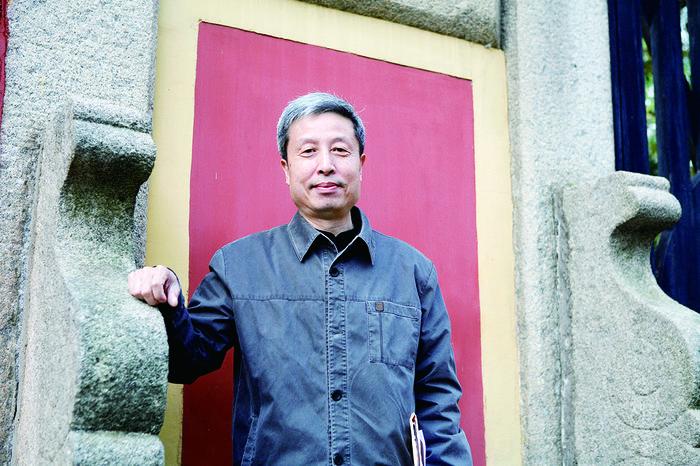
The case of Tianfu Palace is a common problem in promoting urban renewal. The debate around Tianfu Palace will become a microcosm of the protection and utilization of historical and cultural blocks and historical buildings in the future urban renewal process. In this regard, china construction news High Quality Development interviewed Liu Su, a professor at the School of Architecture of Hunan University. As an expert who has been engaged in the research of architectural history and theory, the restoration and protection of ancient buildings and the protection of traditional villages for a long time, he also has many thoughts on urban renewal.
Organic combination of development and protection
Historical culture feeds back urban development.
On January 18 this year, the General Office of the Ministry of Housing and Urban-Rural Development issued the Notice on Further Strengthening the Protection of Historical and Cultural Blocks and Historic Buildings (hereinafter referred to as the Notice), emphasizing that it is of great significance to do a good job in the protection of historical and cultural blocks and historic buildings in urban and rural construction for strengthening cultural self-confidence, carrying forward Chinese excellent traditional culture, shaping urban features and promoting high-quality development in urban and rural areas.
"The’ renewal’ in the urban renewal action refers to organic renewal. The so-called organic renewal does not mean tearing down all the big buildings, but retaining part, transforming part and rebuilding part. The historical and cultural blocks and historical buildings in the city should be preserved." Liu Su believes that a city needs history and urban memory, just as people recall the years experienced by their elders through old photos at home, people in a city also need to see the past of the city through historical buildings.
Urban development can’t just pay attention to economy and ignore culture. Historical buildings are symbols of culture. A city without historical buildings can’t talk about culture. For example, Liu Su said that ancient buildings in many European cities are well preserved, such as Paris, France and Rome, Italy, and almost all cities are ancient buildings. Preserving ancient buildings does not mean backwardness, but the cultural and historical characteristics of the city are its real attraction. "People who come to Paris and Rome are not looking at modern skyscrapers, but at historical remains such as Notre Dame or the Colosseum. Foreigners also go to Beijing to see the Forbidden City, the Temple of Heaven and the Summer Palace …" Liu Su said.
In fact, it is these historical scenes bearing profound cultural accumulation that have made the quality of a city. "With the development of urbanization in China today, the quality of cities has been significantly improved. One of the manifestations of urban quality is people’s comfort and livability, such as convenient work and life, and complete facilities such as museums and theaters. In recent years, cities in China have made great progress in spiritual civilization construction." Liu Su believes that historical and cultural blocks and historical buildings are also symbols of urban quality. They coexist with modern high-rise buildings, which not only preserves people’s historical memory and homesickness, but also helps people transform their visual space.
More importantly, the protection and utilization of historical and cultural blocks and historical buildings can feed back urban development, but this has been ignored for a long time. "In the short term, it may be difficult to achieve a win-win situation in urban development with both culture and economy, unless historical buildings are protected and tourism is developed at the same time, but the problem is that not all historical and cultural blocks and historical buildings are like famous scenic spots such as the Forbidden City, and ticket income alone is enough to support their maintenance costs. Some projects that carry special significance and are not suitable for commercial development require government investment to protect them. " Liu Su believes that this is the inevitable cost of high-quality urban development.
From a long-term perspective, protecting historical and cultural blocks and historical buildings not only preserves historical memory for the city, but also provides more possibilities for urban development. Taking Tianfu Palace in Changsha as an example, Liu Su introduced a win-win model. He said that Tianfu Palace is just a temple, and on the surface it can’t bring more benefits to developers. However, by investigating the history of Tianfu Palace, it can be found that Tianfu Palace once had a very lively temple fair. If Tianfu Palace can be preserved, the temple itself can be restored and people can be attracted to spend here, which may drive the commercial and economic development around the temple.
In addition to Tianfu Palace Temple Fair, Liu Su also envisaged a richer "historical experience area". He said that there is a bank with western architectural style and some industrial heritage parks near Tianfu Palace, which belong to modern industrial style. If we put these together, we can make a "historical experience area" that combines China’s classical, western and modern industrial styles, and on this basis, we can combine it with commercial management to attract tourists.
Respect history and restore history.
Put modern facilities into the old house
As for the protection of Tianfu Palace in Changsha, one view is that it can be preserved by "rebuilding in different places". Liu Su objected to this. He advocated "in-situ protection" and opposed "off-site protection". In his view, historical buildings have their own environment, both geographical and humanistic, which is immobile. If they are moved rashly, the original components of the building itself will be easily damaged while the environment of the building changes. The newly built buildings without the original components are antique buildings, and cultural relics pay attention to raw materials and original technology. Antique buildings are not cultural relics.
The protection of historical and cultural blocks and historical buildings should respect history, restore history, and properly integrate history into modern times. "I think an ideal state is to walk into the old city, and all you can see are old buildings with historical and cultural heritage, but when you walk into the building, it is full of modern life." In Liu Su’s view, there is no contradiction between the protection of historical and cultural blocks and historical buildings and modern life.
The "Notice" pointed out that it is necessary to strengthen restoration and give full play to the use value of historical and cultural blocks and historical buildings. All localities should increase investment to carry out the protection and restoration of historical and cultural blocks. Combined with the renovation of old residential areas, we will focus on building reinforcement and renovation, street facade renovation, road renovation and renovation, as well as supporting the improvement of hydropower and hot gas, communication lighting, garbage collection and transfer, fire and security facilities, etc., to repair and update historical and cultural blocks and continuously improve the livability of historical and cultural blocks.
Liu Su believes that in the protection of historical and cultural blocks and historical buildings, and the transformation of old urban communities, historical buildings can be left behind and preserved for transformation and utilization. During the renovation, the exterior of the historic building should be preserved, and modern facilities should be introduced into the building, so that people living in the "old house" can live a modern life. Regarding the "modernization of old houses", Liu Su introduced the feasibility of this idea by taking some European countries as examples. He said that some hotels in many European cities may have a history of hundreds of years or more, but the interior of the house is modern facilities and the life is also modern. There are also good cases in China in this respect. The exterior of Beijing quadrangles has maintained its original historical appearance with the external blocks, and modern pipe network facilities such as gas pipelines can also be installed inside, so that residents can live more comfortably. "For example, in an old street, all kinds of pipeline lines are connected and buried underground along the vein of this street, and the interface leads to the door of every household, which can completely realize modern life." Liu Su said.
In Liu Su’s view, this kind of transformation and utilization technology is relatively mature, and the cost can be controlled. In practice, the key is to have the consciousness of "putting modern facilities into old houses". In some places, when protecting ancient buildings, they only pay attention to the appearance and make the appearance look antique, but the interior of the building is "tattered" and has no practical function. Such protection is unsustainable. He believes that it is necessary to support and encourage the contemporary functions of historical buildings on the basis of maintaining the appearance and typical components, and organically integrate them with urban and urban life in order to promote maintenance.