"China Economic Weekly" reporter Sun Bing | Beijing Report
Who is the "top stream of science and technology" in China and the world? The AI big model is almost uncontroversial.
On May 28th, the Research Report of China Artificial Intelligence Large Model Map released by the New Generation Artificial Intelligence Development Research Center of the Ministry of Science and Technology shows that the number of large models developed by China ranks second in the world, only next to the United States. At present, 79 large models with over 1 billion parameters have been released in China. From the regional distribution of large models, there are 14 regions in China that are developing large models, among which Beijing, Guangdong, Zhejiang and Shanghai are in the first echelon, with 38 large models in Beijing and 20 in Guangdong.
In the global big model competition, Wang Huaimin, academician of China Academy of Sciences and director of china computer federation Open Source Development Committee, said that there were about 45 big models with parameters exceeding 10 billion in the past five years, of which 32 appeared in the United States, 9 in China and 4 in Europe.
However, China AI big models, which are developing rapidly and soaring all the way, still need some calm thinking.
The big model "Intelligent Emergence" is exciting.
AI capabilities are beginning to be unpredictable.
Artificial intelligence technology has been developed for many years. Why are academics, industry and even the public so excited and even afraid after the big model appears? Professor Huang Tiejun, president of Beijing Zhiyuan Artificial Intelligence Research Institute, told the reporter of China Economic Weekly that AI used to be more like a human assistant, doing the work that human beings can determine the result according to human instructions. For example, if you design AI to turn on the light, AI will only turn on the light.
"However, the reason why the big model is so concerned now is because when the parameter quantity of artificial intelligence reaches tens of billions, there is an inflection point or a sudden change, and the ability of artificial intelligence begins to be unpredictable, which is the so-called’ intelligent emergence’ phenomenon. Some unexpected abilities of artificial intelligence begin to appear, and this unpredictability makes everyone very excited." Huang Tiejun said.
Huang Tiejun introduced that the core task of this wave of artificial intelligence is to train the model. The so-called model, which has a clear meaning in the field of artificial intelligence, is a neural network, and there is nothing special about the neural network. Our human brain is a neural network.
"But the human brain is a huge neural network. About 80 billion neurons are connected by 100 trillion synapses, so the human brain is very capable. In contrast, the number of neurons and connections in the brain of the orangutan closest to human beings is almost 1/3 of that of the human brain, and that of the monkey is 1/10 of that of human beings, while a bug has about 300 neurons, but it can actually have a lot of life activities. " Huang Tiejun explained.
Of course, the neural network of artificial intelligence model is much simpler than that of human brain. However, with the increase of data scale and computing power, the parameters of the model are also increasing, and the ability is also improving, so there is a "big model", that is, a neural network with huge parameters, and of course its intelligence is higher.
The big model is the biggest platform revolution in history, which will be 10 times that of the mobile Internet.
"the AI big model is a historical opportunity that must not be missed. Because this will be the biggest platform revolution in history, it will be 10 times or more bigger than Windows and Android. It will rewrite every application, reconstruct human work, and enlarge the intelligence of those who are creative by 10 times or more. " Li Kaifu, chairman and CEO of innovation works, said.
Kai-Fu Lee also said that he very much agrees with Andreessen Horowitz, a famous American VC institutional investor: it is difficult to grasp how big the market of the big model will be in the future. It will be all software at the minimum and represent all human efforts at the maximum.
"There may be only three or four such opportunities in human history. The big model track is a battleground for future military strategists. Therefore, independent innovation will be the only way and a major responsibility for China enterprises. " Li Kaifu told the reporter of China Economic Weekly.
Kai-fu Lee has been involved in artificial intelligence for more than 40 years. He joked that he is "the most knowledgeable AI investor and the most knowledgeable AI scientist". From the perspective of investment and industrial development, he believes that with the rise of large models, the development of artificial intelligence has entered the AI 2.0 era from the AI 1.0 era.
Kai-fu Lee believes that in the AI 1.0 era, data sets, data sets and models in a single field are isolated islands, and the workload and cost of data labeling are very considerable; However, the emergence of the big model in the AI 2.0 era can solve these bottlenecks. People use super huge data to train a single big model with cross-domain knowledge, and after fine-tuning, they can perform various tasks. This is a brand-new and huge platform opportunity, all applications and interfaces will be rewritten, and AI 2.0 applications will enter an explosive period.
"Although the current big model is still not perfect, it already has considerable commercial value, even hundreds of trillions of commercial value." Li Kaifu predicted. He said that the big model still has the problem of "serious nonsense" at present, because the reasoning ability of AI also comes from the same technical engine. If you reduce its nonsense to near zero, its reasoning ability is almost gone. In other words, the reasons that make it smart are also the reasons that make it talk nonsense.
"We believe that this can be solved in the future. For example, we can let AI cooperate with humans. We don’t take AI as an ultimate application, but treat it as a human’ assistant’. For example, you can let AI draft the first draft of legal documents or news articles first, and then check and adjust them by human lawyers and journalists, so that you can enjoy the powerful capabilities of AI and avoid the mistakes that AI will make. " Li Kaifu said.
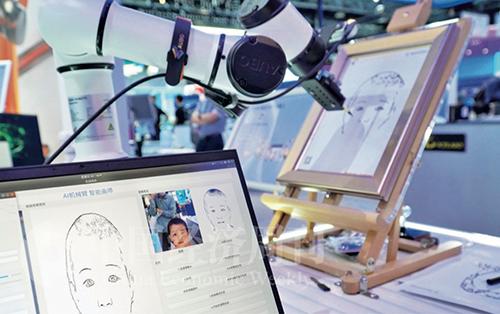
China Economic Weekly reporter Ma Mingyue I photo
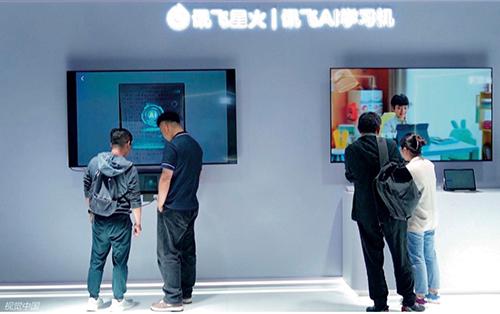

There is no absolute barrier to big model competition, but there will not be too many platform seats, and the key to success or failure lies in ecology.
Huang Tiejun said that the big model will eventually become a new type of infrastructure in the future society, which will provide "intelligence" and deliver it to thousands of industries and households. Therefore, after artificial intelligence enters the era of big model, it will form a systematic industrial ecology.
To put it simply, just like the power grid in the power age, thousands of industries and households are using electricity, but they don’t generate electricity by themselves, but there are special power plants, and there are various ways to generate electricity, such as coal power, thermal power, wind power and nuclear power … There are also enterprises to produce various electrical appliances.
"With a big model, it is like human beings learning to generate electricity. At present, it may be a technical path, but there will be various’ power generation means’ that will continue to evolve and iterate, reduce costs and increase efficiency. This means that just as there will be no state or enterprise monopolizing power generation, there are no absolute barriers and thresholds for large models. Everyone competes for cost and efficiency, and competition is for application and ecology. " Huang Tiejun said.
Kai-fu Lee also said that there will be three ecological layers in the future AI 2.0 era: the basic model layer, the middle layer and the application layer. "The AI 2.0 market represented by the big model is huge enough to accommodate giants, SMEs and startups to’ race horses’." He said.
As for how entrepreneurs and investors choose their position and role in this huge ecology, Li Kaifu believes that it needs to be based on different judgments.
For example, the big model platform companies in the basic model layer certainly have great opportunities, and the ceiling will be very high, just like Microsoft in the PC Internet era and Google in the mobile Internet era, but the risks are also the greatest, because the platform companies must be a minority; If it is an application layer, the risk is not so great, and every productivity field may grow into a leading company in the vertical field, but the scale may not be comparable to that of platform companies. For investors, it is always to seek a balance between risk and return.
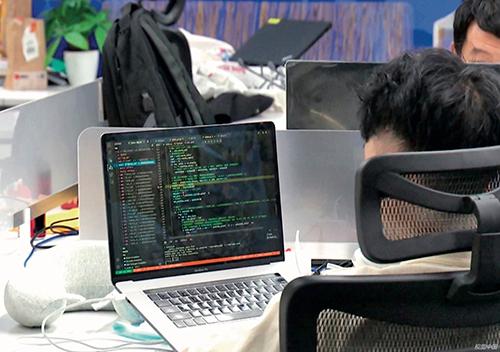
Jobs in artificial intelligence and intelligent manufacturing are very popular.
China’s big model is "arrogant", but there will not be too many "platform seats", and security threats should be guarded.
Focusing on China, Kai-fu Lee believes that the big model and AI 2.0 are also historical opportunities that China should not miss, and China also has its own advantages.
"China has a rich Chinese corpus and a huge market. By developing AI model, China can promote the development of innovative industries and realize the double dividend of science and technology and economy. Moreover, China has a large base of young engineers and the most tenacious entrepreneurs, which provides strong talent support for the development of AI model. It has leading technology, flexible strategy, quick market response, strong ability to fight hard and strong execution, and will be the key to the success of China model company. " Li Kaifu said.
Huang Tiejun is also full of confidence in China’s development in the field of large models. But there are also some phenomena that need special attention. For example, after the big model was on fire, there was still a phenomenon of rushing headlong into mass action and intensified homogenization competition.
"The data is the data, and the computing power is so much. If everyone trains the model, a lot of work will be repeated, which actually consumes a lot of social resources, which is not conducive to the development of the big model ecology." Huang Tiejun said.
"If we compare the PC Internet era and the mobile Internet era, there are probably no more than three underlying platforms for large models worldwide. Just like the early days of the mobile Internet, there were many operating systems, but in the end only iOS and Android were left. Many companies want to be the third, and they have invested a lot but eventually they have failed. " Huang Tiejun said.
Huang Tiejun believes that there will be only a handful of operating systems for large models in China and even in the world. Although it is impossible to predict how many, it is definitely impossible to have more than a dozen or dozens, and there is no market possibility at all. "more companies are involved, not operating platforms, but doing applications. Similar to Apple Ecology and Android Ecology, many applications will be generated. " He said.
Therefore, Huang Tiejun suggested that on the one hand, we should rely on the "hand of the market" and let the "big waves wash sand" of the market play a major role; But at the same time, it also needs the guidance and adjustment of the "policy hand" to promote, encourage and co-ordinate Industry-University-Research’s cooperation and build a large-scale industrial ecology.
Throughout the world, there are two routes to build an artificial intelligence ecosystem: open source and closed source. Wang Huaimin said that because of its uncertainty, the big model forms the basic pattern that the open source model and the pre-research model are promoted at the same time. Of the 32 large models in the United States, 15 are open source. Five of China’s nine big models are open source.
However, a senior investor in the field of artificial intelligence told China Economic Weekly that there are indeed some large models in China that "shell" and fine-tune foreign open source codes. "GPT3.5 may be open source for you, but GPT4.0 will not be available to you in the short term." Therefore, China should develop large-scale models or innovate independently. Moreover, because the development of the big model involves data issues, from the perspective of supervision, this almost means that China and the United States must be "parallel universes."
The big model is becoming more and more powerful. It is better to learn to cooperate with AI than to worry about security risks and be replaced by AI.
With the rapid development of artificial intelligence technology, especially large models, security issues have been raised to a new dimension. "AI will definitely bring new security threats to the digital world." Qi Xiangdong, chairman of Chianxin Group, told the reporter of China Economic Weekly.
"This security threat mainly comes from two aspects: First, AI can imitate, and even implement fraud with falsehood; Second, AI can help hackers improve their attack level, help some hackers write programs, code, formulate attack plans and provide attack strategies. These have brought new threats to the digital world. " Qi Xiangdong said.
Qi Xiangdong said that network security technology is a companion technology, and it must be the innovation of digital technology first, and then the innovation of security technology. This is the relationship between spear and shield, just as there is no spear with a special material, there will be no shield with a special material. Now new AI technologies such as big models are still in their infancy, and their applications are still tentative, and development is still the top priority.
However, Qi Xiangdong said that he believes that the innovation of network security technology and products will definitely solve these network security problems and risks brought by AI in the new era. "Chianxin is keeping up with various scenarios of AI and exploring new technologies and new security solutions needed to solve the new network risks brought by AI. I believe that future security will not drag the development of AI." He said.
As for when the big model will affect the lives of ordinary people, Huang Tiejun said that it has already happened. For example, artificial intelligence is now replacing some human tasks, especially those that are not original.
Taking painting as an example, Huang Tiejun believes that artificial intelligence can’t be replaced by groundbreaking creations like Picasso and Qi Baishi, but if you just imitate and combine previous creations, artificial intelligence is definitely more efficient. Another example is the original theoretical innovation like Einstein and Newton, and artificial intelligence can’t do it, but if it is routine programming and doing math problems, artificial intelligence can really do better.
However, Huang Tiejun emphasized that AI and human beings are not simply substitutes, but need cooperation. "For example, an enterprise originally needed 1,000 programmers, but after accessing the AI big model capability, it may only need dozens. Through the cooperation between people and AI, higher efficiency and better results can be achieved."
Moreover, Huang Tiejun believes that this influence will soon be transmitted to the field of education.
"Now many students have questions, not asking the teacher first, but asking AI first, because the knowledge and information mastered by AI may be more comprehensive and richer, and then they can learn according to the information given by AI. This meeting will be a great impact. What role will teachers play in the growth of students in the future? What role do you play? AI is constantly learning, and people naturally have to keep learning. Education will definitely exist for a long time, but what is the purpose of our education? What is the way of education? Need to rethink. " Huang Tiejun said.
What’s even more "terrible" is that we often say: reading is like breaking thousands of volumes, and writing is like a god. "It is very powerful for a person to read 10,000 books in a lifetime, but AI can read 1 million books a day, and there are about 100 million books in all mankind. AI will read them all in about three years, so the speed of AI’s ability improvement can be imagined, which is completely different from human beings." Huang Tiejun said.
Zhang Jidong, vice president of Iflytek, told China Economic Weekly that the development of AI technology, especially large models, will bring great challenges to education in China.
"The core of education in China lies in the transmission and acquisition of knowledge. Especially, the assessment target of the exam is mainly knowledge-based. Those children with good memory and more training can get high scores, and these are the abilities that are most easily replaced by AI. In the future, we will need more talents with creativity, critical thinking and innovative thinking. But I believe that as the big model becomes a good assistant in all walks of life, it will also become a good assistant in education. " Zhang Jidong said.
(This article was published in China Economic Weekly, No.11, 2023)
The cover of the 11th issue of China Economic Weekly in 2023.