The General Office of the State Council, the General Office of the Central Committee of the CPC issued the Opinions on Further Reducing the Students’ Homework Burden and Off-campus Training Burden in

  Recently, the general offices of the General Office of the Central Committee of the CPC and the State Council issued the Opinions on Further Reducing the Students’ Homework Burden and Off-campus Training Burden in Compulsory Education, and issued a notice, requiring all localities and departments to conscientiously implement it in light of the actual situation.

  The full text of "Opinions on Further Reducing Students’ Homework Burden and Off-campus Training Burden in Compulsory Education Stage" is as follows.

  In order to thoroughly implement the spirit of the 19th National Congress of the Communist Party of China and the Fifth Plenary Session of the 19th Central Committee, effectively improve the level of school education, continuously standardize off-campus training (including online training and offline training), and effectively reduce the excessive workload of students in compulsory education and the burden of off-campus training (hereinafter referred to as "double reduction"), we hereby put forward the following opinions.

  I. General requirements

  1. Guiding ideology. Adhere to the guidance of the Supreme Leader’s Socialism with Chinese characteristics Thought in the New Era, fully implement the Party’s education policy, implement the fundamental task of cultivating people by virtue, focus on building a high-quality education system, strengthen the role of school education as the main front, deepen the governance of off-campus training institutions, resolutely prevent acts that infringe on the interests of the masses, build a good education ecology, effectively alleviate parents’ anxiety, and promote students’ all-round development and healthy growth.

  2. Working principles. Adhere to the student-oriented, respond to concerns, follow the laws of education, focus on the healthy growth of students’ body and mind, protect students’ right to rest, improve the overall quality of school education and teaching, actively respond to social concerns and expectations, and reduce the burden on parents; Adhere to the rule of law, treat both the symptoms and the root causes, strictly implement the compulsory education law, the law on the protection of minors and other legal provisions, and strengthen source governance, systematic governance and comprehensive governance; Adhere to government-led, multi-party linkage, strengthen government co-ordination, implement departmental responsibilities, give full play to the main role of schools, improve security policies, and clarify the collaborative responsibilities of home, school and community; Adhere to overall planning and steady implementation, fully implement the relevant provisions of the state on reducing students’ excessive academic burden, pilot key and difficult issues first, actively promote typical experiences, and ensure the smooth and orderly work of "double reduction".

  3. Work objectives. The teaching quality and service level of the school have been further improved, the assignment is more scientific and reasonable, the after-school service of the school basically meets the needs of students, students return to campus better, and the training behavior of off-campus training institutions is fully standardized. Students’ excessive homework burden and off-campus training burden, family education expenditure and parents’ corresponding energy burden were effectively reduced within one year, and the results were remarkable within three years, and the people’s educational satisfaction was significantly improved.

  Second, reduce the total amount and duration of homework in an all-round way, and reduce students’ heavy workload.

  4. Improve the operation management mechanism. Schools should improve the management methods of homework, strengthen the overall planning of homework in discipline groups and grade groups, rationally regulate the homework structure, and ensure that the difficulty does not exceed the national curriculum standards. Establish a publicity system for homework in schools and strengthen quality supervision. It is strictly forbidden to assign homework to parents or in disguised form, and it is strictly forbidden to ask parents to check and correct homework.

  5. Classify and clarify the total amount of work. The school should ensure that the first and second grades of primary school do not assign homework, and can arrange consolidation exercises appropriately in the school; The average completion time of written homework in grades three to six of primary school is no more than 60 minutes, and the average completion time of written homework in junior high school is no more than 90 minutes.

  6. Improve the quality of homework design. Give play to the functions of homework diagnosis, consolidation, learning situation analysis, etc., and incorporate homework design into the teaching and research system. The system designs basic homework that conforms to age characteristics and learning rules and reflects the orientation of quality education. Encourage the arrangement of layered, flexible and personalized operations, resolutely overcome mechanical and ineffective operations, and eliminate repetitive and punitive operations.

  7. Strengthen the guidance of homework completion. Teachers should guide primary school students to basically complete their written homework in school, and junior high school students should complete most of their written homework in school. Teachers should carefully correct homework, give timely feedback, strengthen face-to-face explanation, carefully analyze learning situation, and do a good job in answering questions and counseling. Students are not allowed to approve and correct their own homework.

  8. Make scientific use of spare time. Schools and parents should guide students to finish the remaining written homework after coming home from school, carry out necessary schoolwork, engage in housework as much as they can, carry out appropriate physical exercise, and carry out reading and literary activities. Individual students who fail to finish their written homework after hard work should also go to bed on time. Guide students to use electronic products reasonably, control the duration of use, protect their eyesight health and prevent internet addiction. Parents should actively communicate with their children, pay attention to their psychological emotions and help them develop good study and living habits. Boarding schools should make overall arrangements for after-school study and life.

  Third, improve the level of after-school services to meet the diverse needs of students.

  9. Ensure after-school service time. Schools should make full use of the advantages of resources, effectively implement various after-school education activities, and meet the diverse learning needs of students on campus. Guide students to voluntarily participate in after-school services. In principle, the end time of after-school service is not earlier than the local normal off-duty time; For students with special needs, the school should provide delayed custody services; Junior high schools can set up self-study classes on weekdays. Schools can co-ordinate arrangements for teachers to implement the "flexible commuting system".

  10. Improve the quality of after-school service. Schools should formulate after-school service implementation plans to enhance the attractiveness of after-school services. Make full use of after-school service time, guide students to finish their homework carefully, give remedial guidance and answer questions to students with learning difficulties, expand learning space for students with spare capacity, and carry out colorful popular science, style, art, labor, reading, interest groups and community activities. Do not use after-school service time to teach new lessons.

  11. Expand after-school service channels. After-school services are generally undertaken by teachers in our school, and can also be provided by retired teachers, qualified social professionals or volunteers. The education department can organize outstanding teachers in the region to carry out after-school services in schools with weak teachers. Seriously investigate and punish teachers’ paid remedial classes outside the school according to the law and regulations, until they are disqualified from teaching. Make full use of social resources and give full play to the role of extracurricular activities such as children’s palace and youth activity center in after-school service.

  12. Strengthen and improve the free online learning service. Education departments should collect and develop rich and high-quality online education and teaching resources, make use of national and local education and teaching resource platforms and high-quality school network platforms, and provide students with high-quality thematic education resources and learning resources covering all grades and disciplines free of charge, so as to promote the balanced development of educational resources and promote educational equity. All localities should actively create conditions and organize outstanding teachers to carry out free online interactive exchange and answer questions. Schools around the country should increase publicity and use, and guide students to make good use of free online quality education resources.

  Four, adhere to strict governance, comprehensively regulate the behavior of off-campus training.

  13. Adhere to strict examination and approval institutions. All localities will no longer approve new off-campus training institutions for students in compulsory education, and the existing discipline training institutions will be uniformly registered as non-profit institutions. The online discipline training institutions that were originally filed were changed to the examination and approval system. All provinces (autonomous regions and municipalities directly under the Central Government) should conduct a comprehensive investigation of the online discipline training institutions that have been filed, and re-apply for examination and approval procedures according to the standards. If it fails to pass the examination and approval, the original registration and Internet information service business license (ICP) shall be cancelled. For non-disciplinary training institutions, all localities should distinguish between sports, culture, art, science and technology, clarify the corresponding competent departments, formulate standards by classification, and strictly examine and approve. Seriously investigate and deal with off-campus training institutions that do not have the corresponding qualifications and conduct training at multiple sites without approval according to laws and regulations. Discipline training institutions are not allowed to go public for financing, and capitalization operation is strictly prohibited; A listed company may not invest in discipline training institutions through stock market financing, and may not purchase the assets of discipline training institutions by issuing shares or paying cash. Foreign capital may not hold or participate in discipline training institutions through mergers and acquisitions, entrusted operations, joining chains or using variable interest entities. Those who have violated the rules should be cleaned up and rectified.

  14. Standardize the training service behavior. Establish a training content filing and supervision system, and formulate measures for the management of training materials in off-campus training institutions. It is strictly forbidden to exceed the standard for advanced training, non-disciplinary training institutions to engage in disciplinary training, and it is strictly forbidden to provide overseas education courses. Resolutely investigate and deal with outstanding problems such as out-of-scope training, uneven quality of training, vulgar and illegal content, piracy and infringement. Strictly implement the relevant provisions of the law on the protection of minors, and off-campus training institutions shall not occupy national statutory holidays, rest days and cold and summer holidays to organize subject training. Training institutions shall not rob school teachers with high salaries; Personnel engaged in discipline training must have the corresponding teacher qualifications, and publish the teacher qualification information in a prominent position in the training institution and website; Personal information of parents and students shall not be disclosed. According to the market demand, training costs and other factors to determine the training institutions fees and standards, to the public, accept supervision. Comprehensive use of the "off-campus training service contract for primary and secondary school students (model text)". Further improve the normal investigation mechanism, timely grasp the situation and information of off-campus training institutions, and improve the "black and white list" system.

  15. Strengthen normal operation supervision. Strictly control the excessive influx of capital into training institutions. The financing and fees of training institutions should be mainly used for training business operations. Unfair competition in the form of fictitious original prices, false discounts, false propaganda, etc. is resolutely prohibited, and monopoly behaviors in the industry are resolutely investigated and dealt with according to laws and regulations. Online training should pay attention to protecting students’ eyesight. Each class hour should not exceed 30 minutes, the course interval should not be less than 10 minutes, and the training should end no later than 21 o’clock. Actively explore the use of artificial intelligence technology to reasonably control students’ continuous online training time. Online training institutions are not allowed to provide and disseminate bad learning methods such as "taking photos and searching questions", which are inert to students’ thinking ability, affect students’ independent thinking and violate the laws of education and teaching. Hiring foreigners in China must comply with the relevant provisions of the state, and it is strictly forbidden to hire foreigners abroad to carry out training activities.

  Five, vigorously improve the quality of education and teaching, to ensure that students learn well in school.

  16. Promote the balanced development of compulsory education. All localities should consolidate the basic balanced achievements of compulsory education, actively carry out the creation of high-quality balanced compulsory education, promote the growth of new high-quality schools, and expand high-quality educational resources. Actively promote group-based education, school district governance and the construction of urban and rural school communities, fully stimulate the vitality of running schools, improve the overall level of running schools, and accelerate the narrowing of the educational level gap between urban and rural areas, regions and schools.

  17. Improve the quality of classroom teaching. Education departments should guide schools to improve teaching management regulations, optimize teaching methods, strengthen teaching management, and improve students’ learning efficiency at school. Schools should start all the courses prescribed by the state, actively promote the connection between young and young sciences, help students prepare for admission, and teach strictly according to the curriculum standards at zero starting point, so as to ensure that students meet the academic quality standards prescribed by the state. Schools are not allowed to increase or decrease class hours at will, improve the difficulty and speed up the progress; Reduce the test pressure and improve the test methods, and there must be no behaviors such as preparing for the exam in advance, violating the rules, exceeding the test questions, and ranking the exams; Test scores are graded, and the tendency of only scores is resolutely overcome.

  18. Deepen the reform of high school enrollment. All localities should actively improve the enrollment mode of high school students based on the examination results of junior high school academic level and comprehensive quality evaluation, and improve the examination methods and performance presentation methods according to the characteristics of different subjects. Adhere to the exam based on learning, further improve the quality of the senior high school entrance examination, and prevent problems such as off-topic, strange questions and exceeding the curriculum standards. Gradually increase the proportion of high-quality ordinary high school enrollment indicators allocated to junior high schools in the region, standardize the enrollment order of ordinary high schools, and eliminate illegal enrollment and vicious competition.

  19. Incorporate into the quality evaluation system. Local party committees and governments at all levels should establish a correct view of political achievements, and it is strictly forbidden to issue entrance examination indicators or unilaterally evaluate schools and teachers by the rate of enrollment. Conscientiously implement the guidelines for the quality evaluation of compulsory education, incorporate the effect of "double reduction" into the quality evaluation of compulsory education in counties and schools, and take students’ participation in after-school services, off-campus training and the reduction of training expenses as important evaluation contents.

  Six, strengthen the supporting governance, improve the ability to support.

  20. Guarantee the after-school service conditions. All localities should, according to the size of students and the standards for the preparation of primary and secondary school faculty, make overall plans for the preparation of teachers. Provincial governments should formulate measures to ensure the funds for after-school services, clarify relevant standards, and adopt financial subsidies, service charges or fees on behalf of others to ensure that funds are raised in place. After-school service funds are mainly used for subsidies for teachers and related personnel who participate in after-school service. When approving the total performance pay, relevant departments should consider the factors of teachers’ participation in after-school service, and include the amount of funds for teachers’ after-school service subsidies as increments into performance pay and set up corresponding projects, not as the base for the normal approval of the total performance pay in the following year; To hire off-campus personnel to provide after-school services, after-school service subsidies can be managed according to labor costs. Teachers’ performance in after-school service should be taken as an important reference for job title evaluation, commendation and reward, and performance salary distribution.

  21. Improve the cooperative mechanism between home and school. Further clarify the responsibility of home-school education, close communication between home and school, innovate collaborative methods, and promote the construction of collaborative education community. Education departments should, jointly with women’s federations and other departments, run parent schools or online family education guidance platforms, promote the construction of community family education guidance centers and service sites, guide parents to establish scientific parenting concepts, rationally determine children’s growth expectations, and strive to form a consensus on reducing burdens.

  22. Do a good job in training advertising control. Relevant central departments, local party committees and governments at all levels should strengthen the management of off-campus training advertisements, and ensure that mainstream media, new media, public places, billboards and online platforms in residential areas do not publish or broadcast off-campus training advertisements. Commercial advertising activities shall not be carried out in primary and secondary schools and kindergartens, and advertisements shall not be published or disguised by using textbooks, supplementary materials, exercise books, stationery, teaching AIDS, school uniforms and school buses in primary and secondary schools and kindergartens. Seriously investigate and deal with all kinds of illegal and illegal advertising behaviors of off-campus training that exaggerate the training effect, mislead the public education concept and create parents’ anxiety according to the law and regulations.

  Seven, do a solid job in pilot exploration, to ensure the steady progress of governance.

  23. Clarify the requirements of the pilot work. While comprehensively carrying out the governance work, Beijing, Shanghai, Shenyang, Guangzhou, Chengdu, Zhengzhou, Changzhi, Weihai and Nantong are determined as national pilots, and at least one city in other provinces is selected to carry out the pilot. The pilot contents are listed in Articles 24, 25 and 26.

  24. Resolutely reduce off-campus training in disciplines. Re-examine and register the existing discipline training institutions, gradually reduce them greatly, and solve the problem of excessive abuse; Seriously investigate and deal with institutions that have serious problems such as unqualified qualifications, chaotic management, taking the opportunity to collect money, false propaganda, and profit-making with schools.

  25. Make rational use of resources inside and outside the school. Encourage qualified schools to provide students with interest-based after-school service activities in their spare time for students to choose to participate. After-school service can’t meet the special needs of some students, such as developing interests and specialties. Non-discipline off-campus training institutions can be introduced to participate in after-school service, and the education department is responsible for organizing the selection for schools to choose and use, and an evaluation and withdrawal mechanism should be established to resolutely cancel the training qualification for training institutions that have problems such as low service level, maliciously recruiting students at school, failing to provide services according to regulations, disrupting school education and enrollment order.

  26. Strengthen the supervision of training fees. Adhere to the public welfare nature of off-campus training, give full consideration to its characteristics involving people’s livelihood, incorporate the fees for off-campus training in compulsory education into the government-guided price management, scientifically and reasonably determine the pricing method, clarify the charging standards, and resolutely curb excessive fees and excessive profit-seeking behavior. Through third-party custody, risk reserve, etc., risk management and control are carried out on the pre-paid fees of off-campus training institutions, and the supervision of loans in the training field is strengthened to effectively prevent problems such as "difficulty in refunding fees" and "running away with money".

  Eight, carefully organized and implemented, in order to achieve practical results.

  27. Fully deploy the system. To strengthen the party’s leadership over the work of "double reduction", the party committees and governments of all provinces (autonomous regions and municipalities directly under the Central Government) should regard the work of "double reduction" as a major livelihood project, put it on the important agenda, incorporate it into the key tasks of the leading group for education work of provincial party committees (autonomous regions and municipalities directly under the Central Government), and refine and improve measures in light of local conditions to ensure the implementation of the work of "double reduction". Party organizations in schools should conscientiously do a good job in teachers’ ideological work and fully mobilize the enthusiasm and creativity of teachers. Off-campus training institutions should strengthen their own party building work and give play to the role of party organizations as fighting fortresses.

  28. Clear departmental responsibilities. The education department should do a good job in overall planning and coordination, strengthen the daily supervision of off-campus training institutions in conjunction with relevant departments, and guide schools to do a good job in "double reduction"; Propaganda and online information departments should strengthen public opinion propaganda and guidance, and online information departments should cooperate with education, industry and information departments to do a good job in online off-campus training supervision; The institutional establishment department should make up the teacher establishment for primary and secondary schools in time; The development and reform department shall, jointly with the departments of finance and education, formulate standards for after-school service or fees, and jointly with the departments of education, formulate guiding policies for fees of off-campus training institutions in pilot areas; The financial department should strengthen the funding guarantee for after-school services; Human resources and social security departments should do a good job in the verification of teachers’ performance pay; Civil affairs departments should do a good job in the registration of discipline training institutions; Market supervision departments should do a good job in the registration of non-disciplinary training institutions and the supervision of fees, advertising and anti-monopoly of off-campus training institutions, intensify law enforcement inspections, and seriously investigate and deal with illegal training behaviors in conjunction with the education departments according to laws and regulations; Political and legal departments should do a good job in maintaining harmony and stability; Public security departments should strengthen public security management according to law, jointly carry out intelligence information collection, judgment, early warning and prevention, and do a good job in emergency response to related stability-related incidents; The People’s Bank of China, the Banking Insurance Regulatory Commission and the Securities Regulatory Commission are responsible for guiding banks and other institutions to do a good job in pre-charge risk control of off-campus training institutions, and clean up and rectify the financing and listing of training institutions; Other relevant departments shall take responsibility according to their respective responsibilities and do a good job in implementation.

  29. Jointly carry out special governance actions. Establish a special coordination mechanism for the work of "double reduction" and focus on organizing special governance actions. Set up a special working mechanism for coordination mechanism in the Ministry of Education, do a good job in overall coordination and strengthen guidance for local work. All provinces (autonomous regions and municipalities directly under the Central Government) should improve the working mechanism, establish special working institutions, and define the road map, timetable and responsible persons of special governance actions in accordance with the objectives and tasks of "double reduction". Highlight key points, key links, weak areas, key targets, etc., and carry out comprehensive investigation and rectification. For violations of laws and regulations, severe punishment should be imposed according to the law and regulations, forming a warning shock.

  30. Strengthen supervision and inspection and publicity and guidance. The implementation of the "double reduction" work and its actual results will be regarded as an important part of supervision and supervision, special rectification that ignores the interests of the masses, and supervision and evaluation of the government’s performance of educational duties. The establishment of accountability mechanism, the responsibility is not implemented, the measures are not in place, departments, schools and related responsible persons should be seriously investigated according to the law and regulations. All localities should set up supervision platforms and special reporting telephones to smooth the channels of supervision and reporting by the masses. All provinces (autonomous regions and municipalities directly under the central government) should sum up the good experiences and good practices in the work of "double reduction" in a timely manner, and do a good job in publicity and promotion. The news media should adhere to the correct direction of public opinion and create a good social atmosphere.

  While doing a good job in the "double reduction" of students in compulsory education, all localities should also co-ordinate the management of off-campus training for preschool children aged 3 to 6 and ordinary high school students, and must not carry out online training for preschool children. It is strictly forbidden to carry out offline discipline (including foreign languages) training for preschool children in the name of preschool classes, young bridging classes and thinking training classes. No longer approve new off-campus training institutions for preschool children and discipline-based off-campus training institutions for ordinary high school students. The management of discipline training institutions for ordinary senior high school students shall be implemented with reference to the relevant provisions of this opinion.
The 6th Academic Journal History Editors’ Forum: Building High-quality Academic Journals from a Global Perspective

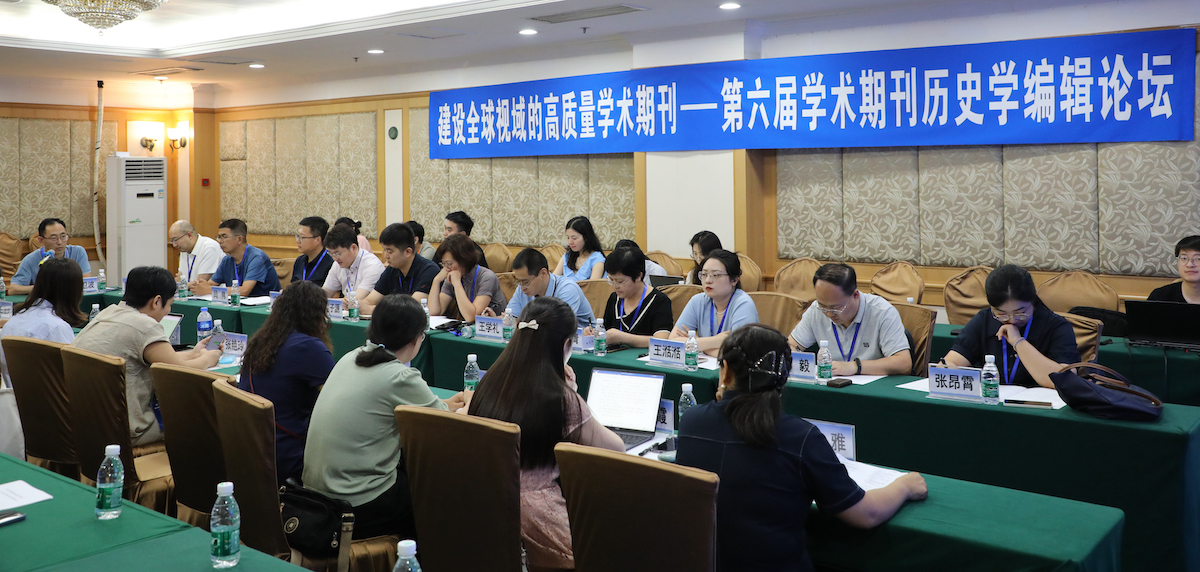
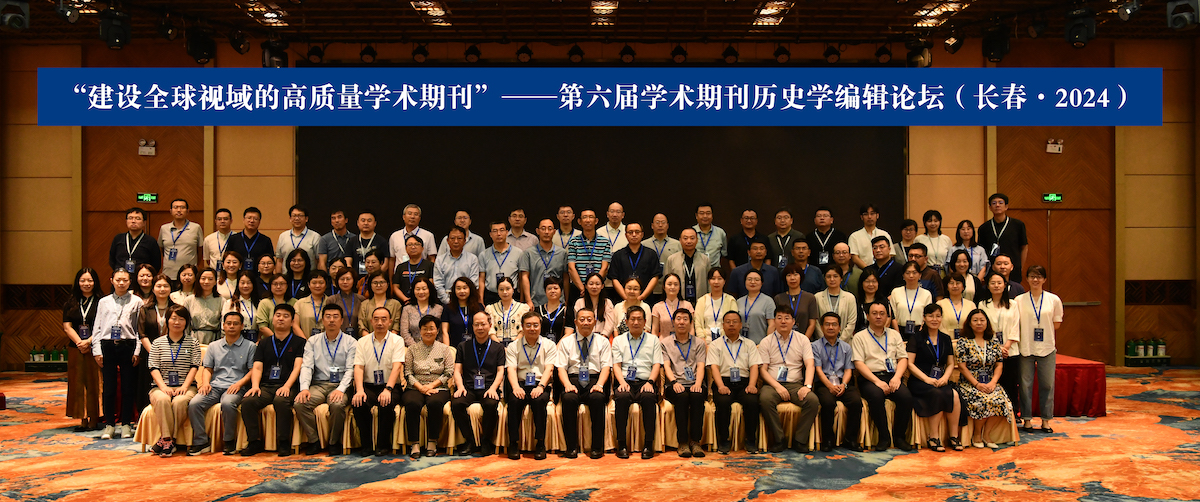
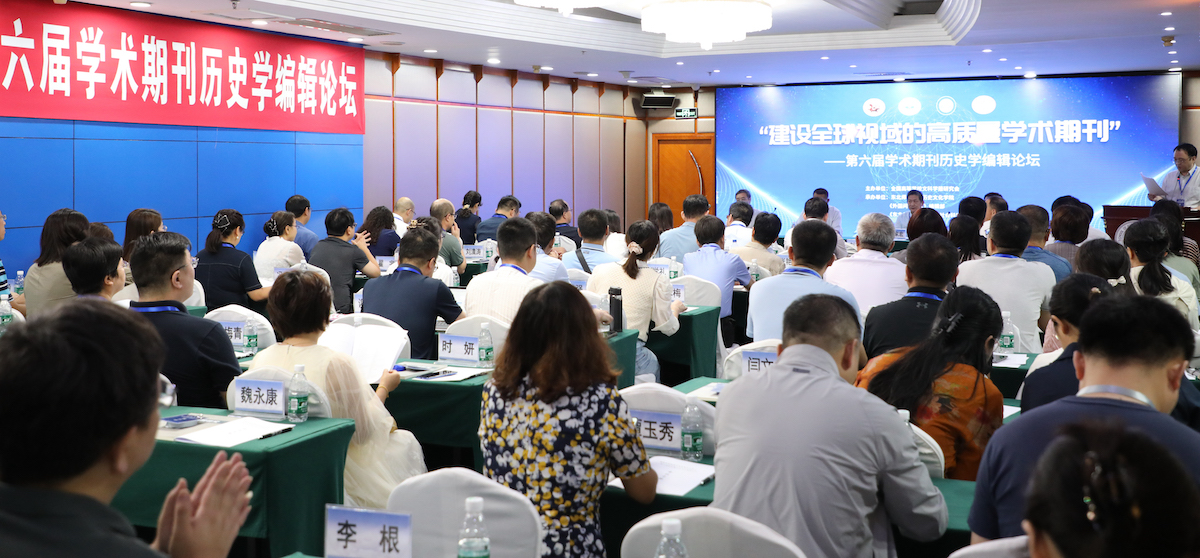
On July 20th, the 6th Academic Journal History Editors’ Forum on "Building a High-quality Academic Journal with a Global Perspective" was held in Changchun, which was sponsored by the National Research Association of Liberal Arts Journals of Colleges and Universities, and hosted by the School of History and Culture of Northeast Normal University, the Editorial Department of Foreign Studies and the Editorial Department of Journal of Northeast Normal University (Philosophy and Social Sciences Edition).

take a group photo

Professor Guo Jiahong, vice chairman of the National Research Association of University Journals of Liberal Arts, executive editor of Journal of Beijing Normal University (Social Science Edition), Liu Wenshan, vice chairman of the National Research Association of University Journals of Liberal Arts, editor and editor, and Professor Zhong Weimin, vice chairman of the National Research Association of University Journals of Liberal Arts and executive deputy editor of Journal of Tsinghua University (Philosophy and Social Science Edition), Researcher Xu Zairong, deputy editor-in-chief and editorial director of World History, Professor Miao Shumei, editor-in-chief of History Monthly, Professor Fu Haiyan, editor-in-chief of Journal of Central China Normal University (Humanities and Social Sciences Edition), researcher Xu Zhimin, deputy editor-in-chief and editorial director of Historical Theory Research, professor Feng Lijun, editor-in-chief of Journal of Shaanxi Normal University (Philosophy and Social Sciences Edition), and Journal of Anhui University (Philosophy and Social Sciences Edition) Professor Ma Linghe, executive editor of Journal of Anhui Normal University (Social Science Edition), Professor Chen Liang, vice president of the School of History of Nanjing University, Zhao Ziyuan, deputy editor-in-chief of Tianjin Ancient Books Publishing House, researcher Xu Tao, director of the editorial department of Shilin, deputy editor-in-chief of Liu Qingtao, deputy editor-in-chief of the editorial department of Research on History and Geography of China’s Frontier, deputy editor-in-chief of organ of Journal of Peking University (Philosophy and Social Science Edition) and responsible editor of Journal of Tsinghua University (Philosophy and Social Science Edition). Researcher Li Liu, deputy editor-in-chief of social science front, Professor Li Yueqin, deputy editor-in-chief of History Teaching, Associate Professor Li Jing, deputy dean of School of History and Culture of Southwest University (in charge of Western History), and Professor Yan Wei, executive editor of Middle East Studies,Professor Qi Yan, director of the history department of Heilongjiang University and editor of Qiushi Journal, Professor Zhang Qiang, editor-in-chief of Ancient Civilization, Professor Guo Dantong, deputy editor-in-chief of Foreign Studies, and more than 60 experts, scholars and journal editors from dozens of journals all over the country attended the meeting. Wang Yan, deputy secretary of the Party Committee of Northeast Normal University, and Professor Bai Weichun, member of the Standing Committee of the Party Committee of Northeast Normal University and editor-in-chief of Journal of Northeast Normal University (Philosophy and Social Sciences Edition), attended the meeting. The opening ceremony of the conference was presided over by Professor Dong Haozhi, Dean of the School of History and Culture of Northeast Normal University and executive deputy editor of Foreign Studies.

In his speech, Wang Yan extended a warm welcome to the experts and scholars attending the meeting. He said that Northeast Normal University attaches great importance to the construction of history disciplines and the development of academic journals, with nearly 20 journals covering many disciplines. As a first-class leading discipline in the field of philosophy and social sciences, the history of East Normal University has also given full play to its disciplinary characteristics, insisted on being upright and innovative, and initiated "academic frontier defense" in the whole country with the help of geographical advantages, with the help of three core historical journals, namely, Studies on Foreign Issues and Ancient Civilization, in order to provide academic and intellectual support for the needs of national culture and diplomatic strategy. In the future, Northeast Normal University and East Normal University will continue to improve the quality of journals, serve academic research and discipline construction, and contribute wisdom and strength to the prosperity and development of China’s journals.

The main venue

Guo Jiahong pointed out that leading innovation is the mission of academic journals, and the editorial team is the core of journal construction. At present, academic journals have ushered in a golden age, and it is the top priority to convene journal editors to carry out academic dialogue and organize experience exchange to create high-quality journals. As an important carrier and exhibition platform of high-level research achievements in history, academic journals are facing the challenges of globalization and digitalization. He emphasized that academic journals should not only improve their political position, but also adhere to the people-centered academic value position and publication construction direction, give full play to their academic service capabilities, and push China’s historical research to the world. Subsequently, he gave a brief report on the recent work of the research society of liberal arts journals in colleges and universities around the key points of periodical quality inspection and evaluation, young editors’ business skills competition, excellent editors’ selection activities and editing skills training.

Bai Weichun pointed out that the Party Committee of Northeast Normal University attached great importance to the construction of academic journals of liberal arts, and set the objectives and related strategies for spreading China’s academic discourse and prospering and developing China’s philosophy and social sciences. For a long time, Journal of Northeast Normal University (Philosophy and Social Sciences Edition) has always focused on high-quality development and carried out its work with the concept of serving schools, disciplines, academics and scholars. The history of East Normal University is profound and influential. Journal of Northeast Normal University (Philosophy and Social Sciences Edition) also insists on doing a good job in the history column as an important task in the publication construction. It works closely with the School of History and Culture, adheres to the leading-edge problem orientation, and makes contributions in a column style, making lasting efforts for the development of the history discipline. Finally, he invited the scholars present to put forward valuable opinions on the development of the journal of liberal arts in Northeast Normal University, and hoped to continue to communicate and cooperate with experts in the future work.

The keynote speech session was hosted by Li Yueqin. Miao Shumei gave a report entitled "Young Talents Training and Academic Mission of Journals —— Taking History Monthly as an Example". She pointed out that cultivating young talents has always been one of the basic purposes of History Monthly. Since its publication, the publication of History Monthly has always focused on young historians, attaching importance to and supporting young people to publish research results. In the subsequent development, Historical Monthly still adheres to the principle of cultivating new people’s sense of responsibility, adhering to the principle of "undifferentiated quality first", cultivating new historians with a tolerant attitude and a developmental vision, and discovering new historians, which has won unanimous praise from historical predecessors and won the broad trust of the younger generation. In addition, she introduced the situation of youth forum jointly organized by History Monthly and other academic institutions, and said that she would continue to undertake the academic mission of cultivating successors in the field of history in the future.

Fu Haiyan, with the topic "Difficulties and Challenges Faced by the Historical Column of University Journals under the New Situation", discussed that compared with professional journals, the historical column of university journals has some shortcomings in the richness of manuscripts, the amount of manuscripts published and the academic influence. Secondly, he emphasized that comprehensive journals are caught in the double structural dilemma of periodical evaluation system and academic evaluation system. Although journals strive to coordinate the layout resources of literature and history with other categories and the publishing opportunities of senior scholars and young talents, the balance between them is still difficult to grasp. At the same time, Fu Haiyan put forward the idea of establishing a community of historical editors, and responded to the current predicament by ensuring the number of columns, improving the quality of column papers, and giving full play to the characteristics of column styles. Then, he called for the support of evaluation institutions, hoping to realize the synergy and interaction among journals, evaluation institutions and the community, and jointly promote the construction and development of historical columns in journals of major universities.

Xu Zairong gave a report on the topic "The Interaction between Editors and Authors in the Construction of Professional Academic Journals —— Taking World History as an Example". Based on his own experience in running journals, he emphasized the subjectivity of editors and pointed out that the role of editors is changing from providing editing and proofreading services to actively participating in the production and dissemination of academic knowledge. Facing the new academic ecology, journals need to strengthen topic planning, organize dynamic columns and written talks, actively build academic exchange platforms, and promote the growth of young and middle-aged scholars. In addition, he also shared various measures implemented by the editorial department of World History, and proposed that only by ensuring the standardization and self-discipline of editing work with rules and regulations can the journal continuously improve its academic quality and influence. He emphasized that the editor’s shift to the subjective role does not mean the weakening of its service, but aims to interact with the author more actively in his work, and the two sides work together to achieve academic innovation.

Ma Linghe published it with the title of "Some Opinions on the Construction of Economic History Columns". He pointed out that although economic history is an important part of historical research, it is currently faced with the dilemma that professional journals are scarce and column characteristics are difficult to achieve. Combined with personal experience, he pointed out the problems faced by economic history columns, such as cross-domain manuscript sources, fragmentation of research, poor readability of articles, and called on journals to play an academic leading role, publish guiding manuscripts, guide academic circles to pay attention to emerging trends, expand the perspective of investigation, build a theoretical framework, and carry out logical analysis to avoid data stacking. He believes that the study of economic history should attach importance to comparative study and international perspective, form its own discourse and narrative, and thus promote the study of Chinese economic history to the world. Ma Linghe said that the role of journals is to lead and proofread. He expected that with the joint efforts of journals and scholars, the field of economic history could break through the bottleneck, get out of the predicament and create a new pattern of discipline development.

Chen Liang published a report entitled "Introduction of Digital Technology and Innovation of Historical Research", which discussed the historical editors’ examination of digital humanities and the problems faced by traditional historiography under the background of digitalization. He first pointed out that history, as the foundation of liberal arts, is unique in the dialogue between disciplines and different in methodology. Subsequently, based on the assertion that "history is evergreen", he analyzed the opportunities brought by digital technologies such as text mining, foreign language translation assistance, database scanning and intelligent retrieval to historical research, and also emphasized that technology should serve historical issues rather than replace historical research itself, and enumerated the limitations of artificial intelligence in material collection and reading through vivid examples. Finally, Chen Liang called on historical editors to be vigilant in the digital age, to adapt to technological progress while ensuring the quality and academic value of published articles, and to use new technologies to enhance editorial efficiency and publication influence.

Xu Tao’s report is entitled "Shi Lin and the Exploration of the Construction of the Three Systems of History Discipline". He emphasized that history occupies a unique position in both theory and reality. Based on this, history editors should act positively and be brave in innovation. Later, he reviewed his specific work as an editor, shared the universal experience and representative problems in the construction of historical journals, and especially talked about the persistence and breakthrough in the predicament of tight financial support and lack of professional team when Shilin was first created. Then, he concisely summarized the concept of "change and invariability" in running a journal, and emphasized that while adhering to China’s position, it is necessary to keep up with the pace of the times, flexibly coordinate the proportion of disciplines at all levels of history, and set topics that are close to the pulse of the times. In addition, he also advocated that editors should hold interdisciplinary, cross-industry and full-coverage seminars, invite researchers and evaluation system personnel to participate together, and work together to promote the in-depth development of the three major systems of history.

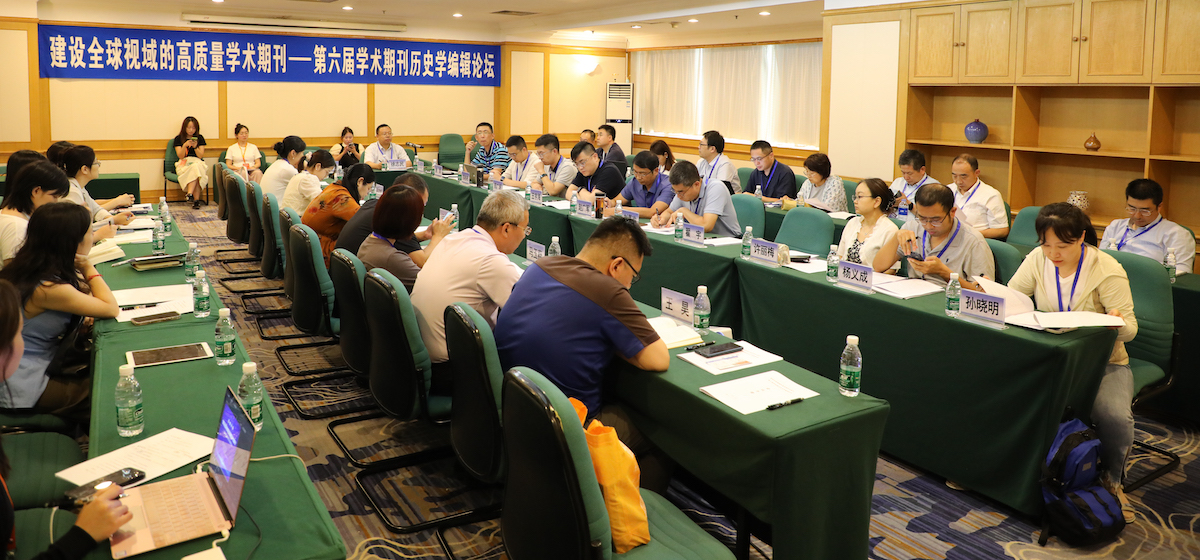
The meeting has two sub-venues, with a total of four group discussions.

The first session of the first session was presided over by Qin Weibo, managing editor of Journal of Northeast Normal University (Philosophy and Social Sciences Edition), Qi Yan, historical editor of Qiushi Journal, Zhang Dengde, deputy editor of Journal of Shandong Normal University (Social Sciences Edition), Yan Wei, executive editor of Middle East Studies, Feng Lijun, editor of Journal of Shaanxi Normal University (Philosophy and Social Sciences Edition), and Zhao, deputy editor of Tianjin Ancient Books Publishing House. Wen Fangfang, editor in charge of Journal of Tsinghua University (Philosophy and Social Sciences Edition), Wang Xueli, editor of Journal of Jilin University Social Sciences, Jane Meiqing, editor of Journal of Anhui University (Philosophy and Social Sciences Edition), Tiantian Wang, editor of History Teaching, Liu Yi, deputy editor of Regional Culture Research, editor of Journal of Hebei Normal University, and Zhang Angxiao, director of China History Teaching and Research Office of Hebei Normal University School of History and Culture, participated in the discussion. In today’s academic environment, academic journals are facing many challenges, such as the difficulty of soliciting manuscripts, the uneven quality of manuscripts and the complex evaluation system, which makes a universal anxiety spread among editors. New problems need new responses, and new requirements bring new standards. Focusing on "the challenge and accomplishment of historical editors", editors share their own experiences and point out that historical editors are gradually moving closer to "scholar editors", which requires not only accumulating profound historical professional knowledge, but also consciously exercising academic insight and professional skills. At the meeting, editors explored the new path of industry development through discussion, so as to better cope with the complex and changeable academic environment and provide help for the development of history.

The first branch meeting place

The second unit of the first session was presided over by Guan Qin, deputy editor of Journal of Peking University (Philosophy and Social Sciences Edition). Zhang Zhidong, editor-in-chief of Journal of Anhui University (Philosophy and Social Sciences Edition), Bai Xiaoguang, editor-in-chief of Siberian Studies, Li Yueqin, deputy editor-in-chief of History Teaching, Li Jing, vice president of School of History and Culture of Southwest University, Li Xiaoyang, editor of Central Plains Cultural Studies, Zhang Yanling, deputy editor-in-chief of Journal of Shaanxi Normal University, Li Liu, deputy editor-in-chief of social science front, Zhang Xiuli, deputy editor-in-chief of History Monthly, Du Ping, deputy editor of Journal of Capital Normal University (Social Science Edition), Liang Xia, executive deputy editor of Journal of Qinghai Normal University (Philosophy and Social Science Edition) and Feng Ya, deputy editor of Journal of Northeast Normal University (Philosophy and Social Science Edition) participated in the discussion. This report focuses on "the shaping and selection of periodical style", and participants deeply exchanged their efforts in creating periodical style. Editors mostly rely on local cultural resources with local characteristics and dominant disciplines in universities to carry out thematic planning and the establishment of expert database, so as to attract high-quality manuscripts and promote the benign interaction between academic journals and disciplines. However, some experts also stressed that besides making use of the surrounding resources, the modeling of periodical style should be problem-oriented, and the columns should be adjusted and reconstructed to realize global dialogue, so as to realize the long-term development of periodicals and promote the deepening and wide dissemination of academic research.

The first unit of the second session was presided over by Xu Zhimin, deputy editor-in-chief and director of the editorial department of Historical Theory Research. Liu Qingtao, deputy director of editorial department of History and Geography of China’s Frontier; Yuan Hao, editor-in-chief of Journal of Daqing Normal University; Zheng Binbin, editor of Medical Social History Research; Zheng Guangchao, editor of History Collection; Wang Yuhai, editor of Shanghai Culture Publishing House; Zhao Guangjun, deputy editor-in-chief of History Monthly; Liu Jingyu, professor of East Asia Center of Beihua University; Zhai Yu, associate researcher of Guizhou Social Science; and deputy director of Social Science Research. During the meeting, editors, based on their own experience in reading manuscripts, held a heated discussion mainly around "Reconstruction and innovation of historical norms in the new era" and conducted in-depth exchanges on core issues such as writing norms of historical papers and construction of discourse system. The meeting pointed out that historical research in the era of globalization has ushered in new opportunities, which requires historians to pay attention to the integration of disciplines, cultivate a macro-thinking and analytical framework, and promote China’s historical discourse system to closely link with the theme of the times and respond to questions raised by international academic circles while maintaining its autonomy. In addition, the conference also advocated the use of social media to broaden the dissemination channels of academic achievements, enhance their social influence, and inject new vitality into the field of history.

The second branch meeting place

The second session of the second session was presided over by Xiao Haiyan, deputy editor of Journal of Central China Normal University (Humanities and Social Sciences Edition), Zhu Yiqing, editor of Folk Studies, Qiao Yu, associate professor of the School of History of Capital Normal University, editor of Global History Review, Chen Yingxue, associate professor of Peking University History Department and editor of Western Studies, Zhang Xiangmei, editor of Guangdong Social Sciences, and Journal of Hebei Normal University (philosophy and social sciences). Yan Wenlong, the historical editor of Journal of Tianjin Normal University (Social Science Edition), Zhao Wenduo, the editorial director of Journal of Beihua University (Social Science Edition), Ma Yuzhong, the deputy director of the Journal Center of Northwest Normal University, Zhang Kejun, the historical editor of Dongjiang Journal, and PG One, the historical editor of Heilongjiang Social Science, participated in the discussion. The style of academic columns of history is the result of the joint efforts of editors and authors. The editors of this field actively discussed the problem of "the formation of characteristic columns of historical journals" based on their own work of running journals. Editors actively interact with academic circles, organically combine academic hotspots with academic advantages by actively soliciting manuscripts, planning themes, and holding academic workshops, thus gradually forming historical columns with their own unique styles. At present, on the basis of maintaining their traditional advantage columns, major journals are also actively exploring new column directions, so as to balance academic research with the needs of the real society and shape the rich diversity and professional depth of academic columns of history.

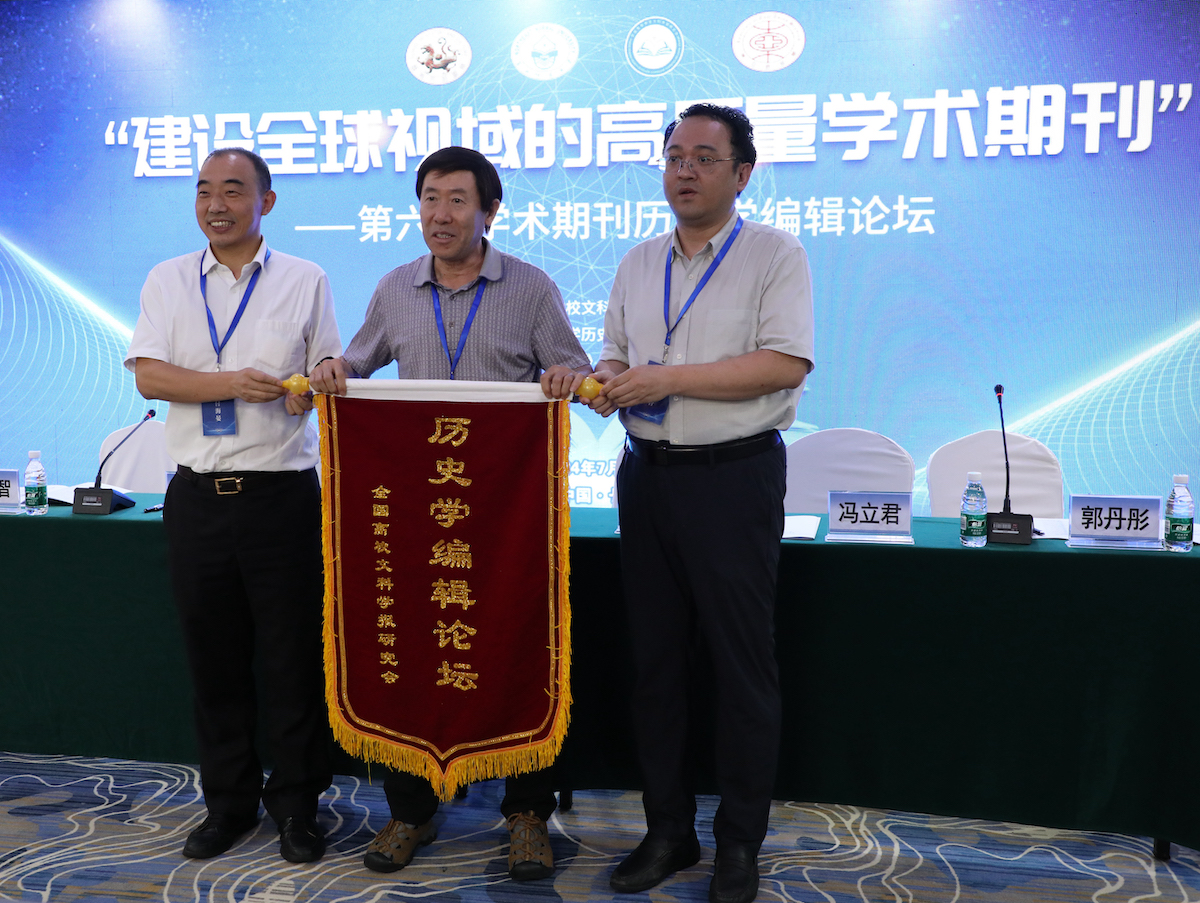
Flag handover ceremony

The closing ceremony of the meeting was presided over by Professor Guo Dantong, and Professor Feng Lijun, Professor Zhang Zhidong, Editor Zheng Guangchao and Professor Zhao Wenduo made summary reports on behalf of each unit respectively. Vice Chairman Liu Wenshan handed over the flag with the next organizer, Journal of Huazhong Normal University (Humanities and Social Sciences Edition). Professor HanDong Yu, editor-in-chief of Foreign Studies, School of History and Culture of Northeast Normal University, and Professor Zhong Weimin, vice chairman of the National College Journal of Liberal Arts, delivered closing speeches. Focusing on practical problems and academic frontiers, Han Dongyu pointed out the great responsibility of academic journals, and encouraged historians in various fields to strengthen exchanges and work together to promote the prosperity and development of history in the new era. Zhong Weimin expressed his gratitude to Northeast Normal University and all the experts and scholars attending the meeting. While celebrating the successful conclusion of this forum, he also placed hopes on the convening of the next forum. At the conclusion of the conference, Guo Dantong pointed out that this forum has conducted extensive and in-depth discussions on the theme of innovation and development of historical journals. Experts and scholars have contributed their insights and valuable experience, forming an academic consensus and pointing out the direction for the development of historical journals. In the future work, historical journals will continue to adhere to academic quality, pay attention to content depth and originality, and actively explore new paths of digital transformation of historical journals, and constantly innovate, so as to contribute to the construction of the three major systems of China history and the community of human destiny.

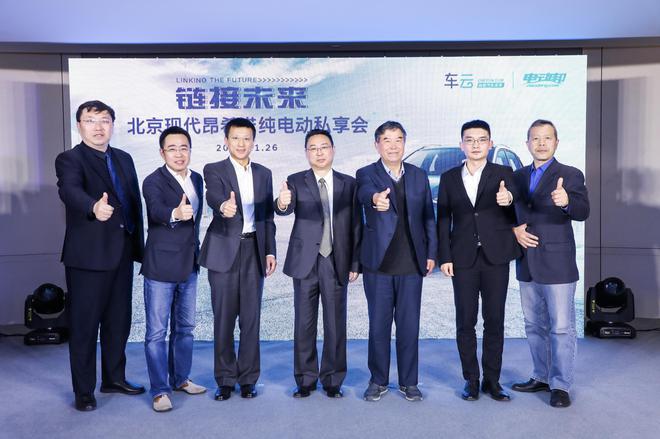
Cheyun. com and Dianbang jointly held a private meeting for new energy vehicles.

  With the market downturn and policy recession, the growth rate of the new energy vehicle market has slowed down, but there is still a broad space for new energy in China in the future. Previously, pure electric products were mostly policy-oriented, and there were widespread situations such as short battery life, high energy consumption in winter, and hidden dangers in battery control. This is a shortcoming of the industry and a pain point faced by consumers.

Cheyun. com and Dianbang jointly held a private meeting for new energy vehicles.

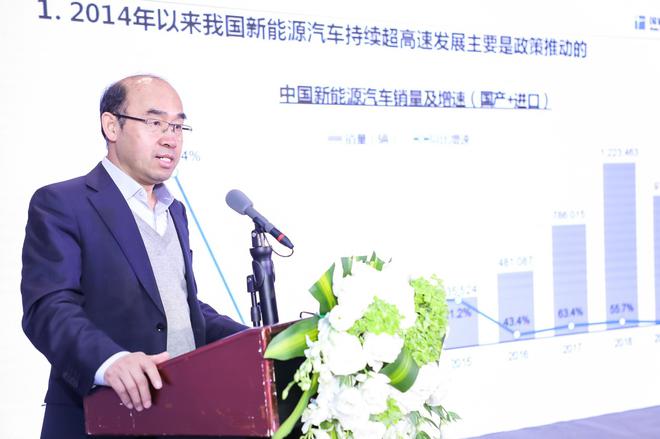
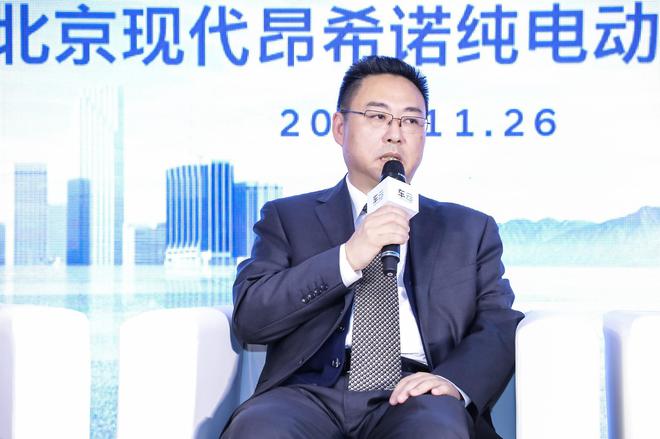
  In order to discuss the development trend of new energy, on November 26th, in Tongying Center, Sanlitun, Beijing, Cheyun.com and Dianbang jointly held a private party for new energy vehicles with the theme of "Linking the Future", and invited many authoritative experts in the domestic new energy vehicle industry and research institutes, as well as the leaders of Beijing Hyundai, who are fully engaged in the new energy market, to discuss the development trend of pure electric products.

  Experts gather to analyze the future trend of electric power, and the image of pure electric benchmark of Angeleno stands out.

  At the meeting, several experts agreed that the country will strengthen the control of energy consumption of electric vehicles, the future pure electric vehicles need excellent and comprehensive three-assembly technology, and the trend of controlling energy consumption. Beijing Hyundai’s newly listed Onsinoe pure electric vehicle, in the opinion of several experts, is in line with the policy and technical trends, and also meets the demands of consumers, and is in the leading position in the industry.

Xu Changming, Deputy Director and Senior Economist of National Information Center

  Xu Changming, deputy director of the National Information Center, first analyzed the national policies, industry trends, market and consumer dynamics of the new energy vehicle market. He believes that as the first pure electric SUV product of Beijing Hyundai, Onsinoe pure electric is expected to become the benchmark product in the current joint venture field.

Chen Quanshi, Chairman of Electric Vehicle Branch of China Automotive Engineering Society

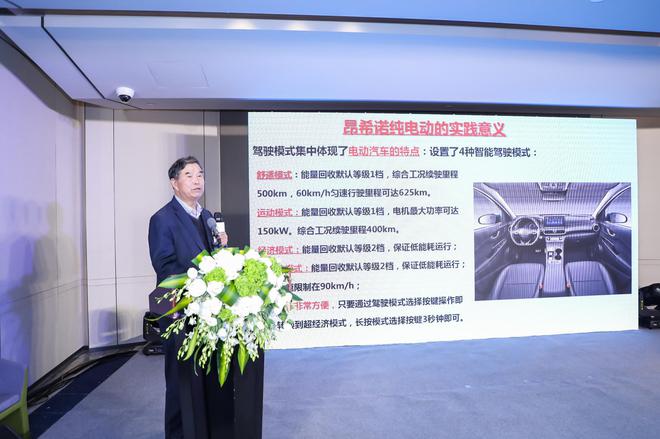
  Chen Quanshi, Chairman of the Electric Vehicle Branch of China Automotive Engineering Society, analyzed and summarized the technical development of the new energy vehicle market. He said that the "Three Electricity" technology with battery, motor and electronic control technology as its core values will become the main source of competitiveness for enterprises in the new energy vehicle market. Considering from the three-electricity technology, Onsinoe pure electric is undoubtedly a benchmark product in the industry.

Wang Zidong, Deputy Secretary General of China Automotive Power Battery Industry Innovation Alliance

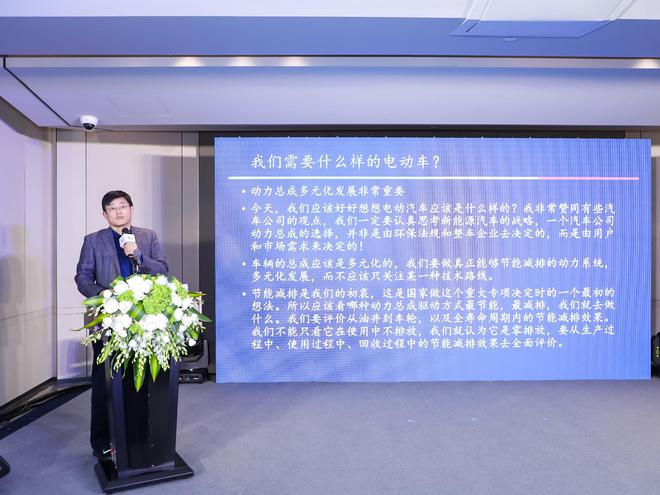
  Wang Zidong, Deputy Secretary-General of China Automotive Power Battery Industry Innovation Alliance, believes that electric vehicles also need energy conservation and emission reduction, and the mileage cannot be increased simply by increasing the charge of battery packs. The industry should have a clear understanding of improving the energy density of power batteries.

  He believes that Onsinoe pure electric has the characteristics of high driving performance and lower energy consumption, and it is far ahead of competing products in terms of battery life and energy consumption, and is at the top of the pyramid.

Sun Chao, Associate Professor of Beijing Institute of Technology.

  Sun Chao, an associate professor from Beijing Institute of Technology, pointed out that China has introduced the national standard GB/T 36980-2018: the limit of energy consumption rate of electric vehicles, which means the arrival of "consumption reduction era". The battery safety of electric vehicles has become a top priority, and a precise and reliable thermal management system for battery packs is as important as the quality control of battery cells.

  On this basis, automobile products should face the needs of the scene. "Onchino pure electric vehicle is an intelligent new energy vehicle that meets the requirements of high efficiency and safety and faces the needs of the scene." Sun Chao commented.

  Discuss and interact with Beijing Hyundai to show the strategic layout of new energy with technology as the core.

  In the round-table discussion session, Xu Aimin, deputy general manager of Beijing Hyundai and director of the Technology Center, discussed topics such as the development direction of new energy with Chen Quanshi, chairman of the Electric Vehicle Branch of China Automotive Engineering Society, Sun Chao, associate professor of Beijing Institute of Technology, and Shi Ganyuan, director of the automotive business department of China Consumer News. The three-electric system, safety system and overall technical characteristics of Onchino pure electric vehicle have been unanimously recognized by experts and media attending the meeting.

Xu Aimin, Deputy General Manager of Beijing Hyundai.

  Xu Aimin, deputy general manager of Beijing Hyundai, said that in the future, the new energy market will shift from policy-driven to market-driven, and technology will become the core competitiveness. In 2020, the new energy automobile industry will enter a new stage of development, gradually complete the transition from policy guidance to market guidance, and enter the stage of high-quality industrial development from the stage of high-speed growth, which is undoubtedly a new round of tests on the quality and technology system "hardware" of related automobile enterprises. For this, Beijing Hyundai has long been prepared.

  Technical explanation, muscle show, pure electric display and strong product strength.

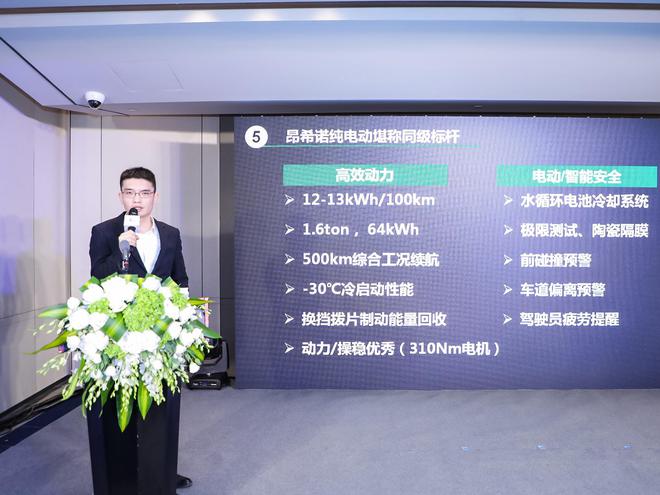
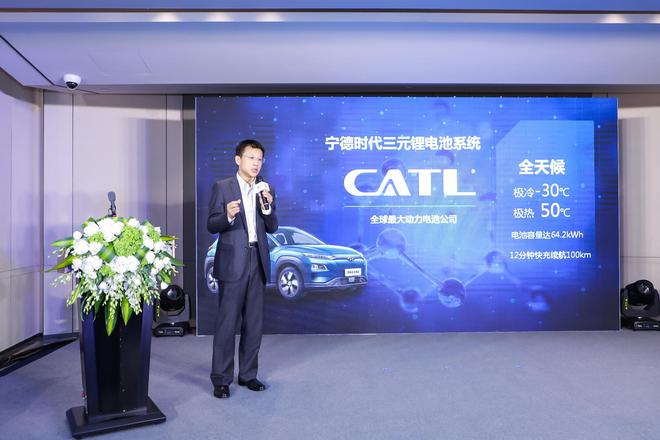
  At the private party, Zhang Yu, director of the new energy development department of Beijing Modern Technology Center, introduced the powerful product strength of Beijing Hyundai’s technology-oriented Onsinoe pure electric for the guests. KONA EV, the overseas version of Onsinoe pure electric, won the 2019 North American Model of the Year Award and the title of Ward’s Top Ten Engines, and is a global pure electric star model. Inheriting KONA EV’s quality and genes, Beijing Hyundai has built Onsinoe pure electric vehicle with strong quality control and R&D capabilities, and is in the leading position in the industry.

Zhang Yu, Director of New Energy Development Department of Beijing Modern Technology Center

  Onsinoe pure electric core system consists of EM15 high-voltage electric drive system and high-quality ternary lithium battery pack. The maximum output power is 150kw, the peak torque is 310N·m, and the battery pack capacity is 64.2 kWh, creating a long battery life of NEDC 500km, leading the same level. This means that users can almost completely get rid of battery life anxiety, and they can enjoy the fun of traveling whether they are commuting or traveling across cities.

Cheyun. com and Dianbang jointly held a private meeting for new energy vehicles.

  Onsinoe pure electric ride integrates 8 ADAS intelligent driving assistance systems to bring all-round safety protection for daily driving; It is equipped with intelligent networking 2.0 system, with online OTA upgrade, scene voice interaction, intelligent voice control and other functions, matching Door to Door function, which can realize seamless connection between mobile phone and car machine, further expanding the networking world demand of target users.

  Business Policy Escort Onsinoe Pure Electric Set off a Pure Electric Wave

  Beijing Hyundai also launched the "Protect the Blue Sky Plan": By December 31, 2019, anyone who purchases Onsinoe pure electric vehicles through replacement will enjoy a replacement subsidy of 40,000 yuan, allowing consumers to enjoy the experience of "unlimited", "no mileage anxiety" and "lower car cost".

Cheyun. com and Dianbang jointly held a private meeting for new energy vehicles.

  Under the favorable policy that the fuel vehicle index allows the replacement of new energy vehicles (the fuel vehicle index can be activated after the new energy vehicles are traded or scrapped), Beijing Hyundai hopes to encourage consumers to try to buy electric vehicles through a sincere subsidy of 40,000 yuan.

  At the same time, the "Huanran E-new" courtesy is also introduced: car purchase enjoys a three-year interest-free loan, the whole vehicle is guaranteed for 5 years/100,000 km, and the three power companies are guaranteed for 8 years/150,000 km, and the household charging pile and its installation are given free of charge. In line with business policies, especially in the first-tier cities such as Beishangguangshen and Shenzhen, users will feel the charm of pure electric power from Onsinoe.

  The theme of "Linking the Future" was the private meeting of Beijing Hyundai Onsinoe Pure Electric, which showed the technological breakthrough and position of Onsinoe Pure Electric in the field of pure electric new energy, and experts and scholars in various fields also put forward the new development trend of China new energy market in the future. Advocating energy conservation, emission reduction and green travel is our common vision. As a pioneer in opening a new chapter for China’s new energy industry with technological breakthroughs, Beijing Hyundai believes that it will continue to adhere to technology as the background and paint a better travel blueprint in the future.

Privacy leaks, hard to prevent? The personal information protection law is coming!

August 20 th

People’s Republic of China (PRC)

Personal Information Protection Act "

vote through

It is scheduled to take effect on November 1.

Which stipulates that

It is strictly forbidden to "kill big data"

APP may not force personalized advertisements to be pushed.

Not illegal

Collection, use and processing

Transfer other people’s personal information

……

For information protection

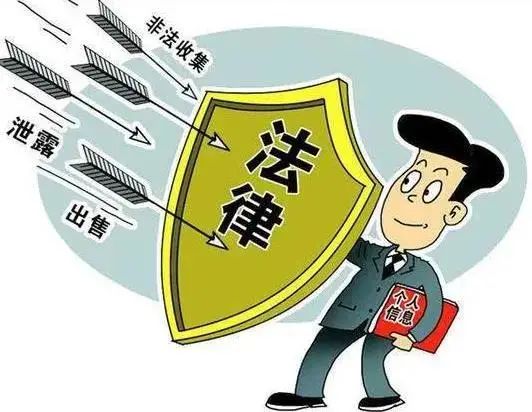
Plus a legal "security lock"

Case review

At the beginning of 2020, Li Ming (a pseudonym) and his former colleague Wang Li (a pseudonym) had feelings. He promised to divorce his wife and then marry Wang Li. However, Li Ming did not immediately divorce his wife. After Wang Li knew it, she knocked off the child behind his back and deleted the contact information such as WeChat friends, and no longer contacted Li Ming. Li Ming hoped to find Wang Li and get back together with her, so he bought a locator from the Internet and installed it on the car driven by Wang Li.

After Li Ming officially divorced his wife, he found Wang Li’s original residential area through the information of Wang Li’s driving track obtained by the locator associated with mobile phone software, and intercepted Wang Li on the road, and then the two sides had a quarrel. After Wang Li called the police, Li Ming was taken back to the police station by the police. Because Li Ming constituted a crime of infringing citizens’ personal information, the court sentenced him to six months’ imprisonment, suspended for one year and fined him RMB 1,000.

Law link

Article 1032 of the Civil Code [Privacy] Natural persons have the right to privacy. No organization or individual may infringe upon others’ right to privacy by spying, harassing, revealing or making public. Privacy is the private space, private activities and private information that natural people live peacefully and are unwilling to be known by others.

Whoever, in violation of the relevant provisions of the State, sells or provides personal information of citizens to others, if the circumstances are serious, shall be sentenced to fixed-term imprisonment of not more than three years or criminal detention, and shall also, or shall only, be fined; If the circumstances are especially serious, he shall be sentenced to fixed-term imprisonment of not less than three years but not more than seven years and shall also be fined.

The Criminal Law Amendment (IX) integrates the crime of selling and illegally providing citizens’ personal information and the crime of illegally obtaining citizens’ personal information into the crime of infringing citizens’ personal information.

Warm reminder

NO.1

Don’t casually expose your whereabouts on social media.

Many people especially like to bask in themselves on social software, but these basking may be targeted. Once they are used by people with ulterior motives, their privacy is likely to be leaked at any time. In fact, many crimes give the murderer an opportunity because the victim’s whereabouts are leaked.

NO.2

Do not download/license software at will.

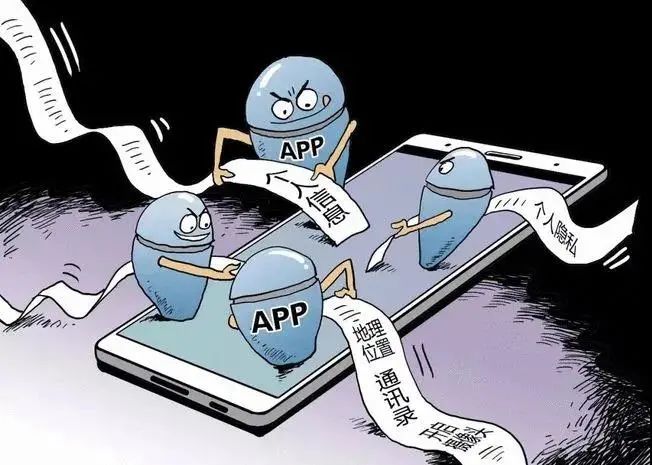
Nowadays, many softwares on mobile phones need authorization, including phone number, photos, identity, location and so on, which are important privacy. Some bad industrial chains specialize in selling this information. Before that, the Ministry of Industry and Information Technology also published a list of some software that obtained privacy beyond the scope, so you must not download the software at will or authorize it at will.

NO.3

Establish a sense of privacy protection

Many people feel that their privacy has been violated and there will be no big problem, which is wrong. The correct way is to stop the other party’s behavior in time, which is really not good. You can choose to let the police solve it.

NO.4

Be careful when you go out.

Many people’s privacy leaks inadvertently, so we must pay attention to the details of life. Pay special attention to tracking you or contacting your strangers when you go out, and don’t add people of unknown origin to WeChat at will, and pay attention to whether there is a hidden camera in the room when staying in the hotel. As the saying goes, be careful to sail for ten thousand years.

Source: Beijing politics and law,

People’s Daily, CCTV news client,

Previous recommendation

The judge turned into a "red vest" to help the fifth round of nucleic acid detection epidemic

Original title: "Privacy leaks, can’t be prevented? The personal information protection law is coming! 》

Read the original text

Expose food rumors: Citrus is sweetened with cyclamate.

  Sodium cyclamate, as an international food additive, will not be harmful to health as long as the intake is not over the standard. Sodium cyclamate will not make the fruit sweeter, on the contrary, it may make the shelf life of the fruit shorter.

  Recently, a WeChat WeChat official account published an article "All Taken, Soon Deleted", which introduced the situation that fruit farmers used cyclamate to sweeten oranges. Through careful compilation and editing by the producers, the article has been widely spread on the Internet, causing some consumers’ worries.

  The saying that citrus is sweetened with cyclamate is an old topic that has been repeatedly hyped. Besides citrus, the hyped fruit types involve winter dates, oranges, watermelons, cantaloupes, peaches, apples, etc. It is rumored that there are many ways to add it, such as soaking, injecting and spraying. Influenced by rumors, some consumers have doubts about the edible safety of fruits, and think that the intake of fruits with sodium cyclamate is not good for their health.

  What exactly is sodium cyclamate?

  Sodium cyclamate, whose scientific name is "sodium cyclamate", is a non-nutritive sweetener, and its sweetness is 30-mdash of sucrose; 40 times, and the price is only about 1/3 of sucrose, and it doesn’t taste bitter when used in a little amount like saccharin, so it can be used as an international food additive in foods such as drinks, fruit juice, ice cream, cakes and preserves.

  Sodium cyclamate as a food sweetener, according to the evaluation results of the Joint Expert Committee on Food Additives of FAO/WHO, the daily allowable intake does not exceed 11 mg/kg body weight. Xu Weisheng, an associate researcher at the Institute of Nutrition and Health of the China Center for Disease Control and Prevention, said that in China, there are strict regulations on the approval of food additives and the limitation of the scope of use. As long as the goods purchased by consumers are regular and the sodium cyclamate intake does not exceed the standard, it will not affect health.

  Is it feasible to sweeten fruits with sodium cyclamate?

  Xu Weisheng believes that sodium cyclamate is water-soluble and insoluble in oil. Even if sodium cyclamate is sprayed on the surface of fruit during its growth, sodium cyclamate cannot enter the fruit. If the fruit is sweetened by injecting sodium cyclamate, it needs to be injected in all directions, which will cause the destruction of plant cell walls and the fruit will rot and deteriorate in a short time. It is harmful to businesses, so it is impossible to add sodium cyclamate to sweeten fruits.

  A large number of data prove that enough vegetables and fruits are beneficial to health, including weight control, antioxidant supplementation, blood lipid and blood pressure control, reducing the risk of malignant tumors, promoting and protecting intelligence, and preventing cognitive decline. Consumers should not believe in rumors, do not spread rumors, believe in scientific knowledge, and eat enough fruits.

Miho Miyazaki, a member of AKB48, is in love with Cowherd? The brokerage company denied it.

  BEIJING, June 23 (Xinhua) According to Taiwan Province’s "Dongsen News", Miho Miyazaki, a 22-year-old member of the Japanese women’s group AKB48, was called "heian period Beauty", but she was ridiculed as a "balloon idol" because of her chubby physique. A few days ago, Mikami Yua, a former member of SKE48, broke the news that she was madly in love with Cowherd. On the 22nd, the photos were exposed, causing comments from netizens.

  According to Japanese media reports, Miho Miyazaki has lived in Niulang’s boyfriend’s house many times, and they are very close. The man works in Shinjuku kabukicho Hotel and looks very handsome. She was photographed walking out of her boyfriend’s home in late May, and went directly to Akihabara Theater to perform on stage, which was described by netizens as "like commuting to work". Every few days, she met each other in the cinema and sang KTV together until 5 am. In addition, some people witnessed the two people going to the supermarket together, and they did not deliberately cross-dress at that time.

  In addition, the identity of Cowherd’s boyfriend was also revealed. It is said that his name is Fujitsu Ling He, and he works in "LOVE" in Shinjuku kabukicho. He is 31 years old and looks handsome and handsome, and has won the trump card NO.1 throne in the store many times. Regarding the rumors of his love affair with Miho Miyazaki, the woman’s brokerage company denied it, emphasizing that "two people just know each other." Fans are angry that "the money I bought records ended up with the cowherd" and "it’s like a food chain."

7.01 trillion yuan! Where is the new impetus for the steady improvement of foreign trade?

  CCTV News:The General Administration of Customs released data on April 12th. In the first quarter, the total import and export value of China’s goods trade was 7.01 trillion yuan, up 3.7% year-on-year, achieving a smooth start. Specifically, in March this year, China’s foreign trade import and export was 2.46 trillion yuan, an increase of 9.6%, which effectively boosted the overall growth rate of foreign trade in the first quarter. What are the new highlights of new foreign trade data? How to improve the quality of foreign trade steadily to a new level?

  What’s the new change in foreign trade data?

  News link:

  In the first quarter, the total import and export value of China’s goods trade was 7.01 trillion yuan, up 3.7% year-on-year, achieving a smooth start.

  Specifically: the export was 3.77 trillion yuan, a year-on-year increase of 6.7%;

  Imports were 3.24 trillion yuan, up by 0.3%;

  The trade surplus was 529.67 billion yuan, an increase of 75.2%.

  Among them, China’s export growth rate exceeded expectations in March, achieving double-digit growth.

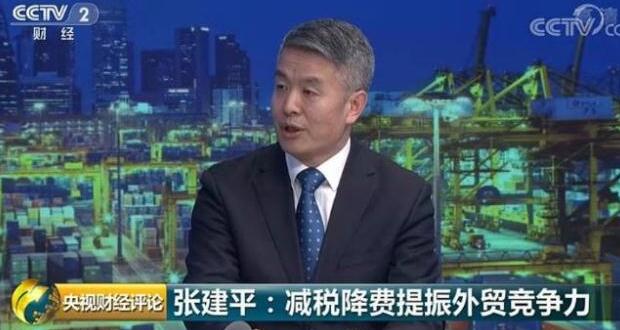
  Zhang Jianping: Market demand promotes private enterprises to become the main force of stable foreign trade

  Zhang Jianping, Director of the Regional Research Center of the Research Institute of the Ministry of Commerce: The foreign trade started smoothly in the first quarter, and the export in March exceeded expectations. I think the important reason is the demand of the international market. In this process, private enterprises played a major role, because the total import and export volume of private enterprises accounted for 40% of the total foreign trade volume, making a great contribution.

  In addition, the foreign trade of countries related to the "Belt and Road" is also steadily advancing. In the first quarter, China’s import and export to the EU increased by 11.5% year-on-year, which was higher than the overall trade growth rate.

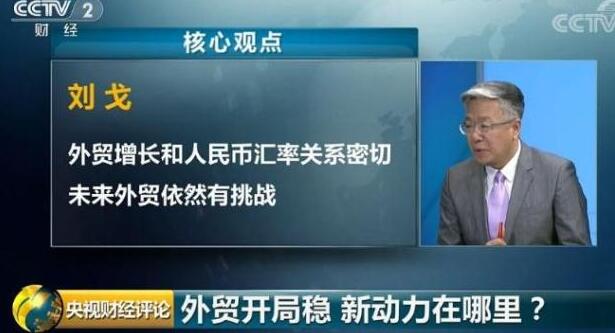
  Liu Ge: The "Belt and Road" construction promotes the diversification of China’s trading partners and promotes the growth of foreign trade

  Liu Ge, financial commentator of CCTV: Many careful China tourists will have a profound experience when they go abroad. Five or six years ago, we may have seen advertisements of China enterprises mostly in airports and other places, but now it is easy to see advertisements of China products on many city streets in many countries related to the Belt and Road Initiative, and the promotion of corporate brands is more vigorous. In the first quarter of this year, China’s import and export to Central and Eastern European countries maintained a relatively high growth rate year-on-year, and the proportion of imports and exports to Latin America and Africa reached 7% and 4.6% respectively, both of which increased year-on-year.

  How to improve foreign trade to a new level?

  News background:

  The person in charge of the Ministry of Commerce recently said that the following measures should be taken to stabilize foreign trade this year:

  First, we must stabilize the market, expand 30 key overseas markets, support the construction of international marketing networks, promote the development of cross-border e-commerce, and give enterprises more room for development.

  Second, we must stabilize confidence, implement eight measures to stabilize foreign trade, and reduce burdens for enterprises in taxation, finance, and facilitation.

  Third, we should improve quality and increase the export of high-tech, high-quality and high value-added products.

  Zhang Jianping: Reducing taxes and fees to boost foreign trade competitiveness

  Zhang Jianping, Director of the Regional Research Center of the Research Institute of the Ministry of Commerce: Behind the foreign trade data in the first quarter, China began to introduce a series of measures to stabilize foreign trade last year, such as simplifying administration and decentralization, improving the business environment, promoting the construction of the Pilot Free Trade Zone, and reducing taxes and fees. Coupled with the recent initiatives to promote the development of the real economy, these have given enterprises confidence. However, I also remind entrepreneurs that in the face of some uncertain international economic situation, we should not take it lightly, because the monthly and quarterly data of foreign trade are highly volatile. We should stabilize foreign trade, improve quality while maintaining stability, increase the core competitiveness and enhance the added value of products for foreign trade enterprises, and in addition, enterprises should actively explore the markets of countries related to the "Belt and Road" and take precautions.

  Liu Ge: The confidence of private enterprises is the key to improving the quality of foreign trade.

  Liu Ge, financial commentator of CCTV: The recent introduction of a series of measures to reduce taxes and fees has greatly helped the development of private enterprises, which are full of confidence. In the future, by increasing investment in research and development and continuing to promote innovation and product upgrading, they will be more competitive in the market. The stability of private enterprises is the key to improving the quality of foreign trade.

  News link:

  China’s foreign trade exports are improving steadily. At present, the export volume of mechanical and electrical products has accounted for nearly 60% of China’s total exports, which is three times that of labor-intensive products such as clothing and textiles. According to the data of the General Administration of Customs, China’s exports of computer equipment, metalworking machine tools and automobiles increased by 10.5%, 26.5% and 15.1% respectively in the first quarter.

  Zhang Jianping: Stabilizing foreign trade requires a multi-pronged approach.

  Zhang Jianping, Director of the Regional Research Center of the Research Institute of the Ministry of Commerce: The next step to stabilize foreign trade should be multi-pronged, because the factors of global market fluctuation are very complicated, such as the process of Brexit.

  From the point of view of stabilizing foreign trade, it is necessary to strike a hard iron and maintain its foreign trade competitiveness. This requires a variety of policy support. For example, the Pilot Free Trade Zone is a new growth point of foreign trade, and it is necessary to gradually accelerate the replication and promotion of relevant trade facilitation policies in the Pilot Free Trade Zone. In addition, it is necessary to deepen measures to reduce taxes and fees, improve the business environment, and take various measures to help our foreign trade enterprises develop and form stronger market competitiveness.

  Liu Ge: The growth of foreign trade is closely related to the RMB exchange rate. There are still challenges in foreign trade in the future.

  Liu Ge, financial commentator of CCTV: Foreign trade growth is closely related to RMB exchange rate. Recently, the International Monetary Fund lowered its forecast for global economic growth this year, which mentioned the uncertainty of global trade situation. Therefore, there are still challenges for foreign trade enterprises in the future.

Policy Interpretation of Guangdong Provincial Department of Natural Resources Printing and Distributing Several Guiding Opinions on Strengthening and Improving Regulatory Detailed Planning Management

  First, what is the background of the introduction?

  According to the Urban and Rural Planning Law, Regulations on Urban and Rural Planning in Guangdong Province and Regulations on Regulatory Detailed Planning in Guangdong Province, regulatory detailed planning (hereinafter referred to as "regulatory planning") is based on the approved urban (town) master plan and zoning plan, which plans the land use nature, development intensity, roads, engineering pipelines and supporting facilities, space environment and other control requirements of the construction area, and is for planning permission and implementation. In the national spatial planning system, detailed planning basically continues the legal status and role of regulatory planning. "Several Opinions of the Central Committee of the Communist Party of China and the State Council on Establishing Land Spatial Planning System and Supervising its Implementation" points out that "Detailed planning is an implementation arrangement for specific land use and development and construction intensity, and it is the legal basis for carrying out land spatial development and protection activities, implementing land spatial use control, issuing planning permission for urban and rural construction projects, and carrying out various constructions within urban development boundaries". Regulatory management is directly related to safeguarding the public interests of the city, strictly observing the bottom line of development, ensuring the spatial response ability of social and economic development, and promoting the legal landing of construction projects.

  As early as 2004, our province took the lead in carrying out provincial-level regulatory management legislation, and promulgated and implemented the Regulations on the Management of Regulatory Detailed Planning in Guangdong Province. In 2008, the Urban and Rural Planning Law was promulgated, which absorbed the relevant experience of regulatory management in our province into the legal provisions and became a great contribution of our province to the national planning management system. Over the years, our province has continuously improved the system construction of planning and management, and formed a relatively perfect planning and management order with legal permission, which has played a great role in the healthy and stable development of our province’s social economy, especially in maintaining the fairness and standardization of planning conditions for construction land. However, with the development of social economy and the deepening of reform, the regulatory management system can not meet the urgent needs of the rapid changes in the current market and the improvement of public service facilities in some aspects. It is mainly reflected in the fact that there is no distinction between business land and public welfare land, and there is no distinction between before and after the transfer of business land, which leads to the inefficiency of regulatory management, the difficulty in building public welfare facilities, the uncoordinated supply and demand of business land, and the difficulty in planning revision, which is incompatible with the current policy requirements for deepening reform. Under the new normal of economic and social development, the response efficiency of regulatory management to the spatial allocation of urban development factors has received further attention. Optimizing regulatory management has become the deployment requirement of deepening the market-oriented allocation reform of factors, "streamline administration, delegate power, strengthen regulation and improve services" reform and optimizing the business environment.Give full play to the decisive role of market allocation of resource elements. Improve the efficiency of planning and the guarantee ability of spatial response.

  Second, what are the main ideas and contents?

  In view of the fact that the current land and space planning system is not stable and new laws and regulations have not yet been promulgated, the main idea of drafting the Guiding Opinions is: under the framework of the current laws and regulations, strictly adhere to the bottom line thinking of safeguarding public interests, adhere to the problem-oriented approach of blocking points and filling shortcomings, and combine the existing practices and advanced experiences inside and outside the province to improve the efficiency of the examination and approval of regulatory amendments, with the aim of promoting the construction projects to land as soon as possible, and form a transitional document to guide all localities to strengthen and improve regulatory management.

  The Guiding Opinions put forward 10 reform measures to strengthen and improve the management of optimized detailed planning (regulatory detailed planning) from four aspects: improving the preparation method, dynamically maintaining the planning, improving the efficiency of examination and approval, strengthening the preparation method of management support, planning adjustment, examination and approval procedures and management support.

  3. What measures are there to improve the compilation method of control regulations?

  (1) Clear control requirements at different levels. The Guiding Opinions put forward that the planning indicators such as building area, floor area ratio, green space area and public service facilities should be comprehensively balanced within the boundaries of urban development, which is conducive to strengthening the flexibility of planning and optimizing the functional layout within the unit.

  (2) Defining the key points by type. Cities and counties can distinguish different types of regulatory planning, such as incremental areas, stock areas and historical protection areas, and put forward various types of regulatory planning priorities and control means to make a good connection between planning. For plots whose development intentions are not clear for the time being, they can be left blank in the control regulations.

  (3) streamlining the results. The statutory documents and management documents in the integrated regulatory results can be integrated, and the integrated planning results are composed of statutory documents and technical documents.

  4. What measures are there to optimize the dynamic maintenance of control regulations?

  (1) Improve the efficiency of regulatory revision. It is really necessary to further improve the work efficiency of regulatory revision. The competent departments of natural resources in cities and counties can combine the demonstration of the necessity of regulatory revision and the preparation of regulatory revision plan, further shortening the time for expert argumentation and department collection of opinions at all stages.


  Fig. 1 Schematic diagram of the optimized approval process for regulatory modification.

  (two) the implementation of local adjustments and technical corrections. The Guiding Opinions put forward that under the premise of not violating the mandatory requirements such as the bottom line of national spatial planning, the protection of ecological environment, natural and historical cultural heritage and urban safety, and not breaking through the control indicators such as the leading function of the regulatory unit and the total residential building area, the local level can define the situation of local adjustment and technical revision of regulatory regulations in accordance with the law when listing, and put forward the specific situation defined in principle, so as to improve the spatial response efficiency of regulatory regulations to market allocation of resource elements.

  V. What measures are there to improve the efficiency of regulatory approval?

  (a) improve the planning committee and public participation system. According to the Guiding Opinions, cities and counties with conditions can set up regulatory detailed planning committees under the urban and rural planning (land and space planning) committees, and cities with districts can set up sub-committees of urban and rural planning (land and space planning) to improve the frequency and efficiency of deliberation of the urban and rural planning (land and space planning) committees or regulatory professional committees, strengthen the pertinence and effectiveness of the publicity of draft regulatory regulations, and accurately inform stakeholders of the planning contents.

  (2) Optimize the regulatory approval process. Local level listing can entrust the examination and approval authority of land development rules (land plans) outside key areas within the scope of municipal districts to the district people’s government according to laws and regulations. All localities can entrust the approval authority of industrial parks and logistics parks to functional area management agencies according to laws and regulations. The local adjustment of control regulations shall be submitted to the original examination and approval authority or its entrusted authority for examination and approval after being examined and approved by the competent department of natural resources of cities and counties. The technical revision of control regulations can be approved by the competent department of natural resources of cities and counties.


  Fig. 2 Schematic diagram of local adjustment and approval process (suggestion) of control regulations


  Fig. 3 Schematic diagram of technical revision and approval process (suggestion) of control regulations.

  6. What measures are there to strengthen the support of regulatory management?

  (1) Strengthen the informatization construction of regulatory management. According to the unified data format, the Guiding Opinions proposes to accelerate the integration of planning such as regulatory planning, village planning, historical and cultural protection planning, overall land use planning and special planning, as well as spatial data such as land use status, cultivated land protection and land use approval, and strengthen the docking with the platform of engineering construction project approval management system. Reserved interface, do a good job with the land and space planning "one map" implementation supervision information system under construction.

  (two) simplify the planning permission review procedures. Construction projects that have passed the "multi-regulation integration" project planning and generated functional review can directly issue land use planning permits in the land transfer link. Government investment projects that have passed the joint evaluation of engineering construction plans, industrial and logistics warehousing projects with land transfer plans, can no longer conduct the review of construction engineering design plans when issuing construction engineering planning permits.

  (3) Encourage the establishment of a third-party review mechanism. The Guiding Opinions also proposes to encourage natural resources management departments to entrust technical institutions with corresponding qualifications to conduct third-party technical review. Third-party technical review institutions shall bear corresponding legal responsibilities for their review conclusions according to law, so as to strengthen the management support of control regulations and ensure the smooth implementation of relevant control regulations optimization work.

Notice of Guangdong Provincial Department of Natural Resources on Several Guiding Opinions on Strengthening and Improving Regulatory Detailed Planning Management (Provisional)

Real shot analysis of Chery iCAR brand iCAR 03+ concept car iCAR GT

ICAR brand night on the eve of Shanghai Auto Show, iCAR brand’s two new cars, iCAR GT and iCAR 03, made their world debut. iCAR 03, a hard-core SUV positioned as "urban hard-core off-road", and iCAR GT, a super-running concept car, made everyone shine. With the opening of Shanghai Auto Show, the two new cars also appeared in the iCAR brand exhibition hall. Today, Mao Ge took everyone’s curiosity and expectation for these two cars and brought them to the museum for real shooting.

iCAR 03

As the first mass-produced model of iCAR brand, its angular lines and cool shape make this car with the attribute of "urban hard-core off-road" very eye-catching. At the same time, iCAR 03 is also equipped with intelligent adaptive four-wheel drive and built-in all-aluminum girder, which has quite excellent off-road performance. And its design and function are also full of modernity and science and technology.

Specifically, in terms of design, iCAR 03 adopts the unique square shape of hard-core off-road as a whole. The front face adopts a closed front grille structure, and the protruding front grille and bumper form the effect of splitting up and down, which is elegant without losing the wild visual effect, making the front face of the car full of momentum.

In addition, the new car also adopts the design of penetrating headlight group, with the luminous LOGO in the center, which gives the front face a fashionable and technological atmosphere that pure electric vehicles should have.

On the side of the car body, the straight and tough lines outline the strength of the whole car body. The short front and rear suspension design is matched with a trapezoidal wheel arch with a large overhang and a large-size wheel rim equipped with all-terrain tires, which highlights the hard-core attributes of the new car.

The word ALLROAD on the car body also reveals its off-road positioning. In addition, the ABCD columns of the new car are all designed with black paint suspension, which complements the roof rack and adds a sense of urban fashion to this hard guy.

It is reported that the body size of the new car will not exceed 4200/1830/1700mm, but the wheelbase will reach 2700 mm.

The rear part is complementary to the front face design, and the hard-core off-road style is also very prominent. The rear taillights with vertical design on both sides are angular, and the internal light source is full of three-dimensional LED light source, so the overall visual effect is rugged without losing the sense of fashion and exquisite design. In addition, the trunk cover of the new car adopts a side-opening structure and is equipped with a square "small schoolbag". It is worth mentioning that the small schoolbag of the new car is different from the fuel version in that the interior is used as a storage function.

In terms of configuration, we can see that iCAR 03 is equipped with panoramic sunroof, retractable door handle and NFC key, which is also a popular element deeply loved by young consumers. In addition, the new car is expected to be equipped with iCAR’s intelligent cabin driving technology and more than 20 intelligent sensors to realize L2+ automatic driving. ICAR virtual human i-VA will be applied to the car system of iCAR 03 for the first time, which will undoubtedly bring more intelligent and humanized experience to users and make technology more temperature.

In terms of power, this car uses pure electric drive and will launch a variety of endurance versions. ICAR 03 is built with the user’s needs as the guide, accompanying users in the whole scene, and creating a "5+2" life full scene car experience for chasing new young people.

Concept car: iCAR GT

CAR GT is a futuristic concept car, which adopts the design language of "infinite light arc", making the whole car look more dynamic and smooth, and the overall style is very cool and exaggerated. When the gull-wing door opens like wings, it is more attractive and attractive.

ICAR GT’s body side adopts a very smooth design, and the nose dive posture gives people a ready impact. The B-pillar of the new car adopts the shape of fangs, which is very distinctive. Reminds people of the concept of future chariots.

At the back of the car, iCAR GT is equally futuristic. The tail is designed with a huge groove, which is full of fighting power, while the taillight style is similar to that of the headlights, making the whole tail look more neat and orderly. At the same time, the top of the tail adopts a convex design, which further highlights the sporty atmosphere of iCAR GT.

ICAR GT and iCAR 03 are both based on the i-MS multi-element Rubik’s Cube new energy architecture platform, adopting i-VA ecology, and the power system will use the battery brand ENER-Q jointly launched by Chery and Contemporary Amperex Technology Co., Limited. More information from the iCAR brand and two new cars, One Cat Car will continue to pay attention and bring more reports to everyone.

Huaihua Changan Auchan X5 price reduction carnival at the end of the year, with a special price of 68,900! If you miss it, you won’t

[car home Huaihua Preferential Promotion Channel] There is a large-scale preferential activity in Huaihua, with the highest discount reaching 20,000 yuan, which reduces the minimum starting price of this highly anticipated SUV model to 68,900 yuan. If you are interested in this model, don’t miss this opportunity to buy a car, and click "Check the car price" in the quotation form to get a higher discount.

怀化地区长安欧尚X5年末降价狂欢,特价6.89万!错过就没有

The exterior design of Changan Auchan X5 is full of power and movement. The front face adopts a large air intake grille, and the flying wing chrome decoration in the center is perfectly integrated with the LED headlights on both sides, giving the vehicle a high degree of recognition. The whole body line is smooth and dynamic, with sharp waistline and unique wheel hub design, creating a strong sports atmosphere. On the whole, the design of Changan Auchan X5 is not only fashionable and avant-garde, but also has a very high visual impact.

怀化地区长安欧尚X5年末降价狂欢,特价6.89万!错过就没有

Changan Auchan X5 has a body size of 4490*1860*1580mm and a wheelbase of 2710mm, providing spacious interior space. The lines on the side of the car are smooth and dynamic. With 18-inch rims, the tyre size is 225/50 R18, showing a fashionable and sporty visual effect.

怀化地区长安欧尚X5年末降价狂欢,特价6.89万!错过就没有

The interior of Changan Auchan X5 adopts modern and simple design style, which brings comfortable and pleasant driving experience to passengers. The steering wheel is made of leather, which feels delicate and supports manual adjustment up and down to meet the needs of different drivers. The center console is equipped with a 10.25-inch central control screen, which supports a variety of functional operations and provides convenience for drivers. The seat is made of leather/fabric mixed material. The main seat has the functions of front and rear adjustment, backrest adjustment and height adjustment (2-way), while the auxiliary seat has the functions of front and rear adjustment and backrest adjustment, which brings passengers a comfortable riding experience. The rear seats support proportional tilting, which increases the space flexibility of the trunk. In addition, the car is also equipped with USB and Type-C interfaces, which is convenient for passengers to charge devices such as mobile phones.

怀化地区长安欧尚X5年末降价狂欢,特价6.89万!错过就没有

Changan Auchan X5 is equipped with a 1.5T 188 horsepower L4 engine with a maximum power of 138kW and a maximum torque of 300 N m.. The engine cooperates with the 7-speed wet dual-clutch gearbox, which provides excellent power output and smooth shifting experience for the vehicle.

In their evaluation of Changan Auchan X5, car home car owners especially mentioned its sports style and youthful appearance design. He pointed out that the side design of the car has the style of a sports car, the external work is solid, the paint material is thick, and the reflector not only supports electric adjustment, but also has heating function. The outstanding performance in these details undoubtedly adds a lot of highlights to Changan Auchan X5.