National Bureau of Statistics: The annual GDP was 126,058.2 billion yuan, an increase of 5.2% over the previous year.

  CCTV News:A few days ago, the National Bureau of Statistics announced the statistical bulletin on national economic and social development in 2023. According to preliminary accounting, the annual GDP was 126,058.2 billion yuan, an increase of 5.2% over the previous year. Among them, the added value of the primary industry was 8,975.5 billion yuan, an increase of 4.1% over the previous year; The added value of the secondary industry was 48,258.9 billion yuan, an increase of 4.7%; The added value of tertiary industry was 68,823.8 billion yuan, up by 5.8%. The added value of the primary industry accounts for 7.1% of GDP, the added value of the secondary industry accounts for 38.3%, and the added value of the tertiary industry accounts for 54.6%. The final consumption expenditure boosted GDP by 4.3 percentage points, the total capital formation boosted GDP by 1.5 percentage points, and the net export of goods and services boosted GDP by 0.6 percentage points. Quarterly, GDP increased by 4.5% in the first quarter, 6.3% in the second quarter, 4.9% in the third quarter and 5.2% in the fourth quarter. The annual per capita GDP was 89,358 yuan, an increase of 5.4% over the previous year. The gross national income was 125,129.7 billion yuan, an increase of 5.6% over the previous year. The overall labor productivity was 161,615 yuan/person, an increase of 5.7% over the previous year.

  People’s Republic of China (PRC)2023Statistical bulletin on national economic and social development in[1]

National Bureau of Statistics(NBS)

February 29, 2024

  The first year of fully implementing the spirit of the 20th National Congress of the Communist Party of China in 2023 is a year of economic recovery and development after three years of epidemic prevention and control in COVID-19. Facing the complicated and severe international environment and arduous domestic reform, development and stability tasks, under the strong leadership of the CPC Central Committee with the Supreme Leader as the core, all localities and departments adhere to the guidance of the Supreme Leader’s Socialism with Chinese characteristics Thought in the new era, fully implement the spirit of the 20th Party Congress and the Second Plenary Session of the 20th CPC Central Committee, adhere to the general tone of striving for progress while maintaining stability, and fully, accurately and comprehensively implement the new development concept in accordance with the decision-making arrangements of the CPC Central Committee and the State Council. Accelerate the construction of a new development pattern, focus on promoting high-quality development, comprehensively deepen reform and opening up, intensify macro-control, focus on expanding domestic demand, optimize the structure, boost confidence and prevent risks, make solid progress in the recovery of the national economy and high-quality development, make important progress in the construction of a modern industrial system, achieve new breakthroughs in scientific and technological innovation, deepen reform and opening up, consolidate and consolidate the foundation for safe development, ensure effective people’s livelihood, and make progress in building a socialist modern country in an all-round way.

  I. Synthesis

  According to preliminary accounting, the annual GDP [2] was 126,058.2 billion yuan, an increase of 5.2% over the previous year. Among them, the added value of the primary industry was 8,975.5 billion yuan, an increase of 4.1% over the previous year; The added value of the secondary industry was 48,258.9 billion yuan, an increase of 4.7%; The added value of tertiary industry was 68,823.8 billion yuan, up by 5.8%. The added value of the primary industry accounts for 7.1% of GDP, the added value of the secondary industry accounts for 38.3%, and the added value of the tertiary industry accounts for 54.6%. The final consumption expenditure boosted GDP by 4.3 percentage points, the total capital formation boosted GDP by 1.5 percentage points, and the net export of goods and services boosted GDP by 0.6 percentage points. Quarterly, GDP increased by 4.5% in the first quarter, 6.3% in the second quarter, 4.9% in the third quarter and 5.2% in the fourth quarter. The annual per capita GDP was 89,358 yuan, an increase of 5.4% over the previous year. The gross national income [3] was 125,129.7 billion yuan, up by 5.6% over the previous year. The overall labor productivity [4] was 161,615 yuan/person, up by 5.7% over the previous year.

  At the end of the year, the national population was 1,409.67 million, 2.08 million fewer than the end of the previous year, including 932.67 million urban residents. The annual birth population was 9.02 million, and the birth rate was 6.39&permil. ; The death toll was 11.1 million, with a mortality rate of 7.87‰ ; The natural growth rate is-1.48 & permit; .

  At the end of the year, there were 740.41 million employed people in China, including 470.32 million employed people in cities and towns, accounting for 63.5% of the total employed people in China. In the whole year, 12.44 million new jobs were created in cities and towns, an increase of 380,000 over the previous year. The average unemployment rate in the national urban survey for the whole year was 5.2%. At the end of the year, the national urban survey unemployment rate was 5.1%. The total number of migrant workers in China [8] was 297.53 million, up by 0.6% over the previous year. Among them, there were 176.58 million migrant workers, an increase of 2.7%; There were 120.95 million local migrant workers, down by 2.2%.

  The annual consumer price rose by 0.2% over the previous year. The ex-factory price of industrial producers decreased by 3.0%. The purchase price of industrial producers decreased by 3.6%. The producer price of agricultural products [9] decreased by 2.3%. In December, among 70 large and medium-sized cities, the sales price of new commercial housing increased in 20 cities, remained flat in 2 cities and decreased in 48 cities. The number of cities where the sales price of second-hand houses increased year-on-year was 1, while the number of cities that decreased was 69.

  At the end of the year, China’s foreign exchange reserves reached 3,238 billion US dollars, an increase of 110.3 billion US dollars over the end of last year. The annual average exchange rate of RMB was 7.0467 yuan to the dollar, which was 4.5% lower than the previous year.

  New kinetic energy grows stronger. Among the industries above designated size [11], the added value of equipment manufacturing [12] increased by 6.8% over the previous year, accounting for 33.6% of the added value of industries above designated size; The added value of high-tech manufacturing [13] increased by 2.7%, accounting for 15.7% of the added value of industrial enterprises above designated size. The output of new energy vehicles was 9.443 million, an increase of 30.3% over the previous year; The output of solar cells (photovoltaic cells) was 540 million kilowatts, an increase of 54.0%; The output of service robots was 7.833 million sets, an increase of 23.3%; The output of 3D printing equipment was 2.789 million units, an increase of 36.2%. Among the above-scale service industries [14], the operating income of strategic emerging service industries [15] increased by 7.7% over the previous year. Investment in high-tech industries [16] increased by 10.3% over the previous year, and investment in technological transformation of manufacturing industry [17] increased by 3.8%. The transaction volume of e-commerce was [18] 468.273 billion yuan, an increase of 9.4% over the previous year. Online retail sales reached 15,426.4 billion yuan, an increase of 11.0% over the previous year. In the whole year, 32.73 million new business entities were established, and 27,000 new enterprises were established every day.

  The pace of urban-rural integration and regional coordinated development is steady. At the end of the year, the urbanization rate of permanent residents in China was 66.16%, an increase of 0.94 percentage points over the end of the previous year. By region [20], the GDP of the eastern region was 652.084 billion yuan, an increase of 5.4% over the previous year; The GDP of the central region was 26,989.8 billion yuan, an increase of 4.9%; The GDP of the western region was 26,932.5 billion yuan, up by 5.5%; The GDP of Northeast China was 5,962.4 billion yuan, an increase of 4.8%. The annual GDP of Beijing-Tianjin-Hebei region was 10,444.2 billion yuan, an increase of 5.1% over the previous year; The GDP of the Yangtze River Economic Belt was 58,427.4 billion yuan, an increase of 5.5%. The GDP of the Yangtze River Delta was 30,504.5 billion yuan, an increase of 5.7%. Major regional strategies such as Guangdong-Hong Kong-Macao Greater Bay Area construction, ecological protection in the Yellow River basin and high-quality development have been further promoted.

  The green and low-carbon transformation has been further promoted. The carbon dioxide emissions per 10,000 yuan of GDP in the whole year [21] were the same as that of the previous year. The electricity generated by clean energy such as hydropower, nuclear power, wind power and solar power generation was 3,190.6 billion kWh, up by 7.8% over the previous year. Among the 339 monitored cities at prefecture level and above, 59.9% of them meet the air quality standards, and 40.1% fail to meet the standards. Among the 3641 national surface water assessment sections, the proportion of sections with excellent water quality (I-III) is 89.4%, the proportion of sections with class IV is 8.4%, the proportion of sections with class V is 1.5%, and the proportion of sections with poor class V is 0.7%.

  Second, agriculture

  The annual grain planting area was 118.97 million hectares, an increase of 640,000 hectares over the previous year. Among them, the rice planting area was 28.95 million hectares, a decrease of 500,000 hectares; The wheat planting area was 23.63 million hectares, an increase of 110,000 hectares; The planting area of corn was 44.22 million hectares, an increase of 1.15 million hectares; The soybean planting area was 10.47 million hectares, an increase of 230,000 hectares. The cotton planting area was 2.79 million hectares, a decrease of 210,000 hectares. The oil planting area was 13.92 million hectares, an increase of 780,000 hectares. The planting area of sugar was 1.42 million hectares, a decrease of 30,000 hectares.

  The annual grain output was 695.41 million tons, an increase of 8.88 million tons or 1.3% over the previous year. Among them, the output of summer grain was 146.15 million tons, a decrease of 0.8%; The output of early rice was 28.34 million tons, an increase of 0.8%; The output of autumn grain was 520.92 million tons, an increase of 1.9%. The grain output was 641.43 million tons, an increase of 1.3% over the previous year. Among them, the rice output was 206.6 million tons, a decrease of 0.9%; The wheat output was 136.59 million tons, a decrease of 0.8%; The output of corn was 288.84 million tons, an increase of 4.2%. Soybean output was 20.84 million tons, an increase of 2.8%.

  The annual cotton output was 5.62 million tons, a decrease of 6.1% over the previous year. The oil output was 38.64 million tons, an increase of 5.7%. The output of sugar was 115.04 million tons, an increase of 2.4%. The output of tea was 3.55 million tons, an increase of 6.1%.

  The annual output of pigs, cattle, sheep and poultry was 96.41 million tons, up by 4.5% over the previous year. Among them, the output of pork was 57.94 million tons, an increase of 4.6%; The beef output was 7.53 million tons, an increase of 4.8%; The mutton output was 5.31 million tons, an increase of 1.3%; The output of poultry meat was 25.63 million tons, up by 4.9%. The output of poultry eggs was 35.63 million tons, an increase of 3.1%. The milk output was 41.97 million tons, an increase of 6.7%. At the end of the year, there were 434.22 million live pigs, down 4.1% from the end of last year. In 2001, 726.62 million pigs were slaughtered, up 3.8% over the previous year.

  The total output of aquatic products in the year was 71 million tons, an increase of 3.4% over the previous year. Among them, the aquaculture output was 58.12 million tons, an increase of 4.4%; The fishing output was 12.88 million tons, down by 1.0%.

  The annual timber output was 119.44 million cubic meters, down 2.0% from the previous year.

  In the whole year, 5.74 million hectares of high-standard farmland were built, renovated and upgraded, and 1.64 million hectares of high-efficiency water-saving irrigation were added.

  III. Industry and Construction Industry

  The total industrial added value of the whole year was 39,910.3 billion yuan, up by 4.2% over the previous year. The added value of industrial enterprises above designated size increased by 4.6%. In industries above designated size, the added value of state-owned holding enterprises increased by 5.0% according to economic types; Joint-stock enterprises increased by 5.3%, and foreign-invested enterprises from Hong Kong, Macao and Taiwan increased by 1.4%; Private enterprises increased by 3.1%. In terms of categories, the mining industry grew by 2.3%, the manufacturing industry by 5.0%, and the electricity, heat, gas and water production and supply industries by 4.3%.

  Among the industries above designated size, the added value of agricultural and sideline food processing industry increased by 0.2% over the previous year, textile industry decreased by 0.6%, chemical raw materials and chemical products manufacturing industry increased by 9.6%, non-metallic mineral products industry decreased by 0.5%, ferrous metal smelting and rolling processing industry increased by 7.1%, general equipment manufacturing industry increased by 2.0%, special equipment manufacturing industry increased by 3.6%, automobile manufacturing industry increased by 13.0%, and electrical machinery and equipment manufacturing industry increased by 12.9%.

  The annual profit of industrial enterprises above designated size was 7,685.8 billion yuan, down 2.3% from the previous year. In terms of economic types, the profits of state-owned holding enterprises were 2,262.3 billion yuan, down 3.4% from the previous year; Joint-stock enterprises reached 5,677.3 billion yuan, down by 1.2%, and foreign-invested enterprises from Hong Kong, Macao and Taiwan reached 1,797.5 billion yuan, down by 6.7%. Private enterprises reached 2,343.8 billion yuan, an increase of 2.0%. In terms of categories, the profit of the mining industry was 1,239.2 billion yuan, down 19.7% from the previous year; The manufacturing industry was 5,764.4 billion yuan, down 2.0%; Electricity, heat, gas and water production and supply industries reached 682.2 billion yuan, an increase of 54.7%. The cost per 100 yuan of operating income of industrial enterprises above designated size was 84.76 yuan, an increase of 0.04 yuan over the previous year; The profit rate of operating income was 5.76%, down by 0.20 percentage points. At the end of the year, the asset-liability ratio of industrial enterprises above designated size was 57.1%, down 0.1 percentage point from the end of the previous year. The annual utilization rate of industrial capacity above designated size [24] was 75.1%.

  According to preliminary accounting, the total primary energy production in the whole year was 4.83 billion tons of standard coal, up by 4.2% over the previous year.

  At the end of the year, the installed capacity of power generation in China was 2,919.65 million kilowatts, an increase of 13.9% over the end of last year. Among them, [26], the installed capacity of thermal power is 1,390.32 million kilowatts, an increase of 4.1%; The installed capacity of hydropower was 421.54 million kilowatts, an increase of 1.8%; The installed capacity of nuclear power was 56.91 million kilowatts, an increase of 2.4%; The installed capacity of grid-connected wind power is 441.34 million kilowatts, an increase of 20.7%; The installed capacity of grid-connected solar power generation is 609.49 million kilowatts, an increase of 55.2%.

  The added value of the construction industry in the whole year was 8,569.1 billion yuan, an increase of 7.1% over the previous year. The profit of general contracting and professional contracting construction enterprises with qualification grade in China was 832.6 billion yuan, up [27]0.2% over the previous year, of which 401.9 billion yuan was state-owned holding enterprises, up 4.3%.

  Fourth, the service industry

  The added value of wholesale and retail industry in the whole year was 12,307.2 billion yuan, an increase of 6.2% over the previous year; The added value of transportation, warehousing and postal services was 5,782 billion yuan, an increase of 8.0%; The added value of accommodation and catering industry was 2,102.4 billion yuan, an increase of 14.5%; The added value of the financial industry was 1,067.7 billion yuan, an increase of 6.8%; The added value of the real estate industry was 7,372.3 billion yuan, down by 1.3%; The added value of information transmission, software and information technology services was 5,519.4 billion yuan, an increase of 11.9%; The added value of leasing and business services was 4,434.7 billion yuan, up by 9.3%. The operating income of service enterprises above designated size increased by 8.3% over the previous year, and the total profit increased by 26.8%.

  The total cargo transportation in the whole year was [28] 55.7 billion tons, an increase of 8.1% over the previous year. The turnover of cargo transportation was 24,771.3 billion tons kilometers, up by 6.3%. The port’s cargo throughput was 17 billion tons, up 8.2% over the previous year, of which the foreign trade cargo throughput was 5 billion tons, up 9.5%. The port container throughput was 310.34 million TEUs, up by 4.9%.

  The total number of passengers transported in the whole year was 9.3 billion, an increase of 66.5% over the previous year. Passenger transport turnover was 2,861 billion person-kilometers, an increase of 121.4%.

  At the end of the year, there were 336.18 million civilian cars (including 7.06 million tricycles and low-speed trucks), an increase of 17.14 million over the end of last year, of which 294.27 million were private cars, an increase of 15.53 million. The number of civilian cars was 186.68 million, an increase of 9.28 million, including 175.41 million private cars, an increase of 8.56 million.

  In 2001, the postal delivery business totaled [2.9] 162.5 billion pieces, an increase of 16.8% over the previous year. The postal industry completed 970 million postal mail services, 200 million parcel services, 132.07 billion express delivery services and 1,207.4 billion yuan in express delivery services. In 2001, the total telecom business volume reached 1,832.7 billion yuan, up by 16.8% over the previous year. By the end of the year, there were 11.62 million mobile phone base stations, including 6.29 million 4G base stations and 3.38 million 5G base stations. The total number of telephone users in China is 1,899.92 million, including 1,726.6 million mobile phone users. The mobile phone penetration rate is 122.5/100 people. There were [32] 636.31 million fixed Internet broadband access users, an increase of 46.66 million over the end of last year, among which [33] 601.36 million broadband access users with a speed of 100M or above, an increase of 47.56 million. There are 2.332 billion end users of cellular Internet of Things [34], an increase of 488 million. There are 1.092 billion Internet users, including 1.091 billion mobile Internet users. The Internet penetration rate is 77.5%, of which the Internet penetration rate in rural areas is 66.5%. In 2001, the access traffic of mobile Internet users was 301.5 billion GB, up by 15.2% over the previous year. Software and information technology service industry [35] completed software business income of 12,325.8 billion yuan, an increase of 13.4% over the previous year.

  V. Domestic trade

  The total retail sales of consumer goods in the whole year was 47,149.5 billion yuan, an increase of 7.2% over the previous year. According to the business location, the retail sales of urban consumer goods was 40,749 billion yuan, an increase of 7.1%; The retail sales of rural consumer goods reached 6.4 trillion yuan, an increase of 8.0%. By consumption type, the retail sales of commodities reached 41,860.5 billion yuan, an increase of 5.8%; The catering revenue was 5,289 billion yuan, an increase of 20.4%. Retail sales of services [36] increased by 20.0% over the previous year.

  Among the retail sales of commodities above designated size, the retail sales of grain, oil and food increased by 5.2% over the previous year, beverages increased by 3.2%, alcohol and tobacco increased by 10.6%, clothing, shoes and hats, knitwear increased by 12.9%, cosmetics increased by 5.1%, gold and silver jewelry increased by 13.3%, daily necessities increased by 2.7%, household appliances and audio-visual equipment increased by 0.5%, and Chinese and western medicines increased by 0.5%. Cultural office supplies decreased by 6.1%, furniture increased by 2.8%, communication equipment increased by 7.0%, petroleum and products increased by 6.6%, automobiles increased by 5.9%, and building and decoration materials decreased by 7.8%.

  The annual online retail sales of physical goods reached 13,017.4 billion yuan, an increase of 8.4% over the previous year, accounting for 27.6% of the total retail sales of social consumer goods.

  VI. Investment in fixed assets

  In the whole year, the investment in fixed assets of the whole society was 50,970.8 billion yuan, an increase of [37]2.8% over the previous year. Investment in fixed assets (excluding farmers) was 50,303.6 billion yuan, an increase of 3.0%. In fixed assets investment (excluding farmers), by region [38], investment in the eastern region increased by 4.4%, investment in the central region increased by 0.3%, investment in the western region increased by 0.1%, and investment in the northeast region decreased by 1.8%.

  In fixed assets investment (excluding farmers), the investment in the primary industry was 1,008.5 billion yuan, down 0.1% from the previous year; Investment in the secondary industry was 16,213.6 billion yuan, an increase of 9.0%; Investment in the tertiary industry was 33,081.5 billion yuan, an increase of 0.4%. Infrastructure investment [39] increased by 5.9%. Investment in social fields [40] increased by 0.5%. Private investment in fixed assets [4.1] was 25,354.4 billion yuan, down by 0.4%; Among them, private investment in manufacturing increased by 9.4%, and private investment in infrastructure increased by 14.2%.

  The annual investment in real estate development was 11,091.3 billion yuan, down [43]9.6% from the previous year. Among them, residential investment was 8,382 billion yuan, down 9.3%; The investment in office buildings was 453.1 billion yuan, down by 9.4%; Investment in commercial premises was 805.5 billion yuan, down by 16.9%. The annual sales area of newly-built commercial housing was [44] 1,117.35 million square meters. The online signing area of second-hand housing transaction is [45] 708.82 million square meters. At the end of the year, the area of new commercial housing for sale was 672.95 million square meters, of which the area of commercial housing for sale was 331.19 million square meters.

  In the whole year, 1.59 million shanty towns were renovated, and 1.93 million were basically completed. Construction of affordable rental housing started and 2.13 million sets (rooms) were raised. Newly started renovation of 53,700 old urban communities, involving 8.97 million residents.

  VII. Foreign Economy

  The total import and export volume of goods in the whole year was 41,756.8 billion yuan, an increase of 0.2% over the previous year. Among them, exports were 23,772.6 billion yuan, an increase of 0.6%; Imports reached 1,798.42 billion yuan, down 0.3%. The import and export surplus of goods was 5,788.3 billion yuan, an increase of 193.8 billion yuan over the previous year. The import and export volume of countries that jointly built the "Belt and Road" [46] was 1,947.19 billion yuan, an increase of 2.8% over the previous year. Among them, exports were 10,731.4 billion yuan, an increase of 6.9%; Imports reached 8,740.5 billion yuan, down 1.9%. The import and export volume to other member countries of the Regional Comprehensive Economic Partnership Agreement (RCEP) [47] was 12,596.7 billion yuan, down by 1.6% over the previous year. The import and export volume of private enterprises was 22,360.1 billion yuan, an increase of 6.3% over the previous year, accounting for 53.5% of the total import and export volume.

  The total import and export of services in the year was 6,575.4 billion yuan, an increase of 10.0% over the previous year. Among them, exports were 2,685.7 billion yuan, down 5.8%; Imports reached 3,889.8 billion yuan, up by 24.4%. The service import and export deficit was 1,204.1 billion yuan.

  In 2001, 53,766 enterprises were newly established by foreign direct investment, an increase of 39.7% over the previous year. The actual use of foreign direct investment was 1,133.9 billion yuan, down 8.0%, equivalent to 163.3 billion US dollars, down 13.7%. Among them, 13,649 newly established enterprises have invested directly in China (including investment in China through some free ports) by countries that jointly built the Belt and Road Initiative, an increase of 82.7%; The direct investment in China was 122.1 billion yuan, down 11.4%, or 17.6 billion dollars, down 16.7%. The actual use of foreign capital in high-tech industries was 423.3 billion yuan, down 4.9%, or 61 billion US dollars, down 10.8%.

  The foreign non-financial direct investment in the whole year was 917 billion yuan, up by 16.7% over the previous year, accounting for 130.1 billion US dollars, up by 11.4%. Among them, the non-financial direct investment in countries that jointly built the "Belt and Road" was 224.1 billion yuan, up by 28.4%, accounting for 31.8 billion US dollars, up by 22.6%.

  In 2001, the turnover of foreign contracted projects was 1,133.9 billion yuan, an increase of 8.8% over the previous year, equivalent to 160.9 billion US dollars, an increase of 3.8%. Among them, the turnover of countries that jointly built the "Belt and Road" was 132.1 billion US dollars, an increase of 4.8%, accounting for 82.1% of the turnover of foreign contracted projects. Foreign labor cooperation sent 350,000 laborers of various types.

  VIII. Finance and finance

  In the whole year, the national general public budget revenue was 21,678.4 billion yuan, an increase of 6.4% over the previous year; Among them, the tax revenue was 18,112.9 billion yuan, an increase of 8.7%. The national general public budget expenditure was 27,457.4 billion yuan, an increase of 5.4% over the previous year. The annual tax reduction and fee reduction and tax refund deferred fees exceeded 2.2 trillion yuan.

  At the end of the year, the balance of broad money supply (M2) was 292.3 trillion yuan, an increase of 9.7% over the end of last year. The balance of narrow money supply (M1) was 68.1 trillion yuan, up by 1.3%; The balance of money in circulation (M0) was 11.3 trillion yuan, an increase of 8.3%.

  In the whole year, the scale of social financing increased by [48]35.6 trillion yuan, 3.4 trillion yuan more than the previous year. At the end of the year, the stock of social financing scale was [49]378.1 trillion yuan, an increase of 9.5% compared with the end of the previous year, of which the balance of RMB loans to the real economy was 235.5 trillion yuan, an increase of 10.4%. At the end of the year, the balance of local and foreign currency deposits of all financial institutions was 289.9 trillion yuan, an increase of 25.4 trillion yuan over the beginning of the year, of which the balance of RMB deposits was 284.3 trillion yuan, an increase of 25.7 trillion yuan. The balance of local and foreign currency loans of all financial institutions was 242.2 trillion yuan, up 22.2 trillion yuan, of which the balance of RMB loans was 237.6 trillion yuan, up 22.7 trillion yuan. The balance of RMB Pratt & Whitney small and micro loans [50] was 29.4 trillion yuan, an increase of 5.6 trillion yuan. The balance of medium-and long-term loans in RMB manufacturing industry was 12.2 trillion yuan, an increase of 3.1 trillion yuan.

  At the end of the year, the balance of RMB loans of major rural financial institutions (rural credit cooperatives, rural cooperative banks and rural commercial banks) was 29,358.4 billion yuan, an increase of 2,636.3 billion yuan over the beginning of the year. The balance of RMB consumer loans of all financial institutions was 57,943.8 billion yuan, an increase of 1,099.2 billion yuan. Among them, the balance of short-term consumer loans of households was 10,354.1 billion yuan, an increase of 507.8 billion yuan; The balance of long-term consumer loans for households was 47,589.7 billion yuan, an increase of 591.4 billion yuan.

  In the whole year, the accumulated fund-raising of A shares in Shanghai and Shenzhen Stock Exchanges was 1,073.4 billion yuan, a decrease of 437.5 billion yuan over the previous year. The Shanghai and Shenzhen Stock Exchanges initially issued 236 listed A shares, raising 341.8 billion yuan, a decrease of 228.6 billion yuan over the previous year, including 67 science and technology innovation board stocks, raising 143.9 billion yuan; The refinancing of A shares in Shanghai and Shenzhen Stock Exchanges (including public issuance, private placement, allotment, preference shares and convertible bonds) was 731.6 billion yuan, a decrease of 208.9 billion yuan. The Beijing Stock Exchange publicly issued 77 shares, raising [52] 14.6 billion yuan. Throughout the year, various entities raised 13,067.7 billion yuan by issuing bonds (including corporate bonds, asset-backed securities, government bonds, local government bonds and policy bank bonds) through the Shanghai and Shenzhen Stock Exchanges, among which the Shanghai and Shenzhen Stock Exchanges issued 40 REITs in the listed infrastructure sector, raising 91.4 billion yuan. There are 6241 listed companies in the national share transfer system for small and medium-sized enterprises [53], and the listed companies have raised 18 billion yuan in accumulated shares throughout the year.

  Corporate credit bonds [54] were issued in 13.8 trillion yuan, an increase of 0.1 trillion yuan over the previous year.

  In the whole year, the original insurance premium income of insurance companies was 5,124.7 billion yuan, an increase of 9.1% over the previous year. Among them, the original insurance premium income of life insurance business was 2,764.6 billion yuan, the original insurance premium income of health insurance and accidental injury insurance business was 999.3 billion yuan, and the original insurance premium income of property insurance business was 1,360.7 billion yuan. Pay all kinds of reparations and pay 1,888.3 billion yuan. Among them, life insurance paid 550.5 billion yuan, health insurance and accident insurance paid 420.7 billion yuan, and property insurance paid 917.1 billion yuan.

  Income, consumption and social security of residents

  In the whole year, the per capita disposable income of the national residents was 39,218 yuan, up by 6.3% over the previous year. After deducting the price factor, the real increase was 6.1%. The median per capita disposable income of the national residents was 33,036 yuan, an increase of 5.3%. According to the place of permanent residence, the per capita disposable income of urban residents was 51,821 yuan, an increase of 5.1% over the previous year, and the real increase was 4.8% after deducting the price factor. The median per capita disposable income of urban residents was 47,122 yuan, an increase of 4.4%. The per capita disposable income of rural residents was 21,691 yuan, an increase of 7.7% over the previous year. After deducting the price factor, the real increase was 7.6%. The median per capita disposable income of rural residents was 18,748 yuan, an increase of 5.7%. The per capita disposable income ratio of urban and rural residents was 2.39, 0.06 lower than that of the previous year. Divided into five equal income groups [57], the per capita disposable income of low-income group is 9215 yuan, the per capita disposable income of lower-middle income group is 20442 yuan, the per capita disposable income of middle-income group is 32195 yuan, the per capita disposable income of upper-middle income group is 50220 yuan, and the per capita disposable income of high-income group is 95055 yuan. The average monthly income of migrant workers nationwide was 4,780 yuan, an increase of 3.6% over the previous year. The per capita disposable income of rural residents in poverty-stricken counties [58] was 16,396 yuan, an increase of 8.5% over the previous year, and the real increase was 8.4% after deducting the price factor.

  In the whole year, the per capita consumption expenditure of the national residents was 26,796 yuan, an increase of 9.2% over the previous year. After deducting the price factor, the actual increase was 9.0%. Among them, the per capita service consumption expenditure [59] was 12,114 yuan, an increase of 14.4% over the previous year, accounting for 45.2% of the per capita consumption expenditure of residents. According to the place of permanent residence, the per capita consumption expenditure of urban residents was 32,994 yuan, an increase of 8.6%. After deducting the price factor, the actual increase was 8.3%. The per capita consumption expenditure of rural residents was 18,175 yuan, an increase of 9.3%. After deducting the price factor, the actual increase was 9.2%. The Engel’s coefficient of national residents is 29.8%, including 28.8% in cities and towns and 32.4% in rural areas.

  At the end of the year, the number of people participating in the basic old-age insurance for urban workers nationwide was 521.21 million, an increase of 17.66 million over the end of the previous year. The number of people participating in the basic old-age insurance for urban and rural residents was 545.22 million, a decrease of 4.3 million. The number of people who participated in the basic medical insurance was 1,333.87 million, including 370.94 million employees and 962.93 million urban and rural residents. The number of people participating in unemployment insurance was 243.73 million, an increase of 5.66 million. The number of people receiving unemployment insurance benefits was 3.52 million. The number of people participating in industrial injury insurance was 301.7 million, an increase of 10.54 million. 249.07 million people participated in maternity insurance. At the end of the year, there were 6.64 million people enjoying the urban minimum living security, 33.99 million people enjoying the rural minimum living security, 4.35 million people enjoying the assistance and support of the extremely poor people in rural areas, and 7.42 million people received temporary assistance throughout the year. In the whole year, 8.34 million veterans and other special care recipients received regular state pensions and living allowances.

  At the end of the year, there were 44,000 civil service organizations providing accommodation in China, including 41,000 institutions for the aged and 971 institutions for the welfare, assistance and protection of children. There are 8.463 million beds for civil affairs services, including 8.201 million beds for the aged and 98,000 beds for children’s welfare and rescue and protection institutions.

  X. Science, Technology and Education

  The annual expenditure on research and experimental development (R&D) was 3,327.8 billion yuan, up by 8.1% over the previous year, accounting for 2.64% of the GDP, of which the basic research expenditure was 221.2 billion yuan, up by 9.3% over the previous year, accounting for 6.65% of the R&D expenditure. The National Natural Science Foundation supported 52,500 projects. By the end of the year, there were 207 national engineering research centers and 1798 national enterprise technology centers under the new sequence management. The National Scientific and Technological Achievements Transformation Guidance Fund has set up 36 sub-funds with a total capital of 62.4 billion yuan. There are 1,606 state-level science and technology business incubators [64], and 2,376 national record creation spaces [65]. In the whole year, 921,000 invention patents were granted, an increase of 15.3% over the previous year. The number of PCT patent applications accepted was [66] 74,000. By the end of the year, there were 4.991 million valid invention patents, an increase of 18.5% over the end of the previous year. The number of high-value invention patents per 10,000 population is [67]11.8. In 2001, 4.383 million trademarks were registered, a decrease of 29.0% over the previous year. In 2001, 950,000 technical contracts were signed, with a turnover of 6,147.6 billion yuan, an increase of 28.6% over the previous year. The proportion of Chinese citizens with scientific literacy [68] reached 14.14%. 66 space launches were successfully completed throughout the year. The missions of Tianzhou-6, Shenzhou-16 and Shenzhou-17 have been implemented one after another, and the China Space Station has entered the stage of application and development.Suzaku II, the world’s first liquid oxygen methane rocket, was successfully launched. The prototype of quantum computing was successfully built in Chapter 9 and 3. The fully superconducting tokamak nuclear fusion experimental device realized steady-state high confinement mode plasma operation for 403 seconds. The world’s first fourth-generation nuclear power plant high-temperature gas-cooled reactor demonstration project was put into commercial operation. The world’s first 16 MW offshore wind turbine is connected to the grid for power generation. C919 large passenger plane officially put into commercial operation. The first domestic large-scale cruise ship completed the trial. Endeavor manned submersible completed extreme deep dive.

  At the end of the year, there were 877 national quality inspection centers in China. There are 1242 certification bodies for product quality, system and service in China, and 1.02 million enterprises have been certified. In the whole year, 2,902 national standards were formulated and revised, of which 1,708 were newly formulated. The annual qualified rate of manufacturing products [69] was 93.65%.

  In the whole year, there were 1.302 million students enrolled in postgraduate education, 3.883 million graduate students and 1.015 million graduates. General and vocational colleges [70] enrolled 10.422 million students, 37.75 million students and 10.470 million graduates. Secondary vocational education [71] enrolled 6.165 million students, 17.379 million students and 5.371 million graduates. Ordinary high schools have 9.678 million students, 28.036 million students and 8.604 million graduates. Junior high school enrolled 17.546 million students, 52.437 million students and 16.236 million graduates. Ordinary primary schools enrolled 18.779 million students, 108.36 million students and 17.635 million graduates. Special education enrolled 155,000 students, 912,000 students and 173,000 graduates. There are 40.93 million children in preschool education. The consolidation rate of nine-year compulsory education is 95.7%, and the gross enrollment rate in senior high school is 91.8%.

  XI. Cultural Tourism, Health and Sports

  At the end of the year, there were 1893 art performance groups affiliated to the national cultural and tourism departments. There are 3,309 public libraries in China, with a total circulation of [72] 1,126.68 million people. There are 3508 cultural centers. There are 202 million cable TV users, including 193 million cable digital TV users. At the end of the year, the comprehensive population coverage rate of radio programs was 99.7%, and that of TV programs was 99.8%. In the whole year, 156 TV series with 4632 episodes and 93811 minutes of TV cartoons were produced. Produced 792 story films and 179 science, education, documentary, animation and special films [73]. It has published 25.8 billion newspapers, 1.8 billion periodicals and 11.9 billion books, with a per capita book possession of [74]8.40 books. By the end of the year, there were 4,154 archives in China, and 238.27 million volumes (pieces) of various archives had been opened. In the whole year, the operating income of cultural and related industries enterprises above designated size was 12,951.5 billion yuan, an increase of 8.2% over the previous year.

  In the whole year, there were 4.89 billion domestic trips, an increase of 93.3% over the previous year. Among them, urban residents made 3.76 billion domestic trips, an increase of 94.9%; Rural residents made 1.13 billion domestic trips, an increase of 88.5%. Domestic tourists spent a total of 4,913.3 billion yuan, an increase of 140.3%. Among them, urban residents spent 4,178.1 billion yuan on travel, an increase of 147.5%; Rural residents spent 735.3 billion yuan on outings, an increase of 106.4%. There were 82.03 million inbound tourists, including 13.78 million foreigners and 68.24 million compatriots from Hongkong, Macau and Taiwan Province. Inbound tourists spend a total of $53 billion. There were 100.96 million domestic residents leaving the country, including 96.84 million for private reasons and 77.04 million for Hong Kong, Macao and Taiwan.

  At the end of the year, there were 1.071 million medical and health institutions in China, including 39,000 hospitals, 12,000 public hospitals and 27,000 private hospitals. There are 1.016 million primary medical and health institutions, including 34,000 township hospitals, 37,000 community health service centers (stations), 362,000 outpatient departments (institutes) and 583,000 village clinics. There are 12,000 professional public health institutions, including 3,426 centers for disease control and prevention and 2,791 health supervision centers. There are 12.47 million health technicians, including 4.78 million licensed doctors and assistant licensed doctors and 5.63 million registered nurses. There are 10.2 million beds in medical and health institutions, including 8 million in hospitals and 1.51 million in township hospitals. In the whole year, the total number of visits was [7.5] 9.56 billion, and the number of discharges was [7.6] 300 million.

  By the end of the year, there were [774] 4.593 million sports venues in China, with an area of [784] 4.07 billion square meters, with a per capita sports venue area of 289 square meters. In the whole year, Chinese athletes won 165 world championships in 32 events, creating 20 world records. At the 19th Asian Games in Hangzhou, Chinese athletes won a total of 201 gold medals, with a total of 383 medals, ranking first in the gold medal list of the 11th Asian Games. China’s disabled athletes won 231 world championships in 45 international competitions. At the 4th Asian Para Games in Hangzhou, Chinese athletes won a total of 214 gold medals, with a total of 521 medals, ranking first in the gold medal list and medal list of the 4th Asian Para Games.

  XII. Resources, Environment and Emergency Management

  In the whole year, the total supply of state-owned construction land in China was [79] 749,000 hectares, down by 2.1% over the previous year. Among them, industrial and mining storage land was 175,000 hectares, down by 11.9%; Real estate land [800] 84,000 hectares, down by 23.3%; Infrastructure land was 490,000 hectares, an increase of 7.2%.

  The total amount of water resources in the whole year was 2,478 billion cubic meters. The total water consumption was 590.7 billion cubic meters, down 1.5% from the previous year. Among them, domestic water consumption increased by 0.5%, industrial water consumption increased by 0.2%, agricultural water consumption decreased by 2.9%, and artificial ecological environment water supply increased by 3.9%. Ten thousand yuan of GDP water consumption [81]50 cubic meters, down 6.4%. The water consumption per 10,000 yuan of industrial added value was 26 cubic meters, down 3.9%. The per capita water consumption was 419 cubic meters, down by 1.4%.

  The afforestation area was 4 million hectares, including 1.33 million hectares of artificial afforestation, accounting for 33.4% of the total afforestation area. The improved area of planting grass is [82] 4.38 million hectares. By the end of the year, there were 5 national parks. The area of soil erosion control increased by 63,000 square kilometers in the whole year.

  According to preliminary accounting, the total energy consumption in the whole year was 5.72 billion tons of standard coal, an increase of 5.7% over the previous year. Coal consumption increased by 5.6%, crude oil consumption increased by 9.1%, natural gas consumption increased by 7.2% and electricity consumption increased by 6.7%. Coal consumption accounted for 55.3% of the total energy consumption, down 0.7 percentage points from the previous year; The consumption of clean energy such as natural gas, hydropower, nuclear power, wind power and solar power accounted for 26.4% of the total energy consumption, up by 0.4 percentage points. The comprehensive energy consumption per unit of calcium carbide decreased by 0.8%, the comprehensive energy consumption per unit of synthetic ammonia increased by 0.9%, the comprehensive energy consumption per ton of steel increased by 1.6%, the comprehensive energy consumption per unit of electrolytic aluminum decreased by 0.1%, and the standard coal consumption per kWh of thermal power generation decreased by 0.2%. According to preliminary calculation, after deducting the energy consumption of raw materials and non-fossil energy, the energy consumption per 10,000 yuan of GDP in China [83] decreased by 0.5% compared with the previous year. The volume of carbon emission quota [84] in the national carbon emission trading market was 212 million tons, with a turnover of 14.44 billion yuan.

  In the whole year, the coastal waters [85] reached the national Grade I and II seawater quality standards, accounting for 85.0%, Grade III seawater accounting for 4.5%, and Grade IV and Grade IV seawater accounting for 10.5%.

  Among the 339 monitored cities at prefecture level and above, the average annual concentration of fine particulate matter (PM2.5) was 30 μ g/m3, up by 3.4% over the previous year.

  Among the 326 cities that carry out daytime monitoring of urban regional acoustic environment, 5.8% cities have good acoustic environment quality, 69.3% cities have good acoustic environment quality, 23.9% cities have average acoustic environment quality, and 0.9% cities have poor acoustic environment quality.

  The annual average temperature was 10.71℃, 0.21℃ higher than the previous year. A total of six typhoons landed.

  The area affected by crops in the whole year was 10.54 million hectares, of which 980,000 hectares were never harvested. The direct economic losses caused by floods and geological disasters are 245.1 billion yuan, the direct economic losses caused by drought disasters are 20.6 billion yuan, the direct economic losses caused by low-temperature freezing and snow disasters are 4.9 billion yuan, and the direct economic losses caused by marine disasters are 2.5 billion yuan. There were 11 earthquakes of magnitude 5.0 or above, resulting in direct economic losses of 15.3 billion yuan. A total of 328 forest fires occurred, and the affected forest area was about 0.4 million hectares.

  A total of 21,242 people died in various production safety accidents in the whole year, down [86]4.7% from the previous year. There were 100,000 employees in industrial, mining and commercial enterprises, and 1.244 people died in production safety accidents, up by 4.2% over the previous year. The number of deaths per million tons in coal mines was 0.094, up by 23.7%. The number of deaths per 10,000 vehicles in road traffic accidents was 1.38, down by 5.5%.

  Notes:

  [1] The data in this bulletin are preliminary statistics. The statistics do not include Hong Kong Special Administrative Region, Macao Special Administrative Region and Taiwan Province. Due to rounding, some data are not equal to the total of sub-items.

  [2] The absolute figures of GDP, added value of tertiary industries and related industries, regional GDP, per capita GDP and gross national income are calculated at current prices, and the growth rate is calculated at constant prices.

  [3] Gross national income, formerly known as gross national product, refers to the total initial distribution income obtained by all permanent units in a country or region within a certain period of time, which is equal to the gross domestic product plus the net initial distribution income from abroad.

  [4] The total labor productivity is the ratio of gross domestic product (calculated at 2020 prices) to all employed people.

  [5] The national population refers to the population of 31 provinces, autonomous regions and municipalities directly under the Central Government and active servicemen in mainland China, excluding Hong Kong, Macao and Taiwan residents and foreigners living in 31 provinces, autonomous regions and municipalities directly under the Central Government.

  [6] By the end of 2023, the population aged 0-14 (including those under the age of 15) was 230.63 million, and the population aged 15-59 (including those under the age of 60) was 882.07 million.

  [7] The number of new jobs in cities and towns refers to the difference between the cumulative number of new jobs in cities and towns and the number of natural attrition during the reporting period.

  [8] The annual number of migrant workers includes migrant workers who have been employed outside their own towns for 6 months or more and local migrant workers who have been engaged in non-agricultural industries in their own towns for 6 months or more.

  [9] The producer price of agricultural products refers to the price when agricultural producers sell their products first-hand.

  [10] Housing prices include rental housing rent, housing maintenance and management, water and electricity fuel, and self-owned housing service prices.

  [11] Due to the changes in the survey scope stipulated in the statistical survey system, statistical law enforcement, elimination of duplicate data and other factors, the growth rate and changes of relevant indicators of industrial enterprises above designated size in 2023 are calculated according to comparable caliber.

  [12] Equipment manufacturing industry includes metal products industry, general equipment manufacturing industry, special equipment manufacturing industry, automobile manufacturing industry, railway, ship, aerospace and other transportation equipment manufacturing industry, electrical machinery and equipment manufacturing industry, computer, communication and other electronic equipment manufacturing industry, and instrument manufacturing industry.

  [13] High-tech manufacturing includes pharmaceutical manufacturing, aviation, spacecraft and equipment manufacturing, electronic and communication equipment manufacturing, computer and office equipment manufacturing, medical equipment and instrumentation manufacturing, and information chemicals manufacturing.

  [14] The statistical scope of service industries above designated size includes: transportation, warehousing and postal services with an annual business income of 20 million yuan or more, information transmission, software and information technology services, water conservancy, environment and public facilities management, and health industry legal entities; Real estate (excluding real estate development and operation), leasing and business services, scientific research and technical services, and legal entities in the education industry with annual operating income of 10 million yuan or more; As well as residents’ services, repairs and other services, culture, sports and entertainment, and social work industries with annual business income of 5 million yuan or more. In 2023, the growth rate of financial indicators of service enterprises above designated size was calculated by comparable caliber.

  [15] Strategic emerging service industries include service-related industries in eight major industries, including new generation information technology industry, high-end equipment manufacturing industry, new material industry, biological industry, new energy automobile industry, new energy industry, energy conservation and environmental protection industry and digital creative industry, as well as related services such as new technologies and innovation and entrepreneurship.

  [16] High-tech industry investment includes six categories of high-tech manufacturing investment such as pharmaceutical manufacturing, aerospace and equipment manufacturing, and nine categories of high-tech service investment such as information services and e-commerce services.

  [17] Investment in technological transformation of manufacturing industry refers to the investment made by manufacturing enterprises to upgrade existing facilities, technological conditions and production services by adopting new technologies, new processes, new equipment and new materials.

  [18] E-commerce transaction volume refers to the transaction volume of goods and services realized through e-commerce trading platforms (including self-built platforms of enterprises and third-party platforms), including transactions to units and individuals. The growth rate in 2023 is calculated according to comparable caliber.

  [19] Online retail sales refer to the retail sales of goods and services realized through public online trading platforms (online platforms mainly engaged in physical commodity trading, including self-built websites and third-party platforms), and the growth rate in 2023 is calculated according to comparable caliber.

  [20] The eastern region refers to the ten provinces (cities) of Beijing, Tianjin, Hebei, Shanghai, Jiangsu, Zhejiang, Fujian, Shandong, Guangdong and Hainan; The central region refers to the six provinces of Shanxi, Anhui, Jiangxi, Henan, Hubei and Hunan; The western region refers to 12 provinces (autonomous regions and municipalities) of Inner Mongolia, Guangxi, Chongqing, Sichuan, Guizhou, Yunnan, Xizang, Shaanxi, Gansu, Qinghai, Ningxia and Xinjiang; Northeast China refers to Liaoning, Jilin and Heilongjiang provinces.

  [21] Ten thousand yuan of GDP carbon dioxide emissions are calculated at 2020 prices.

  [22] See Note [11].

  [23] The data of steel output includes repeated processing of steel between enterprises.

  [24] Capacity utilization refers to the ratio of actual output to production capacity (both measured in value). The actual output of an enterprise refers to the total industrial output value of the enterprise during the reporting period; The production capacity of an enterprise refers to the product output that the enterprise can realize and maintain for a long time when the production equipment (machinery) keeps normal operation under the condition of guaranteed supply of labor, raw materials, fuel and transportation during the reporting period.

  [25] Thermal power includes coal-fired power generation, oil-fired power generation, gas-fired power generation, waste heat, residual pressure and residual gas power generation, garbage incineration power generation and biomass power generation.

  [26] A small amount of installed power generation capacity (such as geothermal) is not listed in the bulletin.

  [27] The profit growth rate of construction enterprises is calculated by comparable caliber. There are incomparable factors between the data of the reporting period and the published data of the same period last year, so it is impossible to directly compare and calculate the growth rate. The main reasons are as follows: ① Strengthen data quality audit, and eliminate relevant data whose main business does not belong to the construction industry. ② Strengthen statistical law enforcement inspection, and correct the data of problems found in accordance with relevant regulations.

  [28] The total volume and turnover of cargo transportation include the five modes of transportation: railway, highway, waterway, civil aviation and pipeline, and the growth rate in 2023 is calculated according to comparable caliber.

  [29] The total delivery business in the postal industry refers to the total number of enterprises engaged in various postal universal service businesses and express delivery businesses.

  [30] The total telecom business is calculated at the price of last year.

  [31] The number of mobile phone base stations refers to the number of wireless transceiver equipment serving the community at the end of the reporting period, which handles wireless communication between base stations and mobile stations, plays a relay role between mobile switches and mobile stations, and monitors the quality of wireless transmission.

  [32] Fixed Internet broadband access users refer to users who registered in telecom enterprises at the end of the reporting period and accessed the public Internet through xDSL, FTTx+LAN, FTTH/O and other broadband access methods and ordinary private lines.

  [33] Broadband access users with 100 m rate and above refer to broadband access users with downlink rate greater than or equal to 100Mbit/s at the end of the reporting period.

  [34] The end users of cellular Internet of Things refer to the users who accessed the mobile communication network and opened the Internet of Things service at the end of the reporting period. The IOT terminal is an IOT device that connects the sensing network layer and the transmission network layer to realize remote data collection and data transmission to the network layer.

  [35] Software and information technology services include software development, integrated circuit design, information system integration and Internet of Things technical services, operation and maintenance services, information processing and storage support services, information technology consulting services, digital content services and other information technology services. In 2023, the growth rate of software business income of software and information technology service industry will be calculated according to comparable caliber.

  [36] Retail sales of services refers to the sum of the value of non-production and non-operation services directly provided by enterprises (industrial activity units and self-employed households) to individuals and other units in the form of transactions, aiming to reflect the value of services sold by service providers in the form of money, including retail sales of service activities in transportation, accommodation, catering, education, health, sports, entertainment and other fields.

  [37] The growth rate of fixed assets investment related indicators is calculated by comparable caliber. There are incomparable factors between the data of the reporting period and the published data of the same period last year, so it is impossible to directly compare and calculate the growth rate. The main reasons are as follows: ① Improve and perfect the method of data quality audit and evaluation, and eliminate the previous land cost and cross-regional and cross-industry repeated statistical data that should not be included in the completed investment in the reporting period. (2) Strengthen the audit of investment projects under construction, and eliminate current assets, consumable biological assets and other projects that do not meet the statistical scope of fixed assets investment. ③ Strengthen statistical law enforcement inspection, and correct the data of problems found in accordance with relevant regulations.

  [38] See note [20].

  [39] Infrastructure investment includes investment in railway transportation, road transportation, water transportation, air transportation, pipeline transportation, multimodal transportation and transportation agency, loading and unloading, postal service, telecommunications, radio and television and satellite transmission services, Internet and related services, water conservancy management, ecological protection and environmental management, and public facilities management.

  [40] Social investment includes education, health and social work, and investment in culture, sports and entertainment.

  [41] Private investment in fixed assets refers to the investment in the construction or purchase of fixed assets by domestic enterprises and institutions with collective, private and individual nature and enterprises controlled by them (including absolute holding and relative holding).

  [42] In addition to real estate development investment, real estate investment also includes self-built houses by construction units, property management, intermediary services and other real estate investments.

  [43] The growth rate of real estate development investment and new commercial housing sales is calculated by comparable caliber. There are incomparable factors between the data of the reporting period and the published data of the same period last year, so it is impossible to directly compare and calculate the growth rate. The main reasons are: ① Strengthen the audit of real estate development projects under construction, and eliminate non-real estate development projects such as simple first-class land development. ② Strengthen the audit of commercial housing sales data, and exclude non-commercial housing sales data such as check-out and mortgage. ③ Strengthening statistical law enforcement, and correcting the data of problems found in accordance with relevant regulations.

  [44] The sales area of new commercial housing refers to the total contract area of new commercial housing sold by real estate development enterprises during the reporting period.

  [45] The online signing area of second-hand housing transactions refers to the total area of online signing contracts for second-hand housing transactions in cities and towns during the reporting period.

  [46] The Belt and Road refers to the Silk Road Economic Belt and the 21st Century Maritime Silk Road.

  [47] Other members of RCEP include Indonesia, Malaysia, Philippines, Thailand, Singapore, Brunei, Cambodia, Laos, Myanmar, Vietnam, Japan, South Korea, Australia and New Zealand.

  [48] The increment of social financing scale refers to the total amount of funds obtained by the real economy from the financial system in a certain period of time.

  [49] The stock of social financing scale refers to the balance of funds obtained by the real economy from the financial system at the end of a certain period (the end of the month, the end of the season or the end of the year).

  [50] Pratt & Whitney small and micro loans include small and micro enterprise loans with a single household credit of less than 10 million yuan, business loans for individual industrial and commercial households, and business loans for small and micro enterprises.

  [51] According to the listing date, the amount of funds raised by the Shanghai and Shenzhen Stock Exchanges includes the actual amount of convertible bonds converted into shares. In 2022 and 2023, the actual amount of convertible bonds converted into shares was 93.4 billion yuan and 83.2 billion yuan respectively.

  [52] The amount of stock financing of Beijing Stock Exchange is calculated according to the listing date.

  [53] The national share transfer system for small and medium-sized enterprises is a national stock exchange approved by the State Council in 2012. In the whole year, the cumulative financing of listed companies in the national share transfer system for small and medium-sized enterprises does not include preferred shares, and the stock financing is counted according to the listing date of new shares.

  [54] Corporate credit bonds include non-financial corporate debt financing instruments, corporate bonds, corporate bonds and convertible bonds.

  [55] The original insurance premium income refers to the original insurance contract premium income confirmed by the insurance enterprise.

  [56] The median per capita disposable income refers to the per capita disposable income of all households in the middle position, which is arranged according to the per capita income level from low to high (or from high to low).

  [57] The quintuple income grouping of national residents refers to arranging all the surveyed households according to the per capita income level from low to high, and dividing them into five equal parts on average. The families with the lowest income of 20% are low-income groups, and so on.

  [58] Poverty alleviation counties include the original 832 national key counties for poverty alleviation and development, counties in concentrated contiguous poverty-stricken areas, and 7 cities and counties in Aksu, Xinjiang.

  [59] Service consumption expenditure refers to the consumption expenditure of households for various life services, including catering services, clothing and footwear processing services, residential services, family services, transportation and communication services, education, culture and entertainment services, medical services and other services.

  [60] In 2023, the number of participants in the basic medical insurance excluded some repeated participation.

  [61] Poor people in rural areas refer to the rural elderly, disabled people and minors under the age of 16 who have no ability to work, no source of income, no obligation to support, support or support their legal obligations.

  [62] Temporary assistance refers to the emergency and transitional assistance given by the state to families or individuals whose basic life is in trouble due to unexpected events, accidental injuries, serious diseases or other special reasons, which can not be covered by other social assistance systems for the time being or whose basic life is still in serious difficulties for the time being after assistance.

  [63] In addition to adoption institutions, civil service beds also include beds in rescue institutions and community institutions.

  [64] State-level science and technology business incubator refers to a science and technology business incubator that conforms to the provisions of the Administrative Measures for Science and Technology Business Incubators, aims at promoting the transformation of scientific and technological achievements, cultivating science and technology enterprises and entrepreneurship, and provides physical space, shared facilities and professional services, and is approved by the Ministry of Science and Technology.

  [65] The national record creation space refers to a new innovation and entrepreneurship service platform that meets the requirements of the Guidelines for the Development of Creative Space, and has been audited and filed by the Ministry of Science and Technology in accordance with the Interim Provisions of the National Record Creation Space.

  [66]PCT patent application acceptance refers to the number of PCT patent applications accepted by China National Intellectual Property Administration as the PCT patent application acceptance bureau. PCT(Patent Cooperation Treaty) is an international cooperation treaty in the patent field.

  [67] The number of high-value invention patents per 10,000 population refers to the number of effective invention patents authorized by China National Intellectual Property Administration that meet any of the following conditions: invention patents in strategic emerging industries; Invention patents with the same family patent right overseas; An invention patent with a service life of more than 10 years; Invention patents with higher pledge financing amount; The invention patent won the National Science and Technology Award and the China Patent Award.

  [68] Citizen’s scientific quality refers to advocating scientific spirit, establishing scientific ideas, mastering basic scientific methods, understanding necessary scientific and technological knowledge, and having the ability to analyze and judge things and solve practical problems. The data on the proportion of citizens with scientific literacy are obtained by sampling survey for citizens aged 18-69.

  [69] The qualification rate of manufacturing product quality refers to the implementation of quality sampling inspection by means of product quality inspection in accordance with the prescribed methods, procedures and standards, and the number of samples judged as qualified accounts for the percentage of all sampled samples. The statistical survey samples cover 29 industries in manufacturing industry.

  [70] General and vocational colleges include general undergraduate courses, vocational undergraduate courses and higher vocational colleges.

  [71] Secondary vocational education includes general secondary schools, adult secondary schools, vocational high schools and technical schools.

  [72] The total number of people in circulation refers to the total number of people who received library services in the library venues this year, including borrowing books and periodicals, consulting questions and participating in various reader activities.

  [73] Special films refer to films that are displayed in different ways from conventional cinemas in terms of technology, equipment and programs, such as image maximum, 3D special effects (4D) films, dynamic films and dome films.

  [74] The per capita book ownership refers to the number of books published in the same year that each person in the country can own in a year.

  [75] The total number of medical consultations refers to the total number of medical consultations, including outpatient consultations, emergency consultations, home visits, appointments for medical consultations, individual health examinations, and health consultation and guidance (excluding health lectures and nucleic acid testing).

  [76] The number of people discharged from hospital refers to the number of people discharged from hospital after hospitalization during the reporting period, including the number of people who were discharged from hospital by doctor’s advice, transferred to other medical institutions by doctor’s advice, the number of people who were not discharged by doctor’s advice, the number of people who died and others, excluding the number of people who were removed from their family beds.

  [77] The survey objects of sports venues do not include sports venues belonging to the military and railway systems.

  [78] The area of sports ground refers to the effective area of sports training, competition and fitness ground.

  [79] The total supply of state-owned construction land refers to the total amount of state-owned construction land that the municipal and county people’s governments signed a transfer contract or issued an allocation decision and completed transactions with land units or individuals according to the annual land supply plan in accordance with the law.

  [80] Real estate land refers to the sum of commercial service land and residential land.

  [81] Ten thousand yuan of GDP water consumption and ten thousand yuan of industrial added value water consumption are calculated at 2020 prices.

  [82] The improved area of grass planting refers to the sum of the areas of grassland ecological restoration through artificial grass planting, aerial planting, grassland improvement, enclosure and other measures.

  [83] The energy consumption per 10,000 yuan of GDP is calculated at the price of 2020.

  [84] The carbon emission quota of the national carbon emission trading market refers to the emission quota of greenhouse gases such as carbon dioxide allocated to key emission units in the national carbon emission trading market within the specified period.

  [85] The coastal seawater quality is evaluated by the area method.

  [86] The statistical data of production safety accidents in 2022 were verified and adjusted, and the comparison between 2023 and the previous year was calculated according to the adjusted data.

  Source:

  The data of new employment, endowment insurance, unemployment insurance, industrial injury insurance and technical schools in secondary vocational education in this bulletin come from Ministry of Human Resources and Social Security; Foreign exchange reserves and exchange rate data come from the State Administration of Foreign Exchange; Data on business entities, quality inspection, formulation and revision of national standards and qualified rate of manufacturing products come from the State Administration of Market Supervision. Environmental monitoring and carbon emission trading data come from the Ministry of Ecology and Environment; The data of aquatic product output, new construction and renovation to improve high-standard farmland area and new high-efficiency water-saving irrigation area come from the Ministry of Agriculture and Rural Affairs. The data of timber output, afforestation area, grass improvement area and national parks come from the National Forestry and Grassland Bureau. The data of total water resources, water consumption and new soil erosion control area come from the Ministry of Water Resources. The installed capacity of power generation, the capacity of newly added AC substation equipment of 220 kV and above, and the data of power consumption come from China Electric Power Enterprise Association. The data of port cargo throughput, port container throughput, road transportation, waterway transportation, newly rebuilt expressway mileage, and new capacity of port berths of 10,000 tons and above are from the Ministry of Transport; The data of railway transportation, mileage of newly-built railway, mileage of newly-built double-track railway and mileage of electrified railway are from China National Railway Group Co., Ltd.; The data of civil aviation transportation and new civil transportation airports are from the Civil Aviation Administration of China; Pipeline transportation data comes from China Petroleum and Natural Gas Group Co., Ltd., China Petrochemical Corporation, China Offshore Oil Group Co., Ltd. and National Petroleum and Natural Gas Pipeline Network Group Co., Ltd.;The data of civil car ownership and road traffic accidents come from the Ministry of Public Security; Postal service data comes from the State Post Bureau; The data of communication industry, software business income and new optical cable line length come from the Ministry of Industry and Information Technology; Data of Internet users and Internet penetration rate come from China Internet Network Information Center. The data of second-hand housing transaction network signing area, shantytown renovation, affordable rental housing and urban old community renovation come from the Ministry of Housing and Urban-Rural Development; Import and export data of goods come from the General Administration of Customs; The data of service import and export, foreign direct investment, foreign direct investment, foreign contracted projects and foreign labor cooperation come from the Ministry of Commerce; Financial data comes from the Ministry of Finance; The data of new tax reduction and fee reduction and tax refund deferral are from State Taxation Administration of The People’s Republic of China; Data of monetary, financial and corporate credit bonds come from the People’s Bank of China; The fund-raising data of domestic trading places come from China Securities Regulatory Commission; The data of insurance industry comes from the State Financial Supervision and Administration Bureau; The data of medical insurance and maternity insurance come from the National Health Insurance Bureau; The data of urban and rural subsistence allowances, assistance and support for rural poor people, temporary assistance and civil affairs services come from the Ministry of Civil Affairs; The data of special care recipients comes from the Department of Veterans Affairs; The data of projects funded by the National Natural Science Foundation of China come from the National Natural Science Foundation of China; National Science and Technology Achievement Transformation Guidance Fund, national science and technology business incubator, national record creation space and technology contract data come from the Ministry of Science and Technology; Data of National Engineering Research Center and National Enterprise Technology Center come from National Development and Reform Commission; Patent and trademark data come from China National Intellectual Property Administration;The data of citizens’ scientific literacy comes from China Association for Science and Technology. Space launch data comes from the National Bureau of Science, Technology and Industry for National Defense; Education data comes from the Ministry of Education; Art performance groups, public libraries, cultural centers and tourism data come from the Ministry of Culture and Tourism; Television and radio data come from the State Administration of Radio and Television; The film data comes from the National Film Bureau; The data of newspapers, periodicals and books come from the State Press and Publication Administration. File data comes from the National Archives Bureau; The exit data of residents come from the National Immigration Bureau; Medical and health data come from the National Health and Wellness Committee; Health supervision data comes from the National Bureau of Disease Control and Prevention; Sports data comes from the State Sports General Administration; The data of disabled athletes come from China Disabled Persons’ Federation; The data of state-owned construction land supply and direct economic losses caused by marine disasters come from the Ministry of Natural Resources. The average temperature and typhoon landing data are from China Meteorological Bureau. The data of affected area of crops, direct economic losses caused by floods and geological disasters, direct economic losses caused by drought disasters, direct economic losses caused by low-temperature freezing and snow disasters, number of earthquakes, direct economic losses caused by earthquake disasters, forest fires, affected forest areas and production safety accidents come from the Emergency Management Department; Other data are from the National Bureau of Statistics.
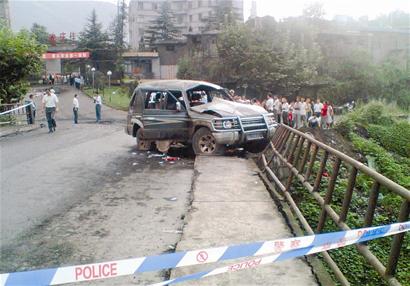
Sichuan Guangyuan coal boss was killed and two people were arrested (photo)


四川广元煤老板被炸死案告破两人被拘(图)

Explosion site


     Sichuan Online-Huaxi Metropolis Daily News The "8 31" car explosion murder case in wangcang county, Guangyuan was successfully solved at 3 am on the 12th after 12 days of hard investigation by the provincial, city and county public security organs, and three suspects, Zhao Yongfa, Jiang Feifei and Jiang Chunrong, who committed murder for money, fell into the law.


    People from all walks of life pay close attention to the bloody explosion case.


    At 16: 43 on August 31, an explosion occurred in front of the gate of Jiachuan Power Plant of Guangwang Energy Group near Provincial Highway 202. A moving car exploded, killing one person in the car and scattering more than 350,000 yuan in cash at the scene. It was later confirmed by the public security organs that the deceased was Yao Zeyuan, the owner of May 4th Coal Mine in Jiachuan Town, wangcang county, with assets of tens of millions. After the incident, Ceng Shengquan, director of the Provincial Public Security Department, Gao Feng, secretary of Guangyuan Municipal Party Committee, Ma Hua, acting mayor, and leaders of wangcang county successively gave instructions to solve the case with all their strength. The public security organs in Guangyuan City and wangcang county City quickly set up the "8.31" bombing investigation project headquarters, and experts from the Provincial Public Security Department rushed to the crime scene to guide the investigation.


    5,000 people are suspected of entering the line of sight.


    In view of the special identity of the deceased, complex social relations, many interests and conflicts, and the difficulty in collecting evidence of the explosion case and locking the suspect, the project headquarters has successively formulated three sets of investigation work plans and determined the investigation direction and scope after analysis and research.


    The task force has conducted eight inspections and searches on the scene and the bombed vehicles, and investigated and interviewed more than 5,000 people. After analysis, 6 categories and 38 clues were highlighted. Through the repeated combing and investigation of key clues, it is found that Jiang Feifei, a 17-year-old group from Shuangcun, wangcang county, Zhao Yongfa, a 31-year-old from Shuangwu Village, Levin Town, and his wife Jiang Chunrong are suspected of committing major crimes. After a surprise trial, at 3 am on September 12, Zhao Yongfa and Jiang Feifei finally confessed their murder for money and killed Yao Zeyuan.


    Two coal bosses who released explosives were killed by the explosion.


    Since 2000, Zhao Yongfa and Jiang Feifei have occasionally worked in the coal mine of the deceased Yao Zeyuan. Knowing that Yao has to pay the workers every month and withdraw money at the end of the month, the car carries a lot of cash. They also know that Yao’s cheetah car is parked in the dam of a factory building in the May Fourth Coal Mine every night, and there is no one to guard it, so they have the idea of robbing him.


    Since April this year, Zhao Yongfa, his wife, Jiang Chunrong, and his nephew, Jiang Feifei, have conspired to bomb cars and rob money many times. In the early morning of July 31, Zhao and Jiang Feifei made explosives and detonators stolen from the mine into explosive devices and placed them under Yao Zeyuan’s car. At noon that day, they waited at a place called Shazhugou, the only way for Yao to take money home, but Yao’s car didn’t show up that day. In the early morning of August 4, Jiang secretly removed the explosive device from Yao’s car and took it home.


    On the evening of August 30, the two men made an explosive device in Jiang’s house and conducted an experiment on their own roof, which was blown to pieces. At 2 o’clock the next morning, they put the explosive device in Yao’s car parked in May 4th Coal Mine again. At 10 o’clock in the morning, Yao drove down the mountain to withdraw money. At 4 o’clock in the afternoon, he drove back to the mine and passed through Jiachuan Power Plant when an explosion occurred. Yao was killed on the spot.


    At present, the criminal suspects Zhao Yongfa and Jiang Feifei have been detained in criminal detention, and the criminal suspect Jiang Chunrong was released on bail pending trial because he was breastfeeding. At present, the case is still under further review.


    Text/photo reporter Qing Xinghai


Editor: Shi Guanghui

The latest offer of Volkswagen’s 17 Magotans is the lowest price in the country.

[Phoenix Auto Quotes Original] The 2017 Volkswagen cars in the 4S store are on sale, with sufficient cars and complete colors, and can be licensed nationwide without regional restrictions. In terms of selling price, at present, the maximum discount for car purchase is 90,000 yuan. Tips: During the activity, the top 60 car buyers can give you a decorative gift package with a value of 16,800 yuan, and you can also reimburse one-way travel expenses (train tickets and plane tickets) when you buy a car. Just keep the small ticket (only for two people). There are more surprises waiting for you when you arrive at the store, so your heart is not as good as action. The company solemnly undertakes to ensure that the vehicle procedures are complete, that the vehicle can be registered in the whole country, and that the vehicle is guaranteed nationwide.


24-hour car consultation hotline: 132 6032 1413 or 132 6932 1413 Manager Li (sold nationwide).

In the hot promotion of the new generation of Magotan in 2017, the new Magotan of Volkswagen in 2017 basically continued the design language of the new generation Passat in Europe. The new Magotan adopted a brand-new family-style front face design and headlights with stronger lines. In terms of the new Magotan tail, the new Magotan new car is equipped with LED light source taillights, and the new Magotan exhaust also adopts a two-sided flat mouth design. In terms of the body size of the new Magotan, the length, width and height of the new Magotan are 4866/1832/1464mm respectively. The wheelbase of the new Magotan is 2871mm, and the wheelbase of the new Magotan is 80mm longer than that of overseas models, and the new Magotan is 59mm longer than that of the current models.


24-hour car consultation hotline: 132 6032 1413 or 132 6932 1413 Manager Li (sold nationwide).

Appearance of the new generation of Magotan in 2017: The new domestic Magotan basically continues the design language of the new generation Passat in Europe, adopting a brand-new family-style front face design and headlights with stronger lines. In terms of the tail, the new car is equipped with LED taillights, and the exhaust is also designed with two flat ports on both sides. In terms of body size, the length, width and height of the new domestic Magotan are 4866/1832/1464mm respectively. The wheelbase is 2871mm, in which the wheelbase is 80mm longer than that of overseas models and 59mm longer than that of current models.


24-hour car consultation hotline: 132 6032 1413 or 132 6932 1413 Manager Li (sold nationwide).

Compared with the current Magotan, the wheelbase of the new Magotan has increased by 59mm, while the length of the car body has hardly changed, which makes its side shape more slender. The height of the new Magotan is a little lower than that of the current model, and with this 18-inch wheel rim, of course, the key point is that the distance between the wheel and the wheel eyebrow has become smaller, and the position of the rear wheel has changed most obviously, so that the sense of movement is more prominent.


24-hour car consultation hotline: 132 6032 1413 or 132 6932 1413 Manager Li (sold nationwide).


24-hour car consultation hotline: 132 6032 1413 or 132 6932 1413 Manager Li (sold nationwide).

How much is the 2017 Volkswagen Magotan/How about the Volkswagen Magotan/The latest quotation of the new FAW-Volkswagen Magotan/The lowest price of the Volkswagen Magotan/After the cockpit of the new Magotan was re-tuned by the designer, although the overall layout is basically the same as the old one, the details are full of elegant European style. In the cockpit, high-grade pure aluminum brushed decorative board, real mahogany decoration and internal flocking are used, and the color scheme with deep top and light bottom creates a charming temperament. The latest style of multifunctional leather steering wheel and instrument panel are extremely exquisite in materials and workmanship. It is worth mentioning that in order to highlight the luxury of the driving cabin, the brand-new Magotan has also added exclusive high-grade welcome pedals with luminous energy and an expensive pointer quartz clock.


24-hour car consultation hotline: 132 6032 1413 or 132 6932 1413 Manager Li (sold nationwide).

The 2017 brand-new Volkswagen Magotan seat is very stylish, and the design of two-color stitching is very beautiful. The co-pilot designed the boss key, which is now a very common configuration at this level. There are obvious protruding parts in the backseat seat, which aims to improve the supporting ability of backseat and make it more comfortable. After the cab was re-adjusted by the designer, although the overall layout is basically the same as the old one, the details are full of elegant European style. The cockpit adopts high-grade pure aluminum brushed decorative board, and the grade of central control is obviously much higher than that of ordinary models.


24-hour car consultation hotline: 132 6032 1413 or 132 6932 1413 Manager Li (sold nationwide).

In 2017, a new generation of Magotan will launch three kinds of powertrains. The new Magotan 1.8T and 2.0T are the third generation EA888 and the new Magotan 1.4T is EA211. The new Magotan only 1.4T model will be equipped with DQ200 dry dual-clutch gearbox, and the reliability needs to be verified. The new Magotan 1.8T and 2.0T will use DQ380 wet dual-clutch gearbox, which will be more worry-free, and the ride comfort of the new Magotan 2.0T model will be improved.

Kono Danting Beauty Salon promotes "treading on thin ice": "Chain plan" sets students up as "mice"

  The same routine

  This Keryanlier beauty salon is holding a free experience activity for new customers. As soon as he saw the reporter, the promoter immediately began to sell hard: "We are engaged in activities now, and you can get a free experience outfit with this card."

  The reporter decided to follow the promoter into the store to experience, and the clerk in the store once again stressed to the reporter that the experience was free: "If you come up, we will give you a free care." And led the reporter into the room half-coaxed, immediately washed his face and removed makeup, and started the so-called free facial care.

  During the experience, the beautician constantly stressed that journalists have many skin problems and need to strengthen nursing, and promoted a project experience card with an original price of 2,500 yuan and only 198 yuan during the activity.

  The reporter was unmoved by this, and the beautician was not discouraged. The massage oil applied to the reporter’s face was dried and painted again, and the massage continued and the sales continued.

  In this way, the original free experience activity eventually turned into a reporter spending 198 yuan to set up a consumption card, but things are far from over.

  The next day, when the reporter came to use this consumer card, a person who claimed to be the dean personally used the instrument to conduct skin tests for the reporter, and stressed that the reporter’s skin problem was very serious: "Every pore of you is blocked, and the hair follicle is blocked very seriously."

  Then the dean gave a nursing plan: "It must be a high-end instrument with our ordinary nursing. If we do this high-end instrument, we will get 39,800 faces at a time." The manager and beautician carry the reporter behind their backs, communicate with their eyes from time to time, and cooperate with the dean hard.

  With the cooperation of three echo each other officials, before the reporter could say that it was too expensive, 39,881 high-end instrument nursing actually had a beating price, and the beating price was only 2,260 yuan.

  "Dean, ask, see if we can do that 2260 one." The manager said.

  While speaking, the dean got up to apply, and the application result was not surprising: "You are really lucky. You really took a big advantage this time, you know." The dean said.

  The dean, manager and beautician tried their best to persuade them until the reporter paid another 2260 yuan, which ended the experience of 198 yuan.

  Another Lislanya beauty salon is also engaged in activities. The promoter said that she can get a mask for free when she participates: "Excuse me, beauty, let’s engage in activities in Xintiandi and get a silk mask for free."

  Once you get the free mask, you start to promote all kinds of expensive beauty projects. If customers refuse to spend money, they will be ridiculed by beauticians and store managers: "Don’t do it, just do it, don’t do it, don’t do it." If a girl is not willing to invest in her image, then you are really, I don’t want to say anything. "

  In Taiyuan Runcheng Shimei Beauty Salon, Shanxi Province, the stunt of soliciting customers is also a free sample product. In order to relieve the reporter’s worry, the promoter repeatedly stressed: "I won’t give you an experience today, just simply take one and bring it home."

  But once consumers are tempted to take this product, it will soon change its taste for free after entering the door. The beautician and the manager took turns to go into battle and kept on selling: "Because the original price is 4,800, and then if you can get together 2,400, then I will give it to you at our internal price, and also to keep you as a customer, 50% off."

  In Chongqing, Kono Danting Beauty Salon is also vigorously promoting free experience activities, but after entering the store, it will also encounter various sales promotion.

  Reporter undercover reveals the routine to promote The Secret Behind

  The crew of the 3.15 party also received a large number of related complaints. Many consumers all over the country reported that they encountered similar routine sales in beauty salons. What secret is hidden behind the free? This reporter conducted an in-depth investigation.

  Ke Yanlier and Kono Danting, both of whom belong to Dengyun Group, are national chain beauty institutions with more than 1,700 beauty salons. After applying for a reporter, they became employees of a beauty salon in the south market of Kono Danting in Chongqing.

  Kono Danting is in the South Market Area of Chongqing, and has free experience to expand new customers every week. On December 1, 2019, a new round of large-scale activities focused on expanding customers began. Before the event, the company held a mobilization meeting. Two store managers taught their employees their experiences and called customers who had not done much beauty treatment "mice": "If we expand customers, we can incorporate more fresh blood. If we say one ‘ White mouse ’ Is it particularly good to sell products when you come in, and is it particularly likely to make a big deal? "

  "In fact, this kind of mice ’ She doesn’t know Kono Danting, and it’s really good to share and promote products. "

  After some mobilization, the pioneering activities began. Dozens of employees scattered around the business district near Nanping Wanda Store to attract customers in the name of free experience. After that, the company prepared a chain of tricks, with several project teachers and store managers crouching in the corner and crawling under the door, trying their best to eavesdrop and grasp the situation in the room. Once necessary, they can play different roles and enter the room at any time to cooperate with beauticians.

  Manager Chen told reporters: "Cooperation with employees is also very important, and cooperation depends on tacit understanding."

  Another manager Liang also said: "We should play different roles. For example, a beautician will apply for a discount from the manager for the customer, so that the beautician is on the side of the customer. Otherwise, she will be alert and think that you are all here to sell things."

  In order to make customers believe in preferential policies and spend money on cards, the play is realistic, and the plot is essential. During the development activities, many students come to experience free beauty, and the beautician will take the opportunity to take the student ID card out of the room for a walk and then send it back in the name of applying for a discount.

  Manager Xu told reporters that this is one of their sales skills: "Just kidding, the skill of placing orders is just a sales skill. That is to say, the student ID card can be discounted, and it is cheaper to buy things with the student ID card. Just as students go to buy train tickets, they are all student prices. "

  Manager Chen told reporters that the applications are actually fake: "Every application ‘ Manager, please apply ’ , immediately ‘ ? Oh, good ’ There is, so if there are some things, even customers think it is a routine. "

  In this way, students who have no fixed income and are not deeply involved in the world have become the most popular "mice" here.

  "The student’s words are very easy to sell. As long as she has money in her pocket now, she can pay it out. Why? Simplicity You have to tell her, dream with her, you are so beautiful, and your skin would be better if it were better. " Manager Chen said.

  For students who don’t have money on hand, Manager Liang of Kono Danting Beauty Salon told reporters that there are ways to get them to spend money on cards without money: "It mainly depends on how you develop, and you can borrow money for some needs. That is, many of them are like this. "

  In this regard, a beautician told reporters: "We often recommend online loans to those little girls. I tell you, those little girls and college students really don’t know what to do. The manager told her about those flowers and borrowed them. Someone borrowed more than 20,000 yuan for beauty, and her monthly salary was only 3,500 yuan. How do you say?"

  Taking free experience as bait, cheating customers with acting, raising prices first and then lowering prices for false discounts, under the guidance of various routines, customers often get deeper and deeper unconsciously.

  Manager Chen summed up for the reporter that the whole process was like boiling a frog in warm water: "Slowly, she cooked, and she didn’t even know that she was about to cook. "

  In the training class of beautician’s sales skills, a lecturer surnamed He encouraged his employees like this: "As long as you want to clinch a deal, you must learn to tell stories and cases. The bedding was in place, our manager assisted and our teacher assisted, and the problem was solved. The money came in and she got out. "

  In order to prevent customers from going back on their word afterwards, beauty salons will refuse consumers’ requests for refund with format terms or various other excuses. In this way, even if customers later realize that they have been cheated, it is difficult to get their money back.

  At the conclusion meeting at the end of this activity, General Manager Li of Kenuodanting Chongqing South Market Area emphasized that such pioneering activities should always be innovative, attract new customers and cultivate new leeks: "We want to raise leeks. In the past, we kept cutting leeks, but we didn’t plant leeks after cutting. How do you cut them? Then how can we cut it if your new guest can’t get in? It’s gone. "

  "We are like this here, and we will do whatever it takes for money."

Investigation on college students’ eating habits: nearly 50% had overeating, and nearly 80% did not exercise after meals.

  China Youth Network, Beijing, October 11th After class at night, Wang Meng, a student of Changsha Medical College, received a WeChat from her mother, telling her to eat on time, eat less cold food and pay more attention to her health to avoid the recurrence of gastrointestinal diseases. In the past few days, the temperature has dropped in most parts of the country. Many parents are worried about the health of their children who are studying abroad, and tell them to add clothes, eat a reasonable diet and eat more hot meals. So, do college students insist on eating breakfast every day? Do you have the habit of overeating? Are you picky about food? Do you exercise after meals?

  Recently, China Youth Network Campus News Agency conducted a questionnaire survey on the topic of eating habits among 3,069 college students. The results show that nearly 50% of college students can’t insist on eating breakfast every day, nearly half of them have overeating, over 40% of them have the habit of being picky eaters, over 30% of them have the concept of "eat whatever they want", nearly 80% of them don’t exercise after meals, and nearly 40% of them have suffered from gastrointestinal diseases because of their eating habits.

The picture shows the proportion of college students eating breakfast. China Youth Network reporter Li Huaxi cartography

The picture shows the proportion of college students eating breakfast. China Youth Network reporter Li Huaxi cartography

  Nearly 50% of students can’t insist on eating breakfast every day, and nearly half have overeating.

  "I eat breakfast more often than ‘ Occasionally ’ Still low. " Chen Yang, a junior in xinxiang university, told the reporter that he had only eaten breakfast two or three times since the beginning of this semester, and his parents "pulled" him out of bed to eat, while at school, he hardly ate breakfast. The reasons for not eating breakfast are that the class time is tight and I want to sleep late, and I have not developed the habit of eating breakfast every day.

  In the survey, the reporter found that there are not a few college students who have similar experiences with Chen Yang, and 47.28% of the respondents said that they can’t insist on eating breakfast every day, and the main reasons for not eating breakfast are time constraints, sleeping late and loss of appetite, accounting for 67.45%, 49.27% and 35.48% respectively. In addition, 47.05% of the respondents said that they had bad eating habits such as overeating.

  Lin Wei studied in Guangdong University of Technology, and once had overeating when he finished the homework of the basic course of mechanical design. He recalled that at that time, he worked as a part-time tutor every night, and when he came back, he caught up with his homework. In many cases, he would do course design all night. At night, he would buy eggs, cakes, fried rice, pancake fruit, octopus balls, chicken rolls, bread and milk as supper, and mix them back and forth, eating three or four midnight snacks a night.

  "There are always times when I want to treat myself." After going to college, Lin Wei will overeat because of too many things, heavy tasks and great pressure. He will also overeat because of long-term intensive study and relaxation after work. Sometimes he will want to eat a lot of things for no reason.

The picture shows the proportion of college students' dietary concepts. China Youth Network reporter Li Huaxi cartography

The picture shows the proportion of college students’ dietary concepts. China Youth Network reporter Li Huaxi cartography

  Over 40% have the habit of partial eclipse and picky eaters, and over 30% mean "eat whatever you want"

  Wang Ying is a student of Zaozhuang College. She eats mainly staple food and vegetables every day and doesn’t like meat. In her daily diet, she will exclude most meat such as pork. "I like to eat vegetables and tomatoes. Only chicken and fish will eat a little bit of meat, and others can’t accept it." According to the survey data of China Youth Network Campus News Agency, 42.75% college students are picky eaters and partial eaters, and 34.47% college students’ dietary concept is "eat whatever they want".

  Li Hongwen, a student of Qingchuan College in Wuhan, is a typical "eat whatever you want". He said that when eating, he would only consider what he likes to eat. "I belong to the kind that I want to eat, and I can run all over the city for what I want to eat. For me, I eat what I want every day, and I am especially happy to think that I can eat delicious food after studying and working. " This makes him more motivated in his usual study and work.

The picture shows whether college students exercise after meals. China Youth Network reporter Li Huaxi cartography

The picture shows whether college students exercise after meals. China Youth Network reporter Li Huaxi cartography

  Nearly 80% do not exercise after meals, and nearly 40% of students have suffered from gastrointestinal diseases because of their eating habits.

  Wang Su, a student from Donghai College of Science and Technology, Zhejiang Ocean University, has no idea of exercising after meals. After meals, he often stays in the dormitory and is busy with his studies and work. "I am busy, I often have something temporary, and I don’t eat regularly. I don’t want to move when I am busy." He said that he knew the health benefits of exercise after meals, but "everyone was very busy, really didn’t have time, and he didn’t like exercise very much" became the reason why he gave up the idea of exercise after meals.

  The results of this survey show that 79.6% of the respondents, like Wang Su, "will not exercise after meals". In addition, 38.91% of the respondents had caused gastrointestinal diseases because of eating habits.

  Pi Qianqian of Pingdingshan University is a member of the battle for postgraduate entrance examination. During the summer vacation, she suffered from acute gastroenteritis due to irregular diet, which made her miserable. "My stomach is super painful. I cried so hard that I went to see a doctor outside the school, and my whole body was shaking."

  "Everyone must eat well." Pi Qianqian said that she was faced with intense review during the postgraduate entrance examination, and she had to go to the library to review at five or six in the morning. Breakfast was basically a "fool" in the past, and dinner was often eaten after the review at night, which eventually led to acute gastroenteritis. "Now have a good meal. I dare not get sick again during the postgraduate entrance examination. It is too time-consuming."

The picture shows the proportion of college students who have had gastrointestinal diseases due to their eating habits. China Youth Network reporter Li Huaxi cartography

The picture shows the proportion of college students who have had gastrointestinal diseases due to their eating habits. China Youth Network reporter Li Huaxi cartography

  College teachers suggest that we should develop good eating habits and exercise reasonably.

  Ma Shutan, a food science counselor at Anhui Normal University, believes that some college students don’t have good work and rest habits, which leads to their inability to insist on eating breakfast. "Students are still very young and have not realized the importance of eating habits to themselves."

  "The body is the capital of the revolution, which not only requires us to pay attention to exercise, but also pay attention to our own diet and lay a good foundation for ourselves." As a counselor and companion around students, Ma Shushan hopes that students can pay attention to their living habits, reasonably match their meals, and replenish their energy on time and in quantity, so as to have a strong body.

  For the results of this survey, Zhao Qiong, a preventive medicine teacher at Chongqing Medical College, said that these dietary problems are indeed common among college students, and students should reasonably arrange three meals a day according to the six dietary guidelines recommended by China Nutrition Society, that is, "the food is diverse, mainly cereals; Eat balance, healthy weight; Eat more fruits and vegetables, milk and soybeans; Eat fish, poultry, eggs and lean meat in moderation; Less salt and less oil, controlling sugar and alcohol; Put an end to waste, promote new food, and ensure both quantity and quality.

  Zhao Qiong also suggested that there should be more than 12 kinds of foods that are not repeated every day and more than 25 kinds a week; Exercise at least 5 days a week, and do moderate-intensity exercise for more than 30 minutes a day; Do not exercise immediately after meals, so as not to affect the digestion of food. (At the request of the interviewee, the students in this article are all pseudonyms.)

  (China Youth Network reporter Li Huaxi correspondent Jiang Yujun)

In ancient times, the imperial examination cost nothing, and the martial arts examination took three days. The examination questions were large and complicated.

  Imperial Examination, the earliest "college entrance examination" in China, began in the Sui Dynasty. Champion, a term that is still full of charm and vitality and envied by all, is the invention and creation of the only female emperor Wu Zetian in China history.

  What is "Imperial Examination"

  "Imperial Examination" means to select people by subject. The real imperial examination system in China began with Emperor Wen of Sui, Emperor Wen of Sui Dynasty, and followed Yang Guang, Emperor Yang of Sui Dynasty. After the unification of the whole country in Sui Dynasty, Emperor Wendi of Sui Dynasty put the power of selecting officials under the central government, abolished the Nine-Graded System, and began to select officials by examination. Emperor Yangdi loved literature, set up the imperial examination department, and selected scholars by "trying strategy". This was the beginning of the imperial examination text for future generations, and also set up the Ming Classics Department, which marked the official birth of the imperial examination system.

  Judging from the history books, Yang Guang’s promotion of the system of selecting officials in imperial examinations was not a political show. At that time, it was really out of the need to select outstanding talents. In the Tang dynasty, the imperial examination field came out of the "No.1 scholar". The first scholar is the champion, and in today’s words, he is the champion in the examination room. This term, which is still full of charm and vitality and envied by all, is the invention and creation of the only female emperor Wu Zetian in China history. Since then, the "number one scholar" has become synonymous with outstanding students.

  Specifically, the scores of the ancient "college entrance examination" were divided into three grades: one, two and three. Only three people are taken from one armor. The first name "No.1 Scholar", the second name "No.2 Scholar" and the third name "Flower Exploration", called "Three Ding Jia", are all given to "Jinshi Ji"; Second, take several names (according to the needs of officialdom), all of which are given "Jinshi origin"; The top three take a number of names, all of which are given "the same Jinshi origin."

  There are many rules in ancient imperial examinations and they are quite complicated. The complete procedure includes the provincial examination, the general examination and the court examination, that is, the local, central and imperial examinations. As we all know, the examination place is located in each province after having obtained the provincial examination. After having obtained the provincial examination, it is also called Xiang Wei, and passing the provincial examination is called "Zhongju" and becomes a juror. Formally speaking, after having obtained a provincial examination can be regarded as the "unified examination for ordinary colleges and universities in China" in ancient China.

  Ancient imperial examinations were nothing but martial arts.

  Just as it is not easy to be among the best now, it is even more difficult to get the top scholar in ancient times. Therefore, most of the top scholars in ancient times were truly knowledgeable people, and even the emperor liked to marry his daughter to the top scholar Lang.

  After the resumption of the "College Entrance Examination" in the late 1970s, for a long time, all the candidates in Qian Qian took the same examination paper. The ancient imperial examination was the same at the beginning, and the national unified examination was implemented. In most years, it was a list of officials. However, since ancient times, there have been talented people in the south of the Yangtze River, and the northern scholar has been in the imperial examination field. On the whole, it is obvious that he can’t pass the examination of Jiangsu and Zhejiang scholars. Later, for the sake of justice, balance and care, in the final round of "Finals" in palace examination, some dynasties, such as the Ming Dynasty, divided the examination questions and examination times between the south and the north, and there were even three volumes between the south, the north and the middle.

  The current college entrance examination is divided into arts and sciences, and the ancient imperial examination is also divided into subjects, which are different from arts and martial arts. Therefore, there is a difference between the literary champion and the martial arts champion. According to research, the first martial arts champion in ancient China was named Xue Yi; There are too many famous literary champions, such as Wang Wei, a great poet in the Tang Dynasty, Wen Tianxiang, a national hero in the Song Dynasty, and Zhang Jian, an industrialist in the late Qing Dynasty.

  How many books should I recite in the imperial examination?

  According to statistics, candidates have to recite The Analects of Confucius, Mencius, The Book of Songs, The Book of Rites and Zuo Zhuan, with a total of more than 400,000 words, all of which should be carefully read and memorized. In addition, candidates have to read several times as many notes as the original text, as well as other classics, history books and literary books that must be read.

  In ancient times, there were four subjects to be studied in the "College Entrance Examination", namely, eight-part essay, poem, classics and law. The topics of the eight-part essay are mainly taken from the Four Books: The University, The Doctrine of the Mean, The Analects of Confucius and Mencius. Trial post poetry is a kind of poetic style. In the examination, a poem and idiom of the ancients are used as the topic, and a rhyme is defined, and a poem is written with the content of praising the state affairs.

  The examination time is three days.

  In ancient times, the examination time was also very fixed, but it was not limited to one examination. In some dynasties, there were spring examinations and summer examinations. The "palace examination" who finally decides the top scholar is usually arranged in the spring of March, which is the so-called "March Tingkao".

  In ancient times, the examination time was generally divided into three days, but instead of connecting the examinations as it is now, two days were left in the middle. During the Ming and Qing Dynasties, after having obtained the provincial examinations, they were held in August of the lunar calendar, and in February of the lunar calendar, and in March of palace examination. The time for the township and the meeting is set at the ninth, twelfth and fifteenth days of the month.

  Jiangnan after having obtained the provincial examinations is mostly held in autumn, so it is also called "Autumn Wei". Three games each, three days and nights each. Because there are two changes in the middle, it is actually nine days and seven nights.

  The first test was an eight-part essay, which was selected from the four books and five classics. The second test is the practical writing of officialdom, which is divided into two types: official documents and judicial judgments based on cases provided. The third exam question involves specific national economy and people’s livelihood issues, and requires candidates to give countermeasures and methods. At that time, the scientific examination was a candidate and a major event of the imperial court. In order to ensure the smooth progress of the examination, the building would be locked after the examination, and no matter what happened, even if there was a fire, the candidates could not be unlocked.

  At that time, all the buildings were lined south, with nearly 100 long ones and 50 or 60 short ones. At the entrance of the lane, there is a font size, equipped with a signal lamp and a water tank, which can be used by candidates to travel at night and drink water during the day. During the examination, the candidates will provide their own meals. Because it takes a long time to have a rural examination and the weather is sultry, the food will soon deteriorate, so candidates usually only bring dry food to satisfy their hunger.

  The examination questions are large and complicated.

  For the types of test papers, the dynasties are similar. The subjects tested in each dynasty have not changed much in general, but the number of questions is very large. According to the different subjects selected, it is possible to obtain fame only by completing the corresponding examination papers. On the surface, it is simpler than the current college entrance examination papers, and it seems that it is only a composition, but in fact it is more complicated, and it is a lifelong test. Because of the large number of examination questions and the long time, there are often incidents of "killing" candidates: some students can’t stand the torture, throw themselves into the water and leave.

  At that time, the relevant measures to prevent cheating were very strict, the examination room was closed, and a row of numbered houses separated the candidates.

  The brick walls on the left and right sides of the building are between one and two feet from the ground, and two brick supports are built, so that upper and lower boards can be placed on them. In the daytime exam, the upper board replaces the console table, and the lower board is a stool for candidates to sit and answer questions. At night, the upper board is taken out and merged into the lower floor to be used as a bed for sleeping. However, because the length of the building is only four feet, which is equivalent to 1.33 meters, people can’t even straighten their legs when they sleep. Moreover, there is no door in the building, so candidates need to bring their own tarpaulin as a door curtain to prevent wind and rain.

  Because the weather is very hot in autumn, the candidates eat and live in a small building. Therefore, there are often candidates who die accidentally because of heatstroke and food poisoning, while others are killed by poisonous snakes hiding in the eaves of the building.

  Ancient candidates were very hard.

  Parents and educators have been calling for reducing students’ burden for years. In fact, this wish has been shouted for more than 1000 years. The college entrance examination in ancient times was also a major event for families. Like parents accompanying and sending exams now, parents in ancient times were also very dedicated, which was the only channel for children to lead their careers.

  In ancient times, students couldn’t just read books. They had to recite classics like the Four Books and the Five Classics, memorize them by heart, and even get a clear picture of a sentence on a page and a line. The ancient college entrance examination was even more beautiful in calligraphy, but it was three or nine in winter and three days in summer. The results of studying for many years were much more painful than those of modern students.

  As far as the provisions of the Ming and Qing Dynasties are concerned, not all students can take the township entrance examination. The first choice is to pass the quiz, which is commonly known as the boy test, and it is possible to become a scholar. Scholars have to pass the annual examination and the departmental examination before they are eligible to take the provincial examination. The departmental examination is held before the provincial examination, which can be regarded as a pre-examination for the provincial examination. Scholars who passed the examination were allowed to take part in the ancient "college entrance examination" after having obtained the provincial examination. If you fail the exam, it is called "falling into the sea", and those who fall into the sea still have a chance to make up the exam, which is called "failing to pass the exam"

  After passing the provincial examination and becoming a juren, you can take part in the meeting presided over by the Ministry of Rites. Because the examination room for the exam is located in Beijing, there is a saying that "going to Beijing to catch the exam". Candidates who pass the final exam, called "Gong Shi", are qualified to take the final and highest-level exam.

  There was a system of sealing volumes in ancient times.

  At present, the college entrance examination stipulates that there is a strict system of sealing papers, and the examination papers will be sealed as soon as each exam is over, so as to prevent artificial disadvantages in marking the exam papers. In fact, this system of sealing papers has existed for a long time in the ancient "College Entrance Examination".

  According to historical records, the ancient imperial examination system in China began in the Song Dynasty. According to the Song History Election, during the Chunhua period in Song Taizong, the method of "pasting the name to test the school" was adopted at the suggestion of Chen Jing, the examiner, and the candidates’ names and places of origin were pasted on the test paper, and it was decided to open the test paper before sealing it.

  The specific method is: the test paper should be pasted with the name, which is called "sealed". The method is that after the examination paper is handed in, the sealing officer will fold the paper, seal the candidate’s name and number it in red; Then, the transcriber will copy the test paper with Zhu Pen, which is called "Zhu Juan" and send it to the examiner for review. When the list is released, the "black roll" will be unpacked according to the red number of the "Zhu roll" selected, and finally the list will be written by roll call.

  The examiner is the deputy examiner. If he likes any recommendation paper, he will mark it with the word "take"-the so-called "admission" in the modern college entrance examination, which is probably how it came about. The papers marked with "take" will be sent to the examiner, who will finally decide the fate of the candidates. If the examiner also likes it, he will approve the word "Zhong" on the test paper-the origin of "Exam Zhong" should come from this.

  Just like today, there are strict rules on the marking time in the past dynasties, which require that the marking be completed within a certain period of time. Take the Qing Dynasty as an example, the time limit for marking papers is 10 days. These 10 days also include the time before sealing, copying and reading. In the meantime, it will take a lot of time to eat and invite, so the real marking time is quite tight, but only three or four days. Therefore, at that time, examiners generally had to review twenty papers a day, with thirty or forty more. Ordinary marking staff have more papers to read, so most of them are overloaded. It can be seen that in ancient times when there was no modern computer-aided marking, the marking staff simply had no time to read every test paper carefully.

  In order to speed up marking and finish the work stipulated by the imperial court on time, marking personnel also try their best. One of the most important means is to look at the "first impression", that is, to focus on the candidates’ first exam papers, which is what the ancients called "stop reading the forecourt and stop reading the meaning of the book".

  Under normal circumstances, if candidates do well in the first exam, they get a "high score" when marking papers-good comments, and basically they will be on the list. But if you fail in the first exam, even if you play well in the last two games, you may lose your reputation in Sun Shan. Therefore, candidates at that time paid special attention to answering the first exam.

  Looking back, the "paste-name examination" method in the Song Dynasty was obviously regarded as the "ancestor" of the college entrance examination system.

  Allow failed students to search the papers

  It can be said that there are more subjective factors in marking papers in ancient times than in modern times, which have a great influence on candidates’ grades. Many failed students were missed by irresponsible marking personnel. Therefore, some examiners with a strong sense of responsibility will randomly check the "failed papers" that have not been tested, and the examiner also has the right to read the recommendation papers that have not been "taken" by the deputy examiner for review.

  In addition, there is a more humane provision-allowing failed students to check the papers, which is also a good way to supervise the marking staff. If the excellent papers are graded badly, once the candidates petition, they will be in big trouble, and the responsible person will be punished by the court.

  During marking, the ink roll has been stored in the outer curtain and kept by the outer palm. After all the marking work is finished, the original volume will be transferred out against the admitted Zhu volume, the personal information of the candidates will be found out, and the name of the list will be filled in. Next, it’s time to release the admission list. After the release of the list, the admitted Zhu Juan and Mo Juan will be re-assembled and sent to the Ministry of Ritual (equivalent to the current Ministry of Education) for review.

  At this time, the failed candidates can check the papers. Generally, within 10 days after the announcement of the test results, the candidates who failed the exam can check their own papers. There will be the examiner’s marking comments on the papers, and at first glance, you will understand why you have not been admitted, which is also a dead end.

(Source: Yanzhao Evening News)

The documentary "Building a Great Country" continued to write the wonderful chapter of China’s construction in the second season

  The Financial Program Center of the Central Radio and Television General Station recently launched the second season of the five-episode large-scale documentary "Building a Great Country", focusing on "exploring engineering miracles", selecting the most iconic buildings and projects, exploring greener, more scientific and smarter construction, showing China wisdom, China’s plan and China’s strength in promoting Chinese modernization, and praising the great country craftsmen in the new era through the mortal story behind the super project.

  As a masterpiece of industrial documentary in recent years, the first season of "Building a Great Country" has created an audience boom at home and abroad, with the total video broadcast of the whole network exceeding 100 million times, which has attracted the fiery attention of 106 million viewers from 89 countries and regions around the world, and realized the international expression of China’s story. In the second season, Building a Great Country consists of five episodes, each of which lasts for 45 minutes, namely, Shaping Due to the Circumstances, String of the Underground, Foundation of People’s Livelihood, Glory of Casting and Metallurgy, Gathering Energy and Chasing Light, which focuses on the majestic power of China’s construction efforts towards greening, industrialization, intelligence and informationization, and its great contribution to high-quality economic development.

  In the second season of "Building a Great Country", the filming team spanned 100,000 kilometers and lasted for 5 months, with 39 shooting projects, which directly hit the construction site and shocked the surging pulse of "Building in China". The film continues the shooting style of the first season, and adopts 4K ultra-high-definition shooting. With aerial photography, high-speed photography, underwater photography, 360-degree panoramic view, crossing machine shooting and other technical means, it dazzles the visual wonders of super projects, and leads the audience to wander between the mountains and rivers in Wan Li through the lens, and experience the grandeur of the building and the exquisiteness of the structure in an immersive way.

  A century-long project will eventually be completed, and a thousand years will bring glory to the past and the present. The world’s largest spherical building — — Sun Hotel, Jiangmen Neutrino Experimental Station with the largest experimental cavern in the world up to now, Jurong Pumped Storage Power Station, which ranks first in the world in the field of pumped storage, is the 500 kV power transmission and transformation project with the highest altitude, the longest transportation distance and the most challenging construction in the world — — Ali Tibet-China Network is the world’s largest clean energy corridor composed of six giant cascade hydropower stations, including Baihetan. This series of representative projects is not only the condensation and display of the achievements of China’s construction industry transformation and development, but also a beautiful business card for a big country to build a world-renowned reputation.

  Full of vitality, workers strive for new things every day. The second season of "Building a Great Country" displays the achievements of China’s modernization transformation and development in a panoramic way, revealing the extraordinary dimensions such as China speed, China density and China accuracy. In the selection and expression of cases, it focuses on the novelty, strangeness and uniqueness of special construction, and selects special buildings such as theme parks, convention centers, winter Olympic venues and neutrino experimental stations, showing innovation, ingenuity and ingenuity through the construction wisdom behind them; Spying on the resource potential of underground space, selecting underground space projects such as underground pipe gallery, underground garbage treatment center and underground cave rock group excavation to witness the rational development and utilization of underground space; Focus on benefiting the "last mile" of water, electricity and roads in remote areas, help rural revitalization, and show the responsibility and responsibility of China construction; Imagine the future era driven by green ecology and wisdom, and select innovative cases such as smart steel mills, green electricity and smart construction to highlight the green and low carbon, technological innovation and future trends behind the construction of China.

  Changhong spans mountains and seas, Qionglou soars into the sky, and the builders who silently contribute are ordinary heroes. Through the perspective of builders, the film vividly shows how they stick to their dedication, take the national strategic needs as the guide, overcome unprecedented construction problems, complete original and leading technical research, and create an amazing "best in the world". If you want to dig an underground cavern with a span of 50 meters 700 meters underground, you can’t have a pillar to support it; In order to protect the mother river and the secondary drinking water source, a bridge across the Yellow River without pier support must be built according to the requirements of environmental protection. How to hide industrial treatment facilities in beautiful parks; And how to realize the green innovation of traditional energy and build the most efficient and clean coal-fired power plant … … The second season of "Building a Great Country" pays tribute to hundreds of millions of builders in the new era with vivid and true records, so that the craftsman spirit of a great country shines in the reinforced concrete.

  The second season of "Building a Great Country" vividly shows many landmark projects and innovative achievements in the new era in the past ten years with its super-high production standard and extreme audio-visual experience, and expresses the dream of building a great country with the wisdom and sweat of countless builders, witnessing the transformation of China from building a great country to building a great country from different dimensions, and conveying the strength and self-confidence of "building a great country" to the world with its shocking audio-visual beauty.

  The program will be broadcast on CCTV-2 at 19:43 every day from October 31 to November 4, 2022, and CCTV financial client, CCTV video and CCTV network will be launched simultaneously.

The blind singer’s bank business was rejected because of "no capacity for civil conduct"

  "I can’t see the dynamic password when I go to the bank to handle business. Can I change it into a solid state? I can’t sign, can I press my handprint? Relevant documents cannot be read, can you provide manual assistance … …” A few days ago, Ma Jingyang, chairman of Shenzhen Blind Association, put forward his own ideas at the symposium on barrier-free services for banks and financial institutions in Shenzhen.

  Recently, when Zhou Yunpeng, a blind singer, opened an account with a personal debit card in a Shenzhen branch of Bank of China, the bank staff refused to do so because of his "lack of capacity for civil conduct". This incident caused widespread discussion in society and triggered social reflection on the construction of "barrier-free environment".

  Many disabled people like Zhou Yunpeng want to "walk freely" in their daily lives like ordinary people, but they suffer from the environment around them that has not paved the way for them.

  Information accessibility is worthy of attention.

  "People take it for granted that barrier-free environment is specially built for people with disabilities. In fact, accessibility includes three levels: accessibility of hardware facilities, accessibility of information communication and accessibility of human environment, which is aimed at the whole society. " Yu Guanbin, president of Shenzhen Barrier-free Environment Promotion Association, said.

  In addition to physical accessibility, the promotion of information accessibility is worthy of attention in the current mobile Internet era.

  On April 12, Wang Mengqi, a visually impaired person, held his mobile phone to his ear in one hand and slid the screen of his mobile phone in the other. With the clicking and sliding of his finger, the mobile phone screen reading software read out what he clicked at a very fast speed. All this is attributed to the information barrier-free construction. At present, Wang Mengqi is an IT engineer of Shenzhen Information Accessibility Research Association. Here, he found his own place to help more visually impaired people "see" the world through the Internet.

  "Blind people can’t use ordinary mobile phones, computers and other information equipment; However, the current technology can help them to interact with devices by listening and get information. My job is to test the information accessibility of various client applications, and submit the problems found and optimization suggestions. " Wang Mengqi said proudly.

  "In this world, if there is an information barrier-free engineer, it will open a door to mainstream society for more visually impaired people." In 2014, Wang Mengqi resigned from his job as a massage doctor regardless of his family’s opposition, and came to Shenzhen from Henan alone to find his dream.

  Deng Zhixin, vice president of Shenzhen Barrier-free Environment Promotion Association, believes that barrier-free service is a matter of consciousness. "Some healthy people often don’t know how to do it. Even sometimes providing help that disabled people don’t need in a high-profile way is also an obstacle at the humanistic level. "

  Barrier-free humanistic environment is the ultimate goal.

  The experience of Zhou Yunpeng, a blind singer, is not the end. This incident triggered the banking industry to reflect on the service mode and service level of special needs groups. On April 17th, Shenzhen Banking Regulatory Bureau and major banks cooperated with the Municipal Disabled Persons’ Federation to hold a forum.

  On the same day, the Municipal Banking Consumer Rights Protection Promotion Association and the Municipal Barrier-free Environment Promotion Association reached a cooperation intention. In the future, a series of barrier-free knowledge training on the financial system will be held, and a long-term communication mechanism will be established to prepare a barrier-free service guide for banks.

  In recent years, negative news about the barrier-free environment, such as serious occupation of blind roads and discrimination against disabled people, is common. This is the result of the imperfect construction of barrier-free humanistic environment. Humanistic environment is an invisible environment hidden in society, and it is a concern for human nature of social individuals. Yu Guanbin believes that building a barrier-free humanistic environment is the ultimate goal of barrier-free construction.

  Chen Lei, deputy director of Shenzhen Barrier-free Environment Construction Supervision Corps, believes that apart from the banking system, many service systems at present also lack humanized consideration for vulnerable groups, which leads to the disabled people not being able to integrate into society and enjoy the conveniences of modern life like ordinary people. "It’s not that the public is unwilling to help the disabled, but that they don’t know what help the disabled really need." Chen Lei said.

  It is understood that during the "Thirteenth Five-Year Plan" period, Shenzhen plans to build the first comprehensive barrier-free city in China. At present, the renovation of disabled parking spaces, the installation of pedestrian traffic lights and other obstacle-free space environment are also progressing in an orderly manner.

  "I hope that in the future, all walks of life can provide better public services for groups with special needs, including the disabled, and promote the further development of barrier-free construction, from hardware facilities to information exchange to human environment, which can achieve real barrier-free." Yu Guanbin said. (Reporter Liu Youting Intern Zhou Meilin)

Don’t be fooled by unreliable health rumors in 2016.

  A 55-degree cup allows you to

  Drink hot water anytime, anywhere

  Rumor tracking: A variable-temperature water cup "55-degree cup", known as the drinking artifact, has become a hot topic of concern because of its magical function. Whether it is hot water or cold water, just pour it into a cup and shake it, and it can become 55-degree warm water suitable for people to drink. It is said that the water cup is a high-tech product with utility model patent, and its core lies in the function of heating and cooling through phase change materials.

  Expert Interpretation: Wu Guangheng, a researcher at the Institute of Physics of the Chinese Academy of Sciences, said that professional tests showed that hot water dropped to 55 degrees and cold water rose to 37 degrees. The manufacturer claims to use the "high-tech" technology of phase change metal, and according to the test report, all the metals in it will not change phase in the temperature range of daily life. Its principle is very simple, there is no high-tech material at all, but the stainless steel layer is filled with salt water, and the hot water conducts heat to the cold water. The so-called high-tech materials are actually ordinary metals.

  "Rose salt" contains trace elements.

  Natural minerals can detoxify and protect skin.

  Rumor tracking: pure natural, crystal structure, detoxification and skin care … On the Internet, "rose salt" once attracted many people’s favor. Merchants claimed that "rose salt" came from Himalaya, Pakistan and other places, containing 84 kinds of trace elements and natural minerals, without adding anti-caking agents, which is more beneficial to health than ordinary salt.

  Expert Interpretation: Yan Shichun, president of Jinan Food Industry Association, said that "rose salt" is actually a kind of crude salt, which is pink because it contains more impurities, and it does not have the health care effect claimed by merchants. There is little difference between the sodium content of "rose salt" and refined salt. The sodium content of pure salt is 39.36%, which is not much different from the sodium content of "rose salt" claimed by merchants of 38.78%. In terms of trace elements, although there are many elements such as iron and calcium in "rose salt", these elements can be obtained from daily diet, and the amount of salt people consume every day is very limited, so the trace elements in salt can’t play the role advertised by merchants. The so-called health care and other effects are just publicity gimmicks of businesses. He reminded consumers that "rose salt" should not replace ordinary salt for a long time, and should try to use iodized low sodium salt.

  Strawberry pesticide exceeded the standard by 7 times.

  Eating too much is easy to cause cancer.

  Rumor tracking: In April this year, some media reporters randomly bought 8 strawberry samples from several farmers’ markets and supermarkets in Beijing for testing. The results showed that the pesticide acetochlor in strawberries exceeded the standard, and the highest residue was 0.367 mg kg, which exceeded the standard by more than 7 times. Acetochlor is classified as a class 2B carcinogen, which may cause cancer if it is used in large quantities for a long time.

  Expert Interpretation: Yun Wuxin, a master of nutrition and food research, said that acetochlor is one of the most widely used herbicides in China. Compared with American standards, China has stricter regulations on the detection of acetochlor, which can only be detected in brown rice, corn, soybeans, peanuts and rapeseed, and the residue limit is lower. If it is really used in strawberries, it is illegal and should be severely cracked down. However, acetochlor is a kind of pre-bud-blocking herbicide, which is generally used before crops sprout, and there is generally no high residue until strawberries mature. Moreover, acetochlor will kill strawberry seedlings and affect the harvest, and it will not be used in large quantities during planting.

  Then, will eating a large number of strawberries with excessive pesticide residues for a long time be toxic and carcinogenic? According to Chinese standards, the daily allowable intake (ADI) of acetochlor is 0.02 mg/kg body weight. In the report, the highest content of acetochlor detected in strawberries is 0.367 mg/kg. If this reference value is followed, an adult weighing 50 kg will have to eat more than 2.72 kg of this strawberry every day to exceed the range. Even in Europe with stricter requirements (the European Union does not allow the use of acetochlor), the European Food Safety Agency (EFSA) estimates that the ADI of acetochlor is 0.0036 mg/kg body weight, and an adult weighing 50 kg will eat 490 grams of strawberries every day to exceed this range. The cultivation of strawberries is also limited by seasons. It is unrealistic for most people to eat so many strawberries every day.

  DIY fruit ferment

  Can help you detoxify and lose weight

  Rumor tracking: Recently, many online posts titled "Homemade Fruit Enzymes Can Detoxify and Lose Weight" have been reprinted in large numbers on the Internet. According to the instructions in the net post, you can cut seven or eight kinds of fruits casually, add water and a lot of sugar, and seal and ferment for weeks or even months to get a bottle of so-called "enzyme stock solution".

  Expert Interpretation: Lv Wanyong, a senior nutritionist in China, pointed out that the essence of enzymes is actually enzymes. The enzyme is protein, which will denature or even decompose under the action of protease in gastric acid and digestive juice after oral administration, thus losing its biological activity. The method of self-made fruit enzyme is essentially a natural fermentation. However, the content of enzyme in the whole fermentation broth is very low, which can not reach the effective amount, and other components in "fruit enzyme", such as lactic acid and alcohol, as the main fermentation products, can not reach the effect of "fruit enzyme".

  Eating’ fruit enzyme’ may also cause certain harm to health. A large amount of sugar needs to be added when making homemade enzymes, which increases the sugar intake. In addition, in nature, the microbial composition on the surface of fruit is very diverse, except for yeast or lactic acid bacteria needed for fermentation, there are other microorganisms that may be harmful. A little carelessness in the production process makes the mixed bacteria grow rapidly in the fermentation process, so the "fruit enzyme" produced in this way will not only not be healthy, but will pose a threat to health.

  Rootless bean sprouts are easy to cause precocious puberty in children.

  Rumor tracking: Rootless bean sprouts refer to the rootless and tender bean sprouts produced by adding "rootless water" when bean sprouts are cultivated. The "rootless bean sprout essence" used by bean sprout producers is a hormone pesticide that can make bean sprout cells divide rapidly, and it has the same carcinogenic and teratogenic effects on human body as nitrogen fertilizer. Even if the intake of hormone drugs for human use is excessive, it will do some harm to the human body, such as precocious development of children, physiological changes of women, osteoporosis of the elderly and so on.

  Expert Interpretation: Experts pointed out that rootless bean sprouts are not only nontoxic, but also contain essential trace elements for human body. The Anti-Cancer Institute in Texas, USA and food experts in Sweden also found that bean sprouts can reduce gastric cancer, esophageal cancer, lung cancer, skin cancer and bladder cancer. B12 in bean sprouts is 10 times higher than the original bean seeds, which is of great benefit to human nerves and liver. The scientific discovery and certification of these experts are very convincing.

  The so-called "poisonous bean sprouts" is to add "rootless water" (that is, 6- benzyl adenine and other substances) to produce rootless and tender bean sprouts. In fact, 6-BA is widely used in agriculture, fruit trees, horticulture and even crops, and has achieved good results in both yield increase and preservation. Moreover, according to China’s regulations, it can be used for the production of pollution-free fruits. The existing evidence shows that 6-BA and other plant growth regulators are safe, and the management measures of relevant departments in China can also prove their safety.

  Infant feeding should use "baby water"

  Rumor tracking: Not long ago, there appeared all kinds of strange water on the market: moon water, pregnant women’s water, baby water, etc. These waters not only have strange names, but also have ridiculously high prices, because they add more trace elements, which are more nutritious than ordinary water and more suitable for infants and pregnant women to drink.

  Expert Interpretation: Yu Liang, a member of Beijing Dietitians Association and one of the top ten national gold medal nutrition lecturers, said that the purpose of drinking water is to supplement water and a small amount of minerals. In fact, as long as it is clean and hygienic ordinary drinking water, it is enough to meet people’s daily needs, and babies are the same. Drinking water does not need to make a fuss about special people. Although pregnant women, nursing mothers, infants, students and other people during pregnancy and childbirth do need more nutrients than ordinary people, such as iron, calcium, zinc, DHA and so on. However, the amount of soluble nutrients in water is saturated, and it is almost impossible to increase the content of nutrients in water through additional addition, not to mention that DHA is a lipid and cannot be dissolved in water at all. In addition, because the intake of minerals mainly depends on food, there is no need to worry about the lack of nutrition caused by pure water with few minerals. Therefore, it is useless to make "baby water" by strengthening minerals with water.

  Eat red meat and processed meat.

  May cause cancer easily.

  Rumor tracking: The International Agency for Research on Cancer under the World Health Organization assessed the carcinogenicity of red meat and processed meat products, and issued a conclusion on October 26th, which listed processed meat products (ham, sausage, jerky and other processed meat products) as the first-class carcinogen, and considered that eating red meat (fresh red meat, that is, the meat of mammals such as cattle, sheep and pigs) may cause cancer, so it was classified as "with high carcinogenicity".

  Expert Interpretation: Barry, President of American Meat Industry Association? Carpenter said that this result "is completely unsuitable for human health and belongs to theoretical danger". Cancer is a complex disease that is not caused by a single food, and a balanced diet and a healthy lifestyle are essential to health.

  The WHO representative office in China responded to this statement. Regarding the carcinogenic risk of processed meat, it is actually a reaffirmation of the report submitted in 2002. The original intention is not to stop people from eating meat, but to remind people to eat meat reasonably and reduce possible dietary risks. At the same time, it is also said that the processed meat products are classified as first-class carcinogens, which only shows that "there is enough medical evidence and animal experiments to prove that it can cause cancer". In fact, the risk or ability of meat carcinogenesis is very low.

  Drinking soybean milk may lead to breast cancer.

  Rumor tracking: A 45-year-old woman bought a soymilk machine to grind soymilk by herself, and took soymilk every morning for nearly three years. Later, she was diagnosed with breast cancer in physical examination, and her estrogen level was several times that of ordinary people. The report that drinking soybean milk caused breast cancer caused people’s panic.

  Expert Interpretation: Professor Zhang Hua, former director of the Nutrition Department of the 309 Hospital of the People’s Liberation Army, said that the statement that drinking soy milk can cause breast cancer is unfounded and untenable. The so-called phytoestrogen is not a hormone, but two concepts and two substances with estrogen in human body. In fact, this estrogen-like substance exists in most plants, especially in flax seeds, food products, beans and fresh vegetables and fruits. Because people equate phytoestrogen with estrogen, it leads to the strange theory that drinking soybean milk causes cancer. Experts said that most people in Chinese like to drink soy milk or eat soy food, but the probability of women suffering from breast cancer in China is lower than that in Europe, America and other countries. Drinking soy milk or eating soy products will not actually lead to breast cancer. On the contrary, eating soy products is good for the human body.

  Bubble tea is prone to intestinal obstruction.

  Rumor tracking: In late October, a CT picture of a netizen’s stomach after drinking bubble tea was circulated on the Internet. The picture shows that after drinking bubble tea for half an hour, many undigested white dots still appear in the stomach of netizens. These dots are the "pearls" in milk tea. Because these pearls are all made of plastic, they are easy to cause gastroptosis and even intestinal obstruction if they are not digested.

  Expert Interpretation: Ruan Guangfeng, an expert from the Food and Nutrition Information Exchange Center, pointed out that the "pearl" in bubble tea is actually a round product made of starch as the main raw material, and cassava starch is commonly used. In addition, in order to have a good taste and chewiness, some wheat protein and food additives will be used. Wheat protein is a kind of protein. Except for some people who are allergic to wheat, wheat protein will not cause any harm to human body.

  All starchy foods will produce dextrin after entering the digestive tract, which is the degradation product of incomplete hydrolysis of starch. Usually, foods containing starch, such as eating bread, are gradually decomposed into dextrin and glucose after entering the digestive tract before being absorbed by the human body. Whether "pearl" can cause intestinal obstruction is related to the gastrointestinal absorption function of consumers and all foods. People with poor gastrointestinal function, such as children and the elderly, drink a lot of bubble tea, which is not only easy to cause poor gastric emptying, but also dangerous to inhale into organs. Therefore, you should chew slowly when eating, especially foods such as pearl powder balls.

  Waxing apples may cause cancer.

  Rumor tracking: Recently, a video of "Apple Waxing" spread in the circle of friends. In the video, a gloved employee smeared a reddish-brown liquid evenly on the apple, and the color of the apple was "radiant" immediately. This video has caused some people to question, and some netizens even said that eating waxed apples is easy to cause cancer.

  Expert Interpretation: Ruan Guangfeng said that waxing is allowed on the surface of fruits in China. According to the Hygienic Standard for the Use of Food Additives, morpholine fatty acid salt (also known as fruit wax) and carnauba wax can be used as coating agents on the surface of fresh fruits. Waxing looks fresher and brighter in order to prevent water loss and insect erosion during apple production and transportation. This kind of wax is a food additive, and it will not be harmful to human body if used reasonably.

  But some unscrupulous vendors will use industrial wax to save costs. The composition of industrial wax is complex, and it may contain heavy metals such as lead and mercury, which will bring risks to human health. However, this risk is potential and unknown at present. As for the carcinogenesis of waxed apples, it is completely unfounded and exaggerates the risk. Experts suggest that if you are worried about health problems, you can peel apples and eat them. If you don’t want to peel them, you can clean them reasonably.

  Vegetable oil cooking can cause cancer

  Rumor tracking: British researchers heated different kinds of cooking oils in the laboratory, and measured the content changes of aldehydes, which are "carcinogenic poisons". They concluded that cooking with vegetable oils such as corn oil or sunflower oil may lead to many diseases, including cancer, and suggested using olive oil, coconut oil, butter and even lard instead of ordinary vegetable oils.

  Expert Interpretation: Fan Zhihong, Center for Nutrition and Food Research, China Agricultural University, said that the experimental results of scientists can only show that the oil rich in polyunsaturated fatty acids is not suitable for frying, not a carcinogenic problem.

  First of all, the conditions used in the study are quite different from those used in ordinary home cooking. The temperature used in the experiment is 180℃, which is about 50% to 60% hot, and it can only be achieved when a large number of foods are fried at this temperature. Usually, the time for burning oil during cooking is far less than that.

  Secondly, for frying oil, China Standard [4] stipulates that the carbonyl value should not exceed 50meq/kg (mg equivalent/kg), which includes the total amount of aldehydes and ketones. It can be considered that there is no obvious adverse effect on health when the content does not exceed this limit. Considering that domestic cooking rarely fries food continuously, there is no need to worry too much. The thermal stability of butter and lard is indeed better, but it is too one-sided to choose only one factor. Frying and excessive intake of saturated fat are unhealthy diets, and reasonable cooking and balanced diet are the most important.

The conflict between Russia and Ukraine has reached a "key node"! The west says "the most dangerous stage is approaching"!

  [Global Times correspondent in Russia Sui Xin Global Times correspondent Ren Zhong Liu Yupeng] "The situation in Ukraine has reached a key node, which may determine long-term results." CNN reported on the 15th that with the rapid advance of Russian troops in important cities in eastern Ukraine, Ukrainian troops "running out of old Soviet weapons" are facing difficulties. Ukrainian officials are not only disappointed that Western military aid "flows into combat piecemeal", but also worried that Western commitments "will soften at a critical moment". The Governor of Lugansk State said on the 14th that Russia has now controlled about 80% of the industrial city of North Donetsk in eastern Ukraine and destroyed all three bridges out of the city. The website of the Royal Joint Research Institute of the Three Armies said on the 15th that the "most dangerous stage is approaching" of the Russian-Ukrainian conflict. French President Macron said during his visit to Romania on 15th that Ukrainian President Zelensky would "have to negotiate with Russia".

  MSNBC)15 reported on the 15th that Russian troops blew up the last bridge in North Donetsk.

  British media said that "Russia occupied 80% of Northton"

  CNN15 reported on 15th that at present, military conflicts are mainly concentrated in two sister cities on both sides of the North Donetsk River — — North Donetsk and Lisichansk. Ukrainian troops are almost completely surrounded in northern Donetsk. Although western analysts believe that Ukraine is more likely to defend the higher-lying Lisichansk, "there are already disturbing signs that Russia is trying to cut off the supply line of the city by advancing from the southeast." Zelensky said last week that the competition between the two cities "largely determines the fate of Donbass".

  The Russian military announced that at 8: 00 local time on the 15th, it would open a humanitarian evacuation passage for civilians in the Yazott factory in North Donetsk, and at the same time demanded that the Ukrainian army in North Donetsk "stop meaningless resistance and lay down their weapons". Britain’s Independent newspaper said on 15th that the final stage of the contest in North Donetsk seems to be similar to that in upor, Mali last month. At present, Russian troops have occupied about 80% of Northton, and most Ukrainian troops have been forced to the suburbs.

  The website of "Russia Today" TV station reported on the 15th that on the evening of 14th, Ukrainian President Zelensky said through social media that Ukrainian troops suffered heavy losses in the fighting near North Donetsk and Kharkov. According to the French newspaper Le Monde reported on the 15th, Ukrainian officials said that the firepower of the Russian army is still far superior to that of the Ukrainian army. Now, 100 to 200 Ukrainian soldiers are killed every day because of the "complete inequality between the two armies".

  Russian Defense Ministry spokesman Konashenkov announced on the 15th that the Russian fleet destroyed an ammunition depot containing foreign weapons such as M777 howitzers made in the United States with "caliber" cruise missiles.

  Macron: Russia will always be in Europe.

  French President Macron began to visit Ukraine’s two eastern neighbors on the 14th — — The visits of Romania and Moldova have aroused widespread concern. According to Reuters, the French president had been criticized by Ukraine and some NATO countries, and he was considered as "ambiguous" in the conflict between Russia and Ukraine.

  On the evening of 14th, Macron arrived in the Romanian Black Sea port city of constanta and visited the French soldiers stationed there. He said: "It is the pride of France that stands at the forefront (on the eastern border of NATO)!"

  About 800 NATO troops are stationed at this base along the Black Sea, including 500 French soldiers and soldiers from other NATO countries such as the Netherlands and Belgium. France has also deployed a surface-to-air missile system here. According to reports from Reuters, on 15th, Macron tried to take a tougher stance towards Russia when he made a speech at this NATO military base. He said: "We will make every effort to stop Russian war troops and help Ukrainians and their troops." But he did not provide any details. He expressed "hope that Ukraine will win the war" and insisted that Ukraine must negotiate with Russia eventually. "We share a continent. Geography is always a thorny issue, and Russia is one of them. It was here yesterday (Europe), here today and here tomorrow. "

  Later on the 15th local time, Mark Long will fly to Moldova, which is the first time that the French President has visited the former Soviet Republic adjacent to Ukraine since 1998. According to sources, on the 16th, Macron will travel to Kiev to visit Ukraine with German Chancellor Angela Scholz and Italian Prime Minister Mario Draghi.

  Peace or non-peace?

  The New York Times said on the 15th that when the leaders of France, Germany and Italy plan to pay their first joint visit to Ukraine since the outbreak of the Russian-Ukrainian conflict, they and other western leaders must decide whether to increase their armed forces against Ukraine or pressure Ukraine to negotiate with Moscow to end the conflict. Western leaders seem to agree that Ukraine’s ability to counterattack Russia depends largely on the speed and quantity of heavy weapons they provide to Ukraine. But they are also worried that the continuation will lead to the intervention of NATO countries and lead to a cruel escalation of the situation. European officials are also worried about the damage to their economies caused by inflation and high energy prices, as well as the possible political backlash at home.

  According to the "Russia Today" TV station reported on the 15th, some officials in the United States expressed concern about the situation in Russia and Ukraine. Speaking at a congressional hearing, US Deputy Treasury Secretary Ardeyeh Mo expressed concern that sanctions against Russia were "overused". He said that only the United States "imposed 1,000 sanctions on Russian institutions and individuals" after the conflict between Russia and Ukraine.

  The New York Times summed up the current situation in Russia and Ukraine in five sentences on the 15th — — The Russians are running out of precision guided weapons; Ukrainians are running out of Soviet ammunition; The world has lost patience with this conflict; Biden’s government is at its wit’s end; And China is watching the progress of the situation.

  "Peace or peace? Ukraine is at a crossroads. " The US National Interest magazine said on the 15th that since Russia changed its offensive strategy, the conflict has entered a certain deadlock, and Russia has made steady progress in eastern Ukraine in recent weeks. "It is estimated that Russia has captured about one-fifth of Ukraine’s territory, while some politicians in the West have begun to question the danger of long-term conflict in Eastern Europe." "National Interest" magazine said that the high cost and risk of protracted conflict should prompt Kiev to at least reconsider the prospect of peace talks with Russia. "Continuing the conflict will push up the cost, and even if Ukraine wins, it will hinder its development."